
Teaching
-
Artstor on JSTOR provides half a million useful images documenting architecture across the world, from ancient architecture to contemporary buildings. See how they might be used for teaching and research.
-
Discover how Artstor’s images elevate literature education and explore two compelling case studies from a UC Irvine professor and a Philadelphia Museum of Art educator.
-
In our webinar, explore tools, content, and strategies with Blair Woodard (Associate Professor of History and Environmental Studies, University of Portland) and Whitney Barlow Robles (Author, Historian, Curator, and Visiting Scholar, Department of History, Dartmouth College), and get practical tips on using images to enrich student learning.
-
Discover how educators across various disciplines are creatively using Artstor on JSTOR to enrich their teaching. From ESL to Dance studies, explore 15 inspiring ways high-quality images and media are being integrated into lessons, helping students engage with visual resources in new and innovative ways.
-
Discover how JSTOR supports teaching and learning with classroom-ready resources, diverse scholarly content, and digital tools that help you save time and deepen student engagement.
-
Discover how JSTOR Daily brings scholarly research to a wider audience with open-access posts, linking academic content for context and insight into current events. Explore educational resources for students and instructors, offering models for research and writing techniques.
-
Enhance visual literacy with “Learning to Look”! Dive into actionable guidance and lesson plans to understand the world through images with Virginia Seymour. Develop vital skills for students and educators alike.
-
Artstor on JSTOR virtual field trips foster equity, boost engagement, and build visual literacy through immersive, accessible online learning experiences.
-
Explore the challenges of explosive demand in computer science departments at colleges, the faculty shortage, and the need for innovative solutions to enrich academic experiences and career opportunities for graduates.
-
We are actively learning from usage, real-world applications, and user feedback in a limited beta environment to build out capabilities thoughtfully, intentionally, incrementally, and most importantly–based on evidence. This blog post delves into the rationale, construction, and current functionality of JSTOR’s beta generative AI tool, as well as the key themes and insights that have…
-
Join this free, one-hour JSTOR + Choice-ACRL webinar to learn how librarians and faculty can align and collaborate to address barriers to teaching with digitized primary sources. In addition to walking away with actionable insights, attendees will be the first to receive full access to the new report!
-
Struggling to forge a connection between scholarly content and vibrant student engagement? The solution awaits. Join us for this webinar where Hypothesis and JSTOR teams unite to unveil the transformative potential of social annotation in reshaping the student-faculty interaction with JSTOR content.
-
Here are six examples that illustrate how the images in Artstor can be used to enhance the teaching and learning of architecture and architectural history, along with two case studies, one by a then-doctoral candidate at Stanford University and another by a fine art faculty member at Berkeley City College.
-
Discover how Artstor’s vast image collection is revolutionizing medical education. Explore case studies and examples highlighting the powerful impact of art in teaching medicine and medical history. Unleash the potential of digital images in a medical setting.
-
Page
Get the latest teaching and learning resources from JSTOR—including new resources, tools, and educator-focused updates. Sign up to receive insightful materials to support your classroom and research.
-
Explore and celebrate the vibrant cultures of Mexico, Central & South America, and the Hispanic Caribbean during Hispanic Heritage Month. Discover Latin American topics with the Artstor Digital Library’s specialized collections. Start your journey now!
-
Discover how educators, librarians, and researchers from secondary schools to graduate programs utilize Artstor in their teaching and research. Explore a wide range of topics, including medicine, ethnic studies, women’s studies, and more.
-
The Artstor Digital Library is used by educators in 1,900 institutions around the world–and with good reason. Here are just ten ways you can enhance your teaching with Artstor: 1. Take advantage of a wealth of images and primary sources to enhance most subjects. 2. Use with confidence: all images are rights cleared for…
-
Guest post by Raymond Pun Raymond Pun is the first-year-student success librarian at the Henry Madden Library, Fresno State. He coordinates and organizes the first year information literacy program and student engagement activities across campus. He holds an M.L.S. from City University of New York – Queens College, M.A. in East Asian Studies, and B.A.…
-
Have you ever wanted a better understanding of how an artwork or architectural detail was originally intended to be viewed? Artstor’s Virtual Reality Panoramas are a wonderful option for viewing works in situ–no travel required. These 360-degree panoramas of world architecture allow you to navigate the interiors of cathedrals, mosques, palazzos, libraries, castles, and more.…
-
I recently found myself exploring the amazing world of netsuke using Artstor’s new comparison mode to perform that timeless task: double-slide projection. Boy, has it ever gotten easier! The new image viewer allows you to project up to 10 images together, with the ability to zoom in on details of any of the images and add…
-
Did you know that Artstor does not own the rights to the images in our collections? When you search Artstor you may be viewing images from multiple sources with differing permitted uses. Some collections might even be from your own institution’s archives and available only to you! To help you better understand how you can…
-
In our previous post I introduced our new Principles and Elements of Design resource (which you can find in Teaching Resources under Studio Art) and spoke about the elements of design; in this post, we look at the principles. As with the series of Elements of Design image groups, each of these includes an explanatory…
-
One of the most daunting challenges I faced teaching in a high school art program was developing a common language to articulate the principles and elements of design. Helping students hone those communication skills made critique easier but took a lot of time up front. When our faculty began to use the same terminology across…
-
Hearing the call from Artstor teachers for sample lesson plans, we revisited some favorite lessons from our teaching days and borrowed from JSTOR Daily and the Philadelphia Museum of Art’s School and Teacher Program. The results, covering a variety of subject areas and grade levels, can be found in Artstor’s Teaching Resources.
-
We are introducing a new resource featuring more than 75 images on the topic of biomimicry. Find it in the Artstor Digital Library’s Teaching Resources area: Teaching Resources > Case Studies > STEM to STEAM > Stem to Steam: The Anatomy of Design Throughout history we have looked to nature to define and devise systems…
-
Love LibGuides? We do too. We’re thrilled to announce our new LibGuides aimed at helping students, faculty, and even librarians get started–or become experts–using the Artstor Digital Library. View them on our home page at artstor.libguides.com, and please feel free to reuse them as you see fit; you have our permission! Our faculty guide covers…
-
Justin B. Makemson, PhD, assistant professor of art and the art education program coordinator at Belmont University in Nashville, TN, contributed this essay, part of a study of selective artistic self-identification. Creative action is defined largely by the artist’s relationship to significant artistic others. Even the youngest of emerging artists are acutely aware of images and objects…
-
Each May, around the world, almost twenty five thousand students sit for the AP® Art History exam. This year’s test falls on the third of May (a date not lost on many seasoned Art History teachers). It is also quite different from the AP® exam you or your children may have taken. This time, students…
-
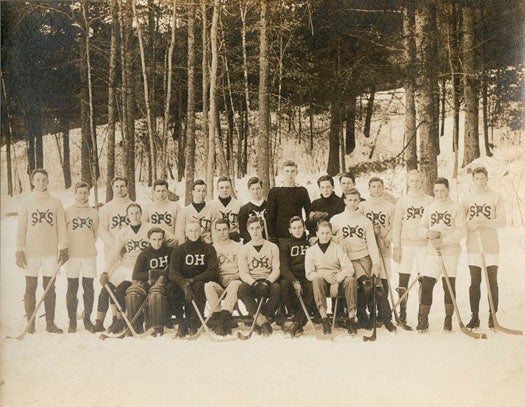
Editor’s note: this post has been updated to reflect the name change from Shared Shelf to JSTOR Forum. We invited Lisa Laughy, Web Services/Archives Assistant at St. Paul’s School’s Ohrstrom Library in Concord, New Hampshire to tell us about her experience as the first K-12 subscriber to JSTOR Forum (formerly called Shared Shelf), Artstor’s digital media management system. When I first started…






Sign up for updates
Never miss a thing. Get updates from JSTOR delivered straight to your inbox.
By signing up you agree to our Privacy Policy. You may unsubscribe at any time by clicking on the provided link on any marketing message.
"*" indicates required fields