
Our history
In 1994, the Internet was in its early days, and William G. Bowen—then president of the Mellon Foundation—conceived of JSTOR to solve a growing problem: university and college libraries were running out of space for expanding scholarly collections.
His idea was transformative: convert printed journals into digital form and store them in a shared online archive. This innovation helped reduce storage costs, free up physical space, and vastly improve access to research.
JSTOR was founded in 1995, and decades later, JSTOR is a thriving nonprofit working with more than 14,000 libraries, museums, and publishers worldwide. Through our products and services, JSTOR has transformed access to scholarly materials—including journals, books, images and other primary sources—to reach more than 100 million users each year.
Sign up for updates
Never miss a thing. Get updates from JSTOR delivered straight to your inbox.
By signing up you agree to our Privacy Policy. You may unsubscribe at any time by clicking on the provided link on any marketing message.
"*" indicates required fields
What will the next 30 years bring?
Explore more about JSTOR’s evolution and impact.
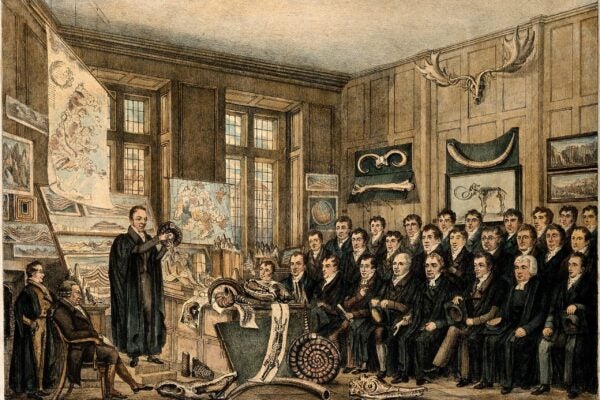
Teach academic research with JSTOR: A flexible lesson plan
Help students move from a broad research topic to a focused, organized set of sources with this flexible JSTOR lesson plan. Designed for a 30–45-minute class or training session, it covers searching, evaluating materials, using Workspace, and citing sources. Adapt the activities and customizable slide deck to your students’ needs.
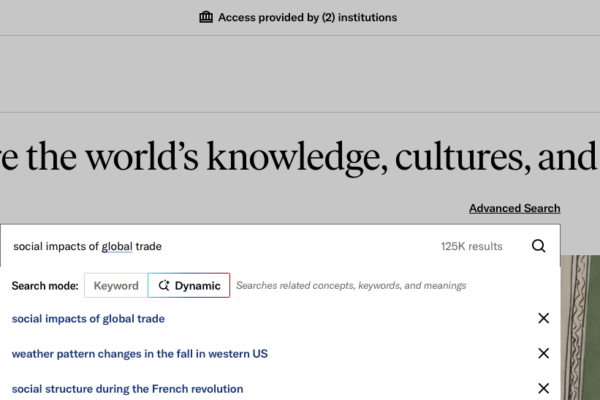
Introducing AI-assisted dynamic search on JSTOR
JSTOR’s AI-assisted dynamic search helps researchers explore early questions by surfacing related ideas, vocabulary, and potentially relevant sources. Learn how it complements keyword search, keeps researchers in control, and will be introduced at participating institutions this fall.
Reconsidering your digital collections platform: Lessons from MTSU’s move from CONTENTdm to JSTOR Stewardship
Join us for a conversation with Kathleen Schmand (Dean, Walker Library) about Middle Tennessee State University’s move from CONTENTdm to JSTOR Stewardship. Hear how MTSU evaluated its options, worked with JSTOR’s migration team to prepare and move its collections, and what the transition has made possible.
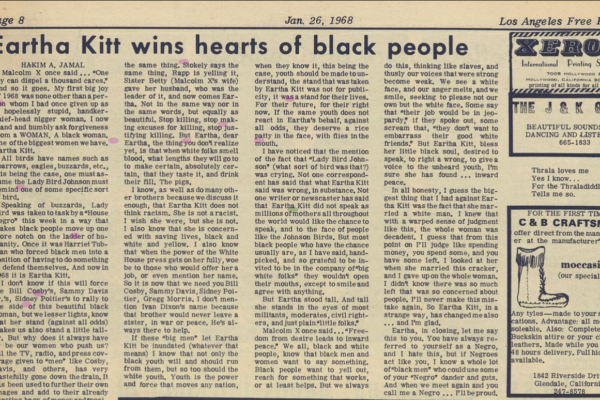
When distinctive collections become part of research
Libraries’ and archives’ collections shared through JSTOR Stewardship can become evidence for research, teaching, and public understanding.
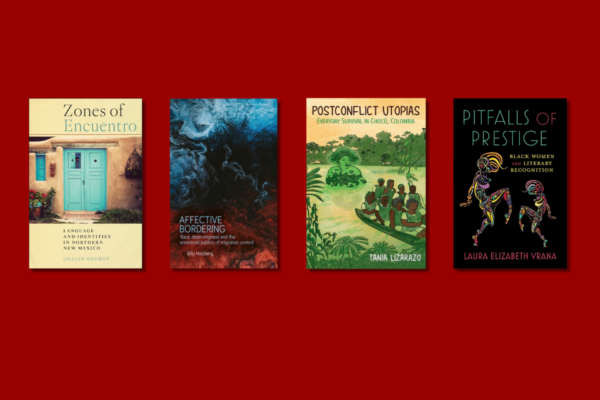
Nearly 300 books in Path to Open will become open access in 2027
In January 2027, 300 books from Path to Open’s 2024 cohort will become open access on JSTOR. Spanning the arts, humanities, and social sciences, the titles build on the first cohort’s sharp increase in readership after going open.

JSTOR Stewardship: A modern foundation
JSTOR rebuilt the infrastructure behind its Digital Stewardship Services while hundreds of institutions continued their work. Learn how this modernization supports accessibility, reliable maintenance, and more flexible ways to organize and connect digital collections.
JSTOR Digital Stewardship Services training: Project cataloging
Training for Stewardship participants (Tiers 2-3): catalog records, manage media, use linked fields, and organize work. One of three sessions in a monthly Stewardship training series.

Looking beyond Georgia O’Keeffe: How multidisciplinary research deepens understanding
An exhibition at the Georgia O’Keeffe Museum invites viewers to reconsider O’Keeffe’s New Mexico landscapes through the perspectives of Tewa artists, scholars, and culture bearers. Explore how multidisciplinary research can deepen our understanding of art, place, and colonial history.

How Middle Tennessee State University planned its move from CONTENTdm to JSTOR Stewardship
Middle Tennessee State University evaluated seven digital collections platforms before selecting JSTOR Stewardship to replace CONTENTdm. Learn how staff from Walker Library and the Albert Gore Research Center aligned their needs, planned the migration of roughly 30 collections and more than 10,000 items, and are preparing to make distinctive materials easier for researchers to discover.