
Our commitment as a nonprofit
As a trusted, nonprofit organization, JSTOR has made a commitment across our products and services to provide equitable, sustainable models to maximize access to knowledge.
Being an independent nonprofit uniquely allows us to operate between libraries and publishers and users, balancing their needs and interests—with the ultimate goal of providing equitable access to knowledge today and in the future.
Our priorities and approach
01
Provide affordable access for everyone
- We actively choose to keep fees low to reach more people, whether it’s our comprehensive model for journals and primary sources, or our diverse ebook models. We lead with our mission, one decision at a time
- Through the JSTOR Access Initiative, we provide free or very low-cost access to more than 1,500 institutions around the world
- With the JSTOR Access in Prison initiative, we provide JSTOR access to learners in jails and prisons
- Our free reading program makes scholarly journals accessible to everyone anywhere in the world, regardless of their ability to pay
02
Support sustainable open access content
Our partnerships with libraries and publishers help us grow open access through content and community initiatives that make more content discoverable and freely accessible worldwide, including:
- Reveal Digital, a collaboration with libraries to fund, source, digitize, and publish open access primary source collections from under-represented voices
- Path to Open, which offers a sustainable open access solution for libraries, supports the nonprofit university press community, and invests in authors, by making books in the program open access three years after publication
- JSTOR Daily, which makes scholarship more accessible through engaging articles and free teaching resources that enrich learning in the humanities, arts, and social sciences—each linking to open and freely available content on JSTOR
03
Lead the preservation of scholarship
- We have secured the needed rights to ensure content on JSTOR is accessible to libraries for the long-term, providing a trusted alternative to hard copies on shelves
- Our digital content can be readily converted to newer formats as they are developed in the future
- Digital files for the entire archive are preserved using the approach and infrastructure developed by Portico
- Our archives can be transferred to a third-party steward in the extremely unlikely event that JSTOR should ever cease operations
04
Advance scholarship and teaching practices
- Our faculty resource library provides comprehensive support for teaching and learning
- JSTOR Workspace simplifies research organization and citation
- JSTOR’s AI-enabled explorations help people discover, evaluate, and engage with knowledge
The latest from JSTOR

New Artstor on JSTOR Collection Launch: Asheville Art Museum
Explore more than 1,500 images of American art from the Asheville Art Museum, including works by Black Mountain College artists Ruth Asawa and Robert Rauschenberg, glass artist Mark Peiser, and contemporary artist Wendy Red Star.
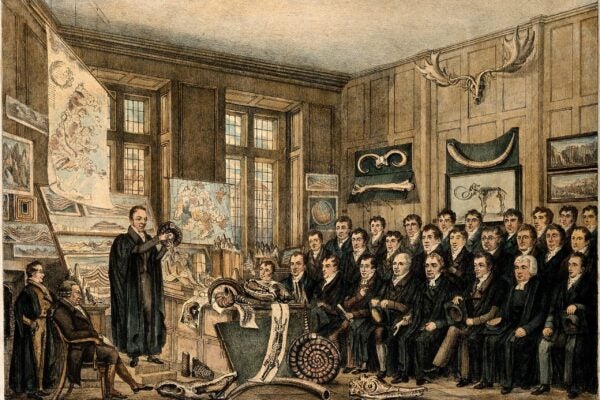
Teach academic research with JSTOR: A flexible lesson plan
Help students move from a broad research topic to a focused, organized set of sources with this flexible JSTOR lesson plan. Designed for a 30–45-minute class or training session, it covers searching, evaluating materials, using Workspace, and citing sources. Adapt the activities and customizable slide deck to your students’ needs.
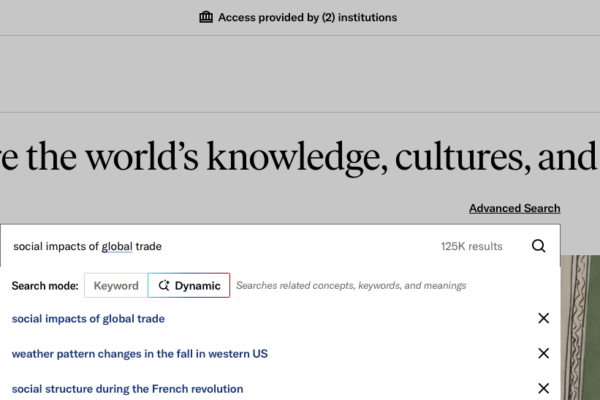
Introducing AI-assisted dynamic search on JSTOR
JSTOR’s AI-assisted dynamic search helps researchers explore early questions by surfacing related ideas, vocabulary, and potentially relevant sources. Learn how it complements keyword search, keeps researchers in control, and will be introduced at participating institutions this fall.
Reconsidering your digital collections platform: Lessons from MTSU’s move from CONTENTdm to JSTOR Stewardship
Join us for a conversation with Kathleen Schmand (Dean, Walker Library) about Middle Tennessee State University’s move from CONTENTdm to JSTOR Stewardship. Hear how MTSU evaluated its options, worked with JSTOR’s migration team to prepare and move its collections, and what the transition has made possible.
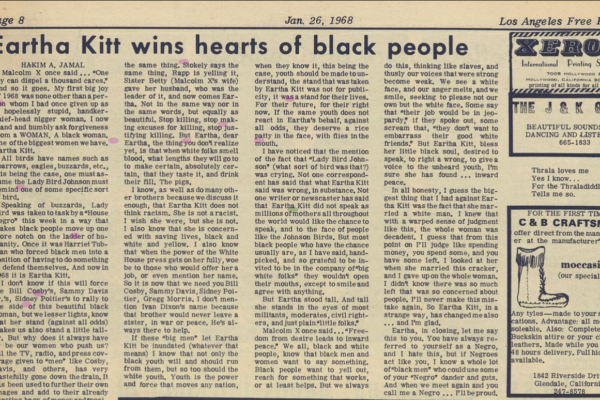
When distinctive collections become part of research
Libraries’ and archives’ collections shared through JSTOR Stewardship can become evidence for research, teaching, and public understanding.
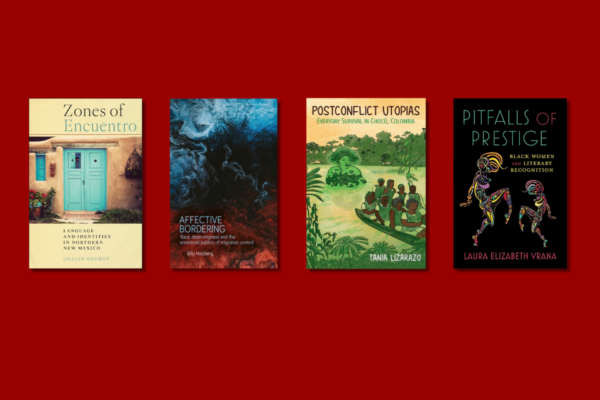
Nearly 300 books in Path to Open will become open access in 2027
In January 2027, 300 books from Path to Open’s 2024 cohort will become open access on JSTOR. Spanning the arts, humanities, and social sciences, the titles build on the first cohort’s sharp increase in readership after going open.
JSTOR Stewardship: A modern foundation
JSTOR rebuilt the infrastructure behind its Digital Stewardship Services while hundreds of institutions continued their work. Learn how this modernization supports accessibility, reliable maintenance, and more flexible ways to organize and connect digital collections.
JSTOR Digital Stewardship Services training: Project cataloging
Training for Stewardship participants (Tiers 2-3): catalog records, manage media, use linked fields, and organize work. One of three sessions in a monthly Stewardship training series.

Looking beyond Georgia O’Keeffe: How multidisciplinary research deepens understanding
An exhibition at the Georgia O’Keeffe Museum invites viewers to reconsider O’Keeffe’s New Mexico landscapes through the perspectives of Tewa artists, scholars, and culture bearers. Explore how multidisciplinary research can deepen our understanding of art, place, and colonial history.
Sign up for updates
Never miss a thing. Get updates from JSTOR delivered straight to your inbox.
By signing up you agree to our Privacy Policy. You may unsubscribe at any time by clicking on the provided link on any marketing message.
"*" indicates required fields