
JSTOR Blog
-
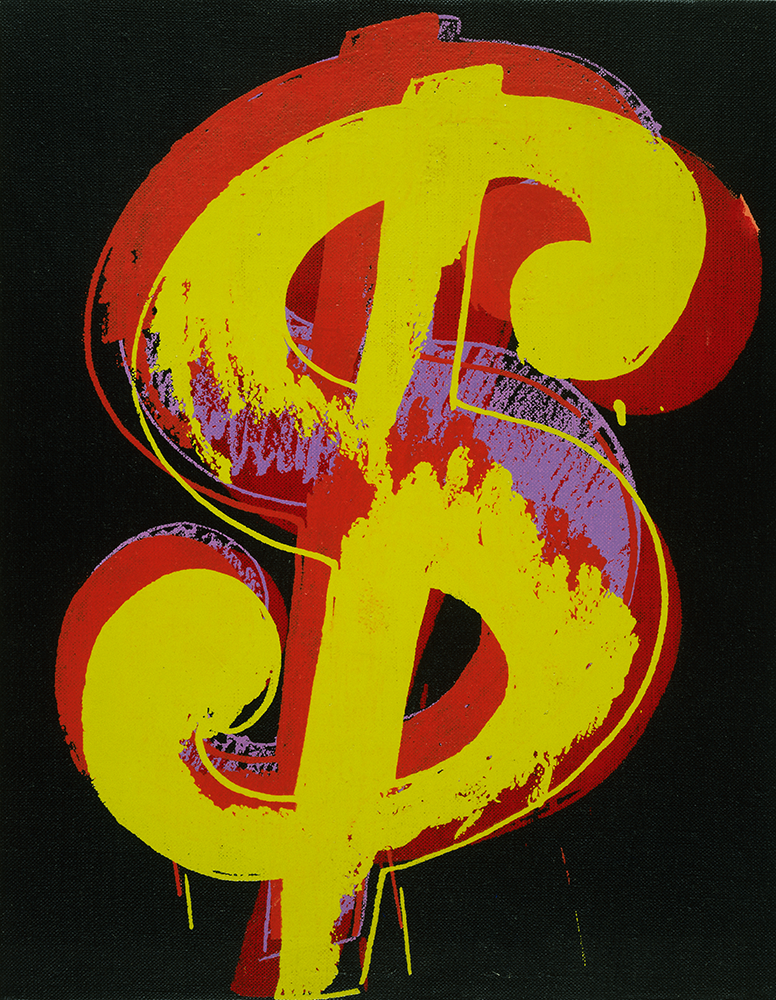
Michael Hermann, Director of Licensing at The Andy Warhol Foundation for the Visual Arts, explains how the Foundation’s collections in the Artstor Digital Library provide a comprehensive view of Warhol’s cultural impact–as well as insight into his personal life. Thirty years after his death, Andy Warhol (1928-1987) remains one of the most influential figures in contemporary…
-
In our previous post I introduced our new Principles and Elements of Design resource (which you can find in Teaching Resources under Studio Art) and spoke about the elements of design; in this post, we look at the principles. As with the series of Elements of Design image groups, each of these includes an explanatory…
-
One of the most daunting challenges I faced teaching in a high school art program was developing a common language to articulate the principles and elements of design. Helping students hone those communication skills made critique easier but took a lot of time up front. When our faculty began to use the same terminology across…
-
Today’s Open Access initiative by the Metropolitan Museum of Art and their generous partnership with Artstor help ensure that these images will reach scholarly audiences in more than 1,700 institutions worldwide. Nancy Minty, Artstor’s Collections Editor, explores some of the Met’s history, the materials in the release, and its implications for future study. In 1872,…
-
Back at school and looking to get started working in Artstor? Here are some tips and reminders from the experts in User Services to help you get started. Register for an account (if you haven’t already). Registering allows you to access Artstor from anywhere (your couch, a coffee shop, or even on-the-go). Remember to create…
-
The search for the Northwest passage, an arctic maritime route connecting the Atlantic and Pacific Oceans, drove European exploration of the North for hundreds of years. The search was exceedingly treacherous–pack ice, the floating ice covering the sea, made arctic waters impassable throughout most of the year and explorers perished in harsh conditions–but the danger…
-
Catherine Tedford, the director of the Richard F. Brush Art Gallery at St. Lawrence University, curates the Street Art Graphics collection, undeniably one of the coolest resources in Artstor’s public collections. Here she shares the history of street stickers and of her amazing collection. History of the collection and the Street Art Graphics digital archive…
-
Hearing the call from Artstor teachers for sample lesson plans, we revisited some favorite lessons from our teaching days and borrowed from JSTOR Daily and the Philadelphia Museum of Art’s School and Teacher Program. The results, covering a variety of subject areas and grade levels, can be found in Artstor’s Teaching Resources.
-
In in the vast, global virtual museum of the Artstor Digital Library, women are rising to the top. Our recent use statistics reveal that portraits and likenesses of the fairer sex (your interpretation…) dominate. The subject of women prevailed among the top 20 hits, with, you guessed it, Leonardo’s Mona Lisa, c. 1505, his serene…
-
Editor’s note: this post has been updated to reflect changes to Artstor’s platform. This fall, the New Hampshire Institute of Art published a first selection of 22 images from its Thom Adams Photograph Collection in Artstor’s public collections. The collection, a gift from 2011, includes around 300 original photographic prints by world class photographers of…
-
The Larry Qualls Archive of Contemporary Art surveys almost three decades of work exhibited in the New York area from 1988-2012. In this post, we consider the personalities and forces that dominated the art world in the 2000s. See also the 1980s and the 1990s. The beginning of the 21st century was an especially auspicious…
-
The Larry Qualls Archive of Contemporary Art surveys almost three decades of work exhibited in the New York area from 1988-2012. In this post, we consider the personalities and forces that dominated the art world in the 1990s. See also the 1980s and the 2000s. As curator Gary Carrion-Murayari pointed out, the 1990s had a…
-
The Larry Qualls Archive of Contemporary Art surveys almost three decades of work exhibited in the New York area from 1988-2012. In this post, we consider the personalities and forces that dominated the art world in the 1980s. See also the 1990s and the 2000s. Quall’s collection opens during the hurly-burly of the 1980s, the…
-
According to a 1985 Illustrated London News poll of artists and critics, Diego Velázquez’s Las Meninas was voted the world’s greatest painting. Let’s take a close look at the painting, its history, and the emotions it elicits to pinpoint why.
-
When it comes to modern warfare, we’ve seen so much through photographs: mass graves, explosions, the faces of soldiers the instant they’re shot. And we’ve also seen the aftermath of war–devastated landscapes, soldiers carrying their dead, and returning home to their families. We’ve become accustomed to a depth of visual coverage that has brought deep…
-
Our friends at JSTOR Daily remind us that this year marks the centennial of the cacophonous beginnings of the Dada movement in Zurich’s Cabaret Voltaire. An anarchic response to the ravages of World War I, the movement is notoriously difficult to pin down. Matthew Wills writes, “Dada combined absurdity and nonsense, radical politics and anti-politics,…
-
Armistice Day became Veterans Day in the United States in 1954. While the holiday is also known as Remembrance Day in other countries and celebrates the end of World War I, the name change in the United States reflects its emphasis on honoring military veterans. The two objectives were mentioned in a speech on the…
-
Take a deep breath, the presidential debates are finally over. But brace yourselves, we still have a couple of weeks of campaigning left until the actual elections. Why the negative tone? Well, the Washington Post reported that “59 percent of Americans are sick and tired of the election”–and that was way back in July! And…
-
The world has lost a uniquely gifted leader and friend. Bill Bowen passed away peacefully at 83 on October 20, 2016. He dedicated his entire professional life to the world of education, and was founding chairman of JSTOR and ITHAKA and founding trustee of Artstor. We extend our heartfelt sympathies and deepest condolences to his…
-
In 1862, amateur photographer William H. Mumler of Boston took a self-portrait in his studio, unaware of a ghostly apparition lurking directly behind him. It wasn’t until he viewed the resulting image of a pellucid arm draped casually across his shoulder that he realized the camera must have exposed the lingering spirit of his deceased…
-
The Christian festival of Michaelmas, also known as the Feast of Saint Michael the Archangel, is celebrated in many parts of the world on September 29. Michaelmas celebrates the story of Saint Michael defeating Satan, which is often depicted in the motif of Saint George and the Dragon, Saint George being the Archangel Michael’s earthly counterpart. The earliest…
-
An interview with the graduate student curators of Avery/GSAPP Architectural Plans and Sections To celebrate the completion of our two-year collaborative project with Avery Library and GSAPP on releasing a collection of 20,000 architectural plans, sections, and related materials in Artstor, Lisa Gavell, Artstor’s Senior Manager of Metadata & Content, spoke with five of the…
-
Editor’s note: this post has been updated to reflect Artstor’s platform changes. We invited Stanton Belford, Ph.D., assistant professor of biology at Martin Methodist College, to tell us about his three Marine Biology collections in JSTOR Forum (formerly Shared Shelf): Red Sea, Trinidad, and Key Largo. Before describing the marine biology digital collections, I would…
-
Start off the school year with more than 2 million images! Here are some links to help you get started: * Register for a free Artstor account – you’ll be able to download images, log in away from campus, share image groups, and more! * Learn how easy it is to download citations! Export to your favorite reference citation management…
-
In 1846, dentist William T. G. Morton assembled a group of doctors in the operating theater at Massachusetts General Hospital, a sky-lit dome located on the hospital’s top floor. As the doctors watched from the dome’s stadium seating, Morton waved a sponge soaked in a mysterious substance called Letheon inches from his patient’s face. The…
-
Editor’s note: this post was updated to include accurate information about Artstor’s platform changes in June 2018. Traci Timmons, Librarian at the Seattle Art Museum, shares with us the story of the completion of their first digital collection. The Seattle Art Museum only began issuing its annual reports digitally in 2007. Prior to that, for…
-
It’s very easy to share links to images and image groups in the Artstor Digital Library. Here’s how: Open the group you wish to share. This can be a Private, Institutional, Artstor-Curated, or a group that has been shared with you. From the menu choose Share > Generate image group link. Click Copy to Clipboard…
-
Professor David S. Efurd’s collection of nearly 10,000 photographs of Buddhist, Hindu, and Jain art and architecture was recently released in Artstor. We were particularly impressed by the variety and complexity of the rock-cut cave temples he photographed, and he was kind enough to answer our questions. Artstor: What is the importance of caves as the sites of some…
-
Sculptor Benvenuto Cellini is best remembered for two things: his bombastic autobiography, the Vita, in which he confesses to multiple murders and a spectacular jailbreak, and for his salt cellar. Yes, that’s right—a dish for salt.
-
We are introducing a new resource featuring more than 75 images on the topic of biomimicry. Find it in the Artstor Digital Library’s Teaching Resources area: Teaching Resources > Case Studies > STEM to STEAM > Stem to Steam: The Anatomy of Design Throughout history we have looked to nature to define and devise systems…
Sign up for updates
Never miss a thing. Get updates from JSTOR delivered straight to your inbox.
By signing up you agree to our Privacy Policy. You may unsubscribe at any time by clicking on the provided link on any marketing message.
"*" indicates required fields