
Presses participating in Path to Open
Meet the growing community of university presses and select academic publishers working alongside libraries and JSTOR to give newly published humanities and social science monographs a sustainable, guaranteed pathway to open access worldwide.
Participating presses
Abilene Christian University Press
The American University in Cairo Press
Berghahn Books – New!
Boydell & Brewer – New!
Bristol University Press
The British Academy – New!
The Chinese University of Hong Kong Press
Clemson University Press
Edinburgh University Press
Hong Kong University Press
INSTAP Academic Press
Leiden University Press
Leuven University Press
Liverpool University Press
Manchester University Press
Masaryk University Press
Melbourne University Publishing
Michigan State University Press
National Taiwan University Press – New!
Northwestern University Press
Ohio State University Press
Ohio University Press
Pan-Atlantic University Press – New!
Pluto Press – New!
Purdue University Press
Southern Illinois University Press
SUNY Press
Sydney University Press
Syracuse University Press
The University of Alabama Press
University of Alaska Press
The University of Arizona Press
University of Georgia Press
University of Illinois Press
University of Michigan Press
University of Nebraska Press
University of New Mexico Press
The University of North Carolina Press
University of Rochester Press
University of South Carolina Press
The University of Tennessee Press
The University of Utah Press
University of Virginia Press
University of Washington Press
University of Wisconsin Press
University of Wyoming Press
University Press of Colorado
University Press of Florida
University Press of Kansas
University Press of Kentucky
Utah State University Press
Vanderbilt University Press
Path to Open in action
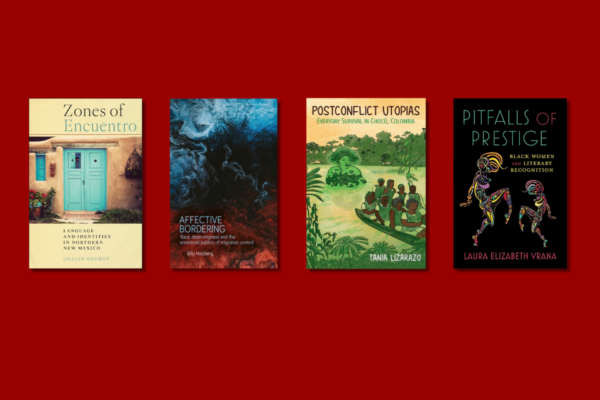
Nearly 300 books in Path to Open will become open access in 2027
In January 2027, 300 books from Path to Open’s 2024 cohort will become open access on JSTOR. Spanning the arts, humanities, and social sciences, the titles build on the first cohort’s sharp increase in readership after going open.
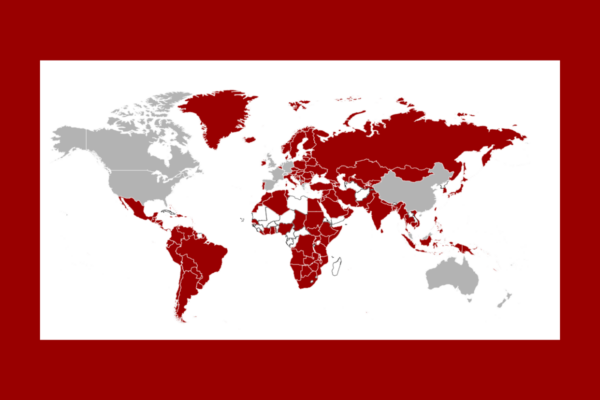
What happened when the first Path to Open books became open access?
When 100 Path to Open titles became freely available worldwide, their readership quickly extended far beyond the institutions that had previously provided access.
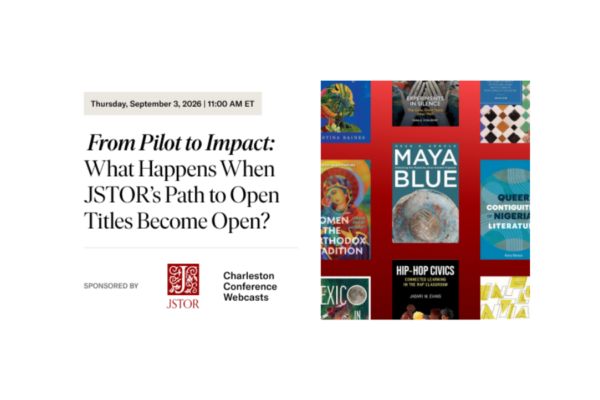
From Pilot to Impact: What Happens When JSTOR’s Path to Open Books Become Open?
Watch this Charleston webinar, originally held on September 3, 2026, to hear representatives from the Boston Library Consortium, University of Oregon, Liverpool University Press, Syracuse University Press, and JSTOR discuss new evidence and community perspectives on the impact of the first 100 Path to Open titles to become open access.
Turning the Page on Path to Open: From Pilot to Program
Over the past three years, libraries, publishers, and partners have worked together to shape Path to Open, a Books at JSTOR initiative that supports the transition of high-quality scholarly monographs to open access at scale. With positive results and feedback, the pilot is now moving forward as an official JSTOR program. Watch this on-demand webinar to explore this important milestone and learn what it means for your library.

JSTOR Transitions Path to Open Pilot to an Ongoing Program, Offering a Sustainable Model for Open Access Monographs
JSTOR’s Path to Open has transitioned from a pilot to an ongoing program, demonstrating that a collaborative, community-supported model can sustainably expand open access for monographs. Early results show significant growth in participation, titles, and global usage.
Newly opened Path to Open titles surpass 2025 usage in just five weeks
Five weeks after becoming openly available, the first 100 Path to Open titles have already surpassed their total 2025 usage—when access was limited to participating institutions. With usage up more than 580%, readership has expanded from six to 113 countries, underscoring the immediate global impact of open access for scholarly books.
Frequently asked questions
What is the maximum number of presses JSTOR is looking to secure to participate in Path to Open?
Path to Open has grown significantly since its launch in 2023. We exceeded our original goal of securing at least 30 university presses before launch and now partner with over 50 participating presses and select academic publishers.
What are the minimum and maximum number of titles a press can contribute to the program each year?
The number of titles a press contributes each year varies based on publisher capacity and program participation. Path to Open’s target remains 300 titles published annually. Many participating presses contribute between 5 and 15 titles per year, though there is no minimum requirement. We recognize that output may fluctuate, and some smaller publishers may contribute fewer titles in a given year.
Are there requirements to the publication/copyright year date that can be published in this program?
JSTOR will accept titles based on the copyright year in the calendar year they are published for the first time. For example, a book chosen for the 2027 cohort should most likely have a 2027 copyright year. However, if the book is published later than expected, or the copyright year is later than the cohort year the book was selected in, the title will still be considered part of the cohort year it was selected in. For more detailed information, please view title selection methodology.
When will a title published in Path to Open be made available as an open access title to the public?
Titles become open access in their third year in which they were selected for Path to Open. For example, a title selected for the 2023 cohort becomes open access and available to all users on any supporting platform in the first week of January 2026. If a title is published later than expected, its transition to open access remains tied to its original selection year.
When can a press expect to get paid for titles that are published in the Path to Open program?
Per the Path to Open Program Rider, JSTOR will pay each publisher $5,000 per title selected and published in the program. For all titles made available on the JSTOR platform by May 31st, the publisher will be paid by June 30th. After that, any titles made available on the platform by November 30th will be paid for by December 31st. However, the last round of 2026 titles from the initial pilot will be paid out at the end of March 2027.
Do I need to pay my authors royalties using my Path to Open payment?
JSTOR does not have any set parameters or guidelines on how to use or issue your $5,000 payment, as it will depend on each publisher’s agreements with their authors. We recommend discussing this with colleagues in your organization or with other publishers participating in the program.
How are published titles made available to libraries under the Path to Open model?
Institutions will be required to pay an annual subscription fee to be able to access the current cohort/copyright year the publishers release in Path to Open each year, in addition to the titles that have not yet converted to open access. After the selected books are sent to JSTOR and go live per their publication schedule, libraries will gain automatic access to them. Please ensure that these books are tagged correctly in your metadata and sent in a timely manner so that there is no delay in libraries gaining access to them.
When should a press register titles for inclusion in the program? Will there be a deadline?
We are asking publishers to submit any title they know will be published in a specific calendar year and with rights cleared to submit the title at the end of September, prior to the upcoming publication year with a final opportunity to submit titles by the end of March in the calendar year they are published. If publishers need to know if a book is accepted to the program ahead of these deadlines, please follow the instructions in our Toolkit for Submitting Titles for Review.
What is the workflow for submitting titles for inclusion to Path to Open?
Publishers will have the opportunity to submit books for potential inclusion twice during the year.Titles are submitted for review through a publisher’s specific Path to Open Submission Link, which is provided to each publisher during onboarding. This link opens a Google sheet that anyone on staff at the press can use to submit titles. For more information, please see this Toolkit for Submitting Titles for Review.
Once the selection process has concluded, JSTOR will notify publishers by email and identify their selected titles in their Path to Open Submission Link. At this point, selected books must be removed from standard library ebook distribution channels, while the rest can proceed through normal workflows. Once selected books are available, metadata, PDFs, and covers must be sent to JSTOR using the publisher’s specific SFTP space. JSTOR also accepts accessible EPUB files alongside PDFs. For more information, please visit our support site.
Please note that entering titles in the Path to Open Submission Link does not deliver book metadata to JSTOR. Please follow our delivery specifications or email Content Support for assistance. To summarize:
- Publishers submit titles for potential inclusion in Path to Open through their Path to Open Submission Link.
- Following the March and September submission deadlines, JSTOR reviews all submitted titles and determines which will be accepted. The review process takes approximately two weeks.
- Publishers are notified by email and in their Path to Open Submission Link which books have been selected to be included in the program. At this point, selected books must be removed from standard library ebook distribution channels, while the remaining books can proceed through their usual workflows.
- Publishers send metadata, PDFs, and covers for selected books once they are available, using the metadata specs provided here.
Are there best practices that can be shared for the ISBN registration of these titles?
It should follow the same process as other titles made available today.
Are there best practices that can be shared for the Creative Commons license for these titles?
Publishers and their authors are free to choose whatever Creative Commons License they would like to use for their Path to Open books.
We are asking publishers to either fill out the Creative Commons License field in their Path to Open Submission Link or email Content Support with details. These must be provided a full month prior to the flip to open access.
Is there a way to send books in Path to Open directly to JSTOR outside of my normal file distribution workflow?
Yes. If you are concerned about accidentally sending books in Path to Open to other platforms, there is a way to send the books directly to JSTOR. Please contact Content Support to receive a metadata template and SFTP login.
Are there special requirements or acknowledgements needed for the copyright page of the books? Do I need a Creative Commons license or blurb that acknowledges Path to Open?
Yes, the below verbiage should be included in the electronic copy of the book:
“This book will be made open access within three years of publication thanks to Path to Open, a program developed in partnership between JSTOR, the American Council of Learned Societies (ACLS), University of Michigan Press, and The University of North Carolina Press to bring about equitable access and impact for the entire scholarly community, including authors, researchers, libraries, and university presses around the world. Learn more.”
We request that all print copies of the books published in Path to Open include the verbiage above, assuming the print copy has not yet been processed/distributed at the time of its selection.
JSTOR is not requiring an updated copyright page to be sent at the time of open access conversion, which might often include an OA eISBN or a Creative Commons license. Since the above verbiage explains the program and notes that it will be open access in the future, an updated copyright page will not be required for the open access version. For more detailed information, please visit our support page.
When should I deliver my titles to JSTOR?
As books are published, they should be delivered to JSTOR. Please do not delay in sending them, as libraries are expecting to have access as they are published. There is a new delivery location where Path to Open metadata and assets can be uploaded in your SFTP. Please get in touch with Content Support if you have not yet received information on how to access this location.
Do I need to tell my metadata distributor (such as BiblioVault or Coresource/Ingram) to do something special?
Yes, please work with your metadata distributor to meet the identified metadata specifications where possible, and also to deliver these titles to the new Path to Open-specific location. The library ebook version of your Path to Open titles should only be sent to JSTOR, and withheld from other library ebook platforms. You may need to have special restrictions applied to these books in your title management systems to prevent the automatic dissemination.
While JSTOR has had discussions with CoreSource, BiblioVault, and Firebrand about the program, we are not in a position to alter publisher configurations, change title management systems, or set up new delivery channels on your behalf. Ideally, the press will be able to flag or mark your Path to Open titles in some fashion in your title management system(s). Then, the press should alert your distribution partners to the appropriate delivery parameters explaining what to do with their Path to Open titles. The routing should ensure that the library ebooks are only sent to JSTOR and not to other library resellers/platforms while still distributing direct-to-consumer versions of the books.
If you have not received the metadata specifications, please get in touch with Content Support.
Can I publish my ebooks through existing library sales channels for ebooks? If not, what are the limitations and why?
The electronic versions of titles published in the Path to Open program will only be available in the academic market through this model. However, a Path to Open title may also be included in a participating publisher’s Publisher Collection for the same publication year. Beyond these two JSTOR programs, electronic versions of selected titles should not be available for sale through other library aggregators or through direct sales models to libraries.
The single-user and library print copy of books can be made available through existing sales channels such as Gardners, Erasmus, Centraal Boekhuis, etc. and all other forms of these titles can be made available for sale through consumer channels such as Kindle, iBookstore, etc. The Path to Open working group made this decision to limit the costs in supporting the program by streamlining the management of library participation and contributions, allowing for more revenue to be provided to the publishers and for more ebooks to be published in this program.
If you are unsure which delivery platforms are considered library ebook platforms, we recommend talking with your metadata distribution partners for a definitive list.
Do titles from publishers participating in both Path to Open and Publisher Collections overlap?
Yes. Path to Open titles may also be included in a participating publisher’s Publisher Collection for the same publication year. Path to Open participants receive access to titles in each annual Path to Open collection until they become open access. Publisher Collections participants receive a perpetual license to all of a publisher’s current-year titles, including its Path to Open titles.
For example, a library participating in both Path to Open and a university press’s 2027 Publisher Collection would have access to that press’s 2027 Path to Open titles through both programs. If the library does not renew the Publisher Collection in 2028, it will retain perpetual access to the press’s 2027 titles, which will later become open access according to the Path to Open schedule.
I’ve accidentally sent out the ebook version of my Path to Open title to a library aggregator, what should I do?
Please immediately withdraw the library ebook from that partner and confirm it has been removed from sale. This is still true even if the metadata shows “Not Yet Published”. Some library platforms have set schedules for issuing title removals, so emailing them requesting a legal removal is warranted in most cases. Simply sending a metadata feed with the removal is often not enough to correct the change. Please work with these other platforms and/or with your metadata distribution partners to correct any errors.
Please note that if a Path to Open book remains available for sale on a different library ebook platform during the gated phase of the program despite repeated warnings, publishers will not receive payment for said book, and may in fact need to have the title removed from the program.
Will there always be a set price of $5,000 per title published in the Path to Open program?
JSTOR will guarantee $5,000 per title published in the program. If Path to Open continues to grow, we project there may be a surplus within a couple of years of the official launch. In this case, the Path to Open Community Advisory Committee would need to decide whether to distribute the surplus to titles already in the program through a usage pool distribution, and/or use the surplus to publish more titles in the program.
Will JSTOR still support publishing open access ebooks on the platform that are immediately made open access?
Yes, JSTOR will continue to increase the number of open access ebooks published on our platform as we have done in the past. For publishers participating in this program, JSTOR will waive all fees for current copyright year open access titles each year a publisher participates in the program.
How can individuals not associated with an academic institution access single titles while embargoed?
Individual book acquisitions are not available on JSTOR. Individuals will be able to purchase single titles through the standard print channels publishers have in place, in addition to sales channels to individual consumers, such as Amazon. Lastly, JSTOR will support interlibrary loan (ILL) for all chapters of a book from academic institutions who have access through a paid subscription.
How can authors gain access to their ebooks published in Path to Open?
JSTOR will provide each university press with access to all titles they have published in the Path to Open program. This access can be shared with the press’ authors via the Publisher Admin Portal.
How are titles selected for inclusion across publishers?
The model prioritizes books in disciplines that demonstrate strong demand on JSTOR—either through high levels of open access usage or significant increases when licensed content becomes openly available—while also expanding representation in newer or underrepresented subject areas.
This approach is designed to expand access beyond traditionally dominant subject areas and ensure that titles reflect both scholarly value and reader interest.
The goal is to ensure that titles are published across all publishers in the ranges set and to ensure we continue to support bibliodiversity. For a more detailed view of our title selection methodology, please review our documentation.
How can I measure the success (or impact) of my ebooks published in Path to Open when embargoed, and when they are converted to open access?
While titles are under embargo, participating publishers can use the Publisher Admin Portal to view usage dashboards, including their most-used books and chapters and the institutions and countries accessing their content.
After titles become open access, JSTOR provides periodic reports comparing usage during the licensed and open access phases, helping publishers understand how open access expands the reach and use of their books.
Publishers seeking a more detailed impact report may contact JSTOR for assistance. We are also exploring ways to give publishers more direct access to comparative usage data in the future.
The Path to Open Community Advisory Committee is also working to identify meaningful measures of success across both phases.
How can I learn more about Path to Open?
Please contact JSTOR with any additional questions you may have about Path to Open.
How can I promote my participation in Path to Open?
Use the Path to Open: Communications toolkit for publishers to promote your press and titles at every stage—from announcing your participation and title list to celebrating books that become open access and sharing their impact. The toolkit includes customizable email and website copy, ready-to-use social media messaging and graphics, outreach ideas, and opportunities to collaborate with JSTOR Marketing on promotions and success stories.
Publishers can also share the Path to Open: Communications toolkit for authors with contributors. It provides customizable messaging and social assets authors can use when their book is selected, becomes available through participating libraries, transitions to open access, and demonstrates the impact of expanded access
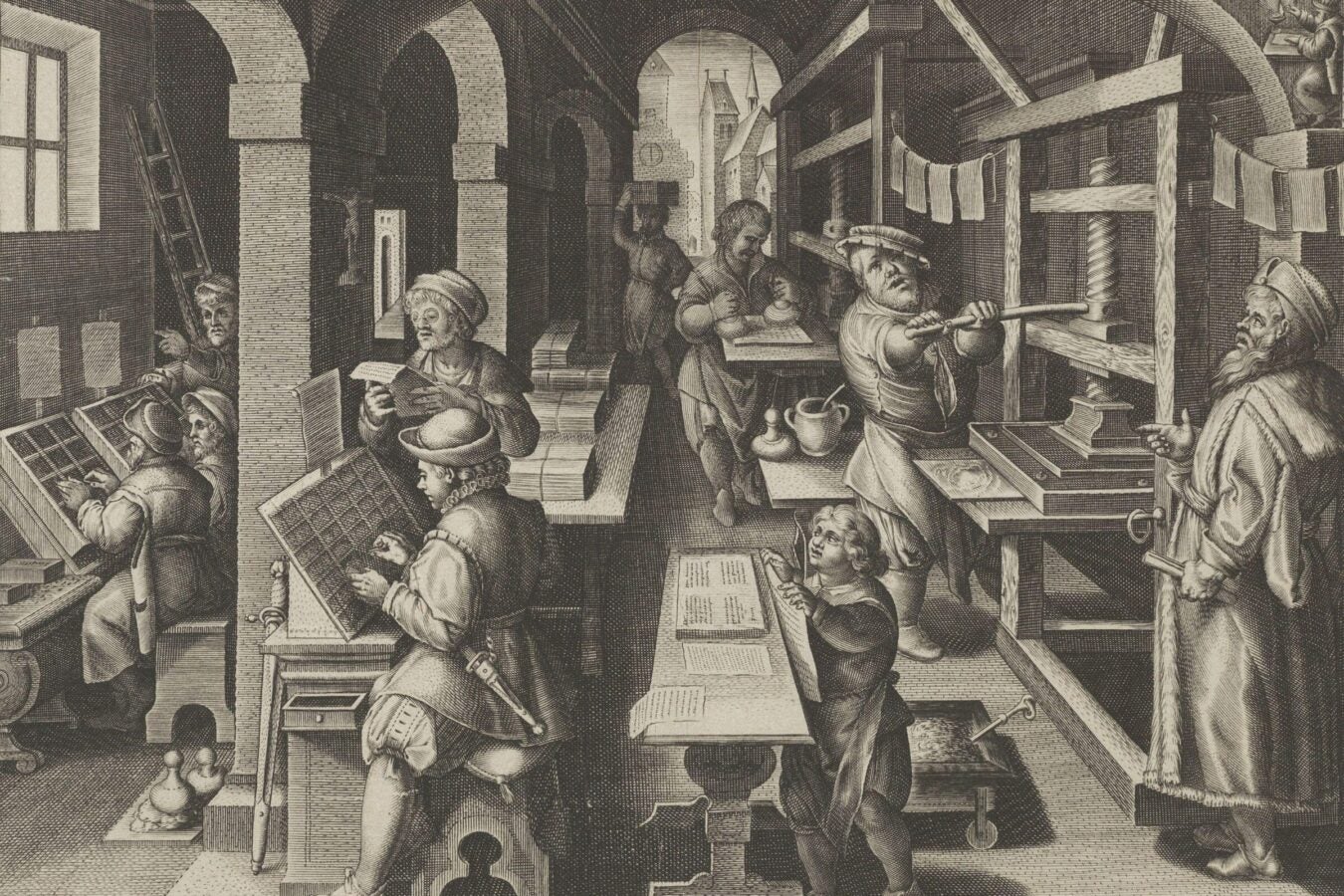
View image credits from this page
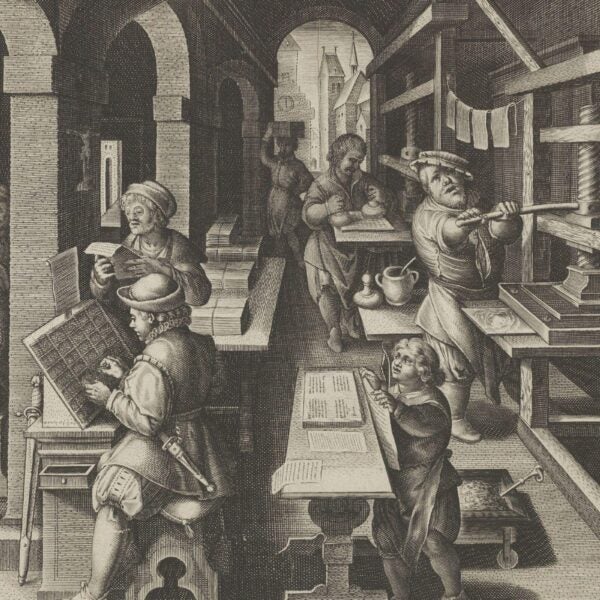
Jan Collaert I after Jan van der Straet, called Stradanus. New Inventions of Modern Times [Nova Reperta], The Invention of Book Printing, Plate 4. ca. 1600. Part of Open: The Metropolitan Museum of Art, Artstor.