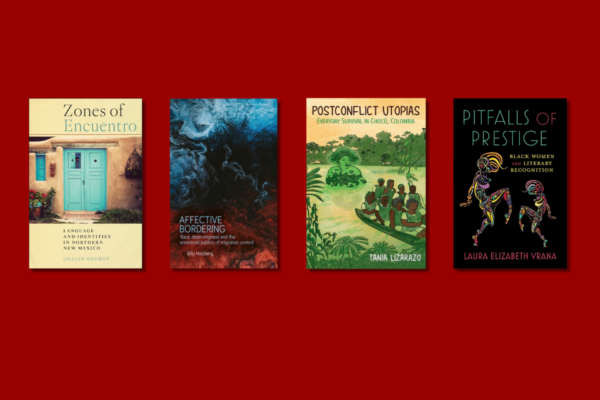
In January 2026, the first 100 books from JSTOR’s Path to Open program became freely available to readers worldwide. Their transition to open access offers an early look at how broader availability affects the use and reach of scholarly books.
Path to Open is a community-led model for scholarly monographs. Participating libraries receive access to 300 new titles each year, along with 600 earlier titles during a licensed period, helping support the costs of publishing and distribution. In the third calendar year after publication, the 300 titles licensed each year become openly available to readers around the world.
This first release gave us a chance to examine the same group of books before and after that change in access. The findings compare the full licensed-access period, from October 2023 through December 2025, with the first three months of open access, from January through March 2026.
This is the first post in a series examining what the early results can tell us about Path to Open’s impact and the potential for a community-led model to scale open access for scholarly books.
When the books opened, usage accelerated
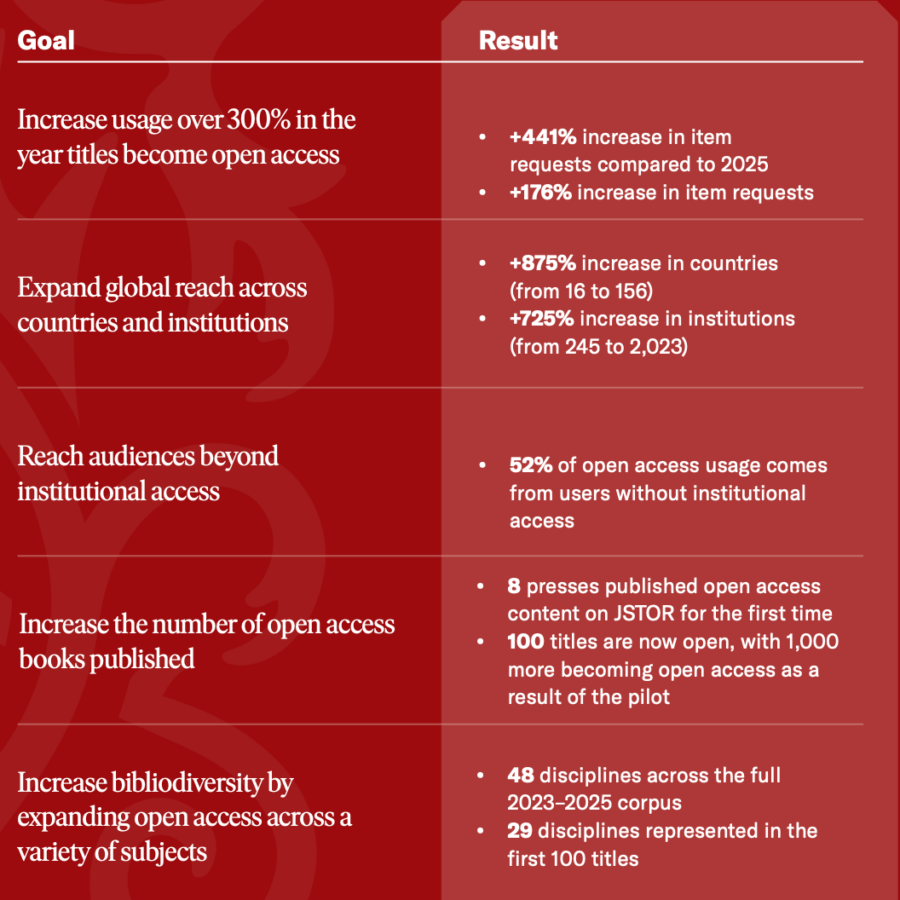
Once books became open, far more readers were able to find and use them. In their first three months as open access, titles saw a 176% increase in item requests, with 91% the combined usage they received during the full 2023 to 2025 licensed-access period.

Books at JSTOR: Our commitment to supporting community driven, flexible, and sustainable business models
Since 2012, Books at JSTOR has grown to 146,000+ scholarly ebooks from 345 publishers, offering libraries flexible acquisition options including DDA and EBA.
That acceleration continued: According to updated data presented in a recent webinar, by July 31, 2026, books saw a 1,082% increase in item requests, and every title exceeded the combined use it received during the 2023 to 2025 licensed-access period. Usage of fifty-eight percent of titles increased by more than 1,000%.
The map of readership changed
Before books became open, usage came from 16 countries. In the first three months of open access, that figure grew to 156 countries—an 875% increase.
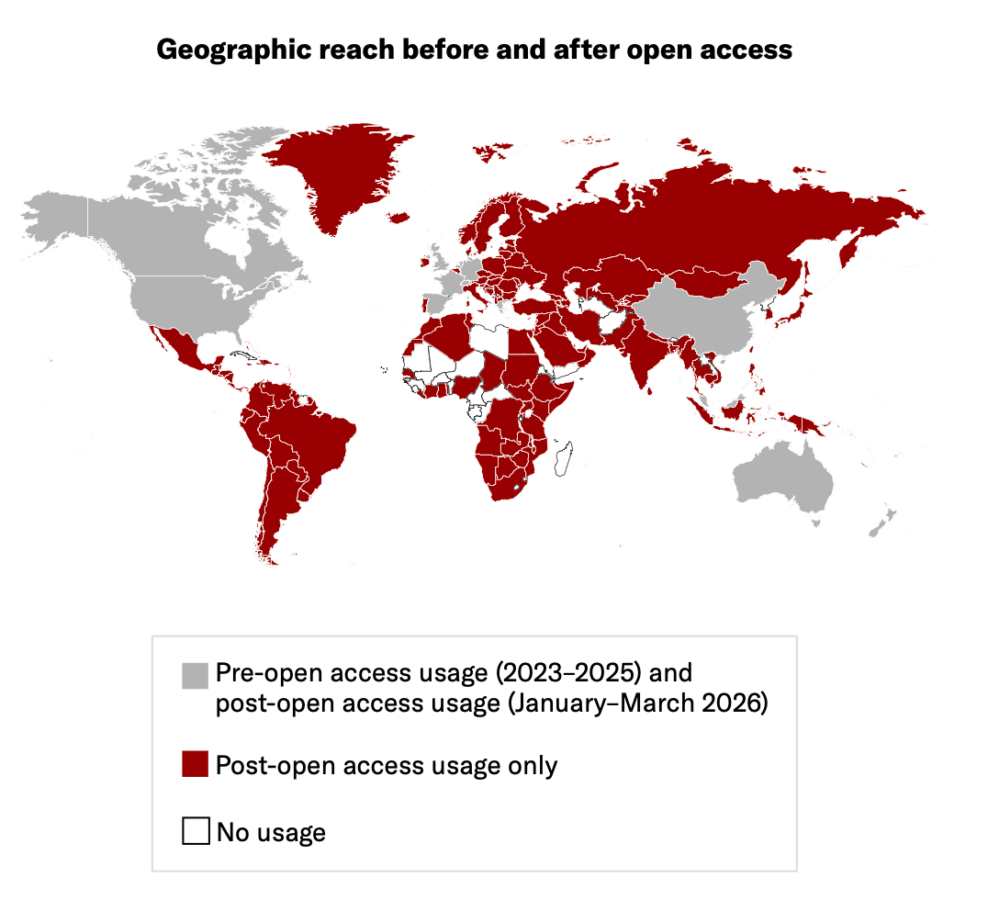
The expansion included readers in Africa, Asia, Europe, and Latin America. For researchers and learners in places where licensed scholarly content may be less readily available, open access can make a meaningful difference in what they are able to read and use.
Growth continued after the initial three months: By July 31, 2026, usage of the first 100 titles had been recorded in 191 countries and at 3,238 institutions.
Open access brought new readers into view
52% of open-access usage came from readers without institutional access—which means readers who were not systematically authenticated through an institution. Their circumstances vary, but the finding makes a broader reading public visible: independent researchers, learners, and others whose access to scholarship does not begin with a library login.
The successful initial phase of Path to Open demonstrates JSTOR’s ability to build a scalable, financially viable open access model for monographs that benefits both publishers and libraries. Crucially, this model empowers our institutions to meet campus-specific needs while advancing our faculty’s global reach and benefitting researchers worldwide through a sustainable, values-oriented program.”
Library support remains central to this outcome. Through Path to Open, participating libraries help create the conditions for books to move from limited licensed access to worldwide availability.
A strong beginning, with more to learn
These findings are early evidence from the first 100 Path to Open titles, and not a final evaluation of the model.
The results capture only the first months after the books became open. This initial performance may reflect several factors, including how recently the titles were published, Path to Open’s curated selection process, and coordinated promotion. Further evaluation will show whether these patterns persist over time, what drives them, and how use varies across titles, disciplines, and audiences. As the program grows, we can also learn more about the added value it provides to libraries and publishers, and how the model supports the costs of publishing open-access monographs.
What the early data does show is a clear expansion in access and engagement. Once these books became open, they were used more often, in more countries, and by a readership that extended beyond institutionally authenticated access.
Explore the findings in the Path to Open Insight Brief to see how your library can contribute to expanding access to scholarly books.