
AI and advanced technologies
-
A new perspective on responsible AI in libraries, exploring how institutions can adopt emerging technologies while maintaining trust, transparency, and scholarly values.
-
At ITHAKA, innovation happens when user research and engineering exploration move in parallel. This behind-the-scenes look at JSTOR Seeklight shows how collaboration with archivists and technologists shaped an AI-driven tool designed to accelerate collections processing while keeping human expertise at the center.
-
Library Journal features a Q&A with Roger Schonfeld on higher education, libraries, and the evolving role of organizations like JSTOR in supporting research and teaching.
-
Facing growing preservation needs and limited staff capacity, Evergreen State College migrated from Omeka to JSTOR Digital Stewardship Services for sustainable, long-term stewardship.
-
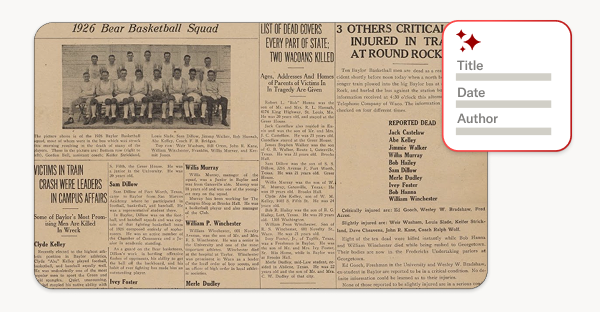
Goldey-Beacom College used JSTOR Seeklight to scale archival metadata creation with AI and human oversight—unlocking hidden collections while building student AI literacy.
-
As generative AI reshapes how people discover and use scholarly content, traditional usage metrics no longer tell the full story. This post explores what “invisible use” means for libraries, how COUNTER and the wider community are responding, and how JSTOR is adapting to ensure library value remains visible in an AI-mediated research environment.
-
An article co-authored by Beth LaPensee, Principal Product Manager at JSTOR, has been published in the December issue of Against the Grain. Written with Anne Grant of Clemson University Libraries, the piece examines how libraries and nonprofit research platforms can work together to design and implement embedded AI tools that support ethical, transparent, and inquiry-driven…
-
Access ready-made outreach materials, training guides, FAQs, and social media content to help your community understand and effectively use JSTOR’s AI research tool for discovery and research.
-
JSTOR Conversational Discovery GPT is a conversational research assistant that helps you discover trustworthy academic sources using natural language—grounded in JSTOR’s trusted scholarly content.
-
In this webinar, Emilie Hardman shares how values-aligned AI, including JSTOR Seeklight, can support reparative description at scale.
-
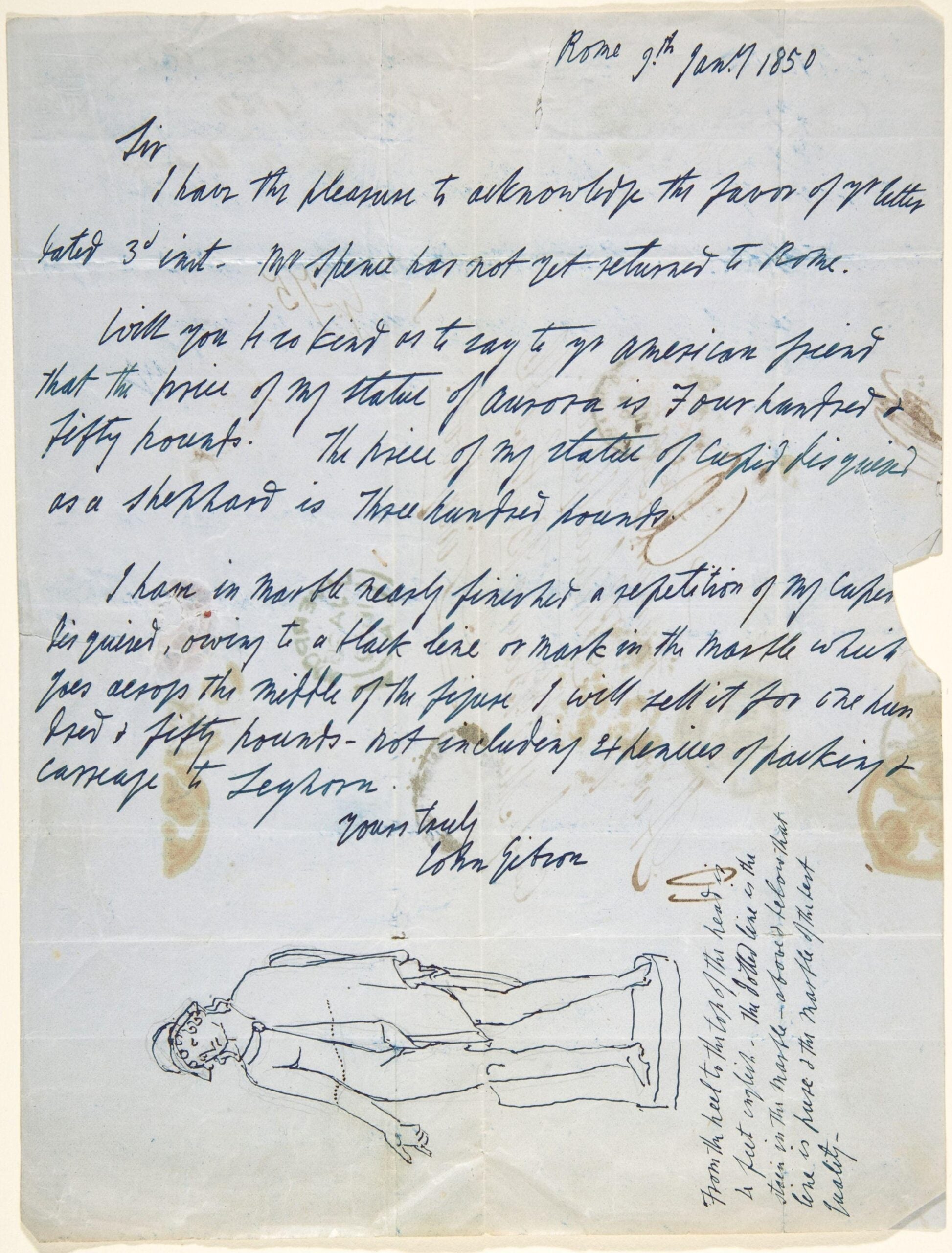
Roger Schonfeld introduces the concept of a collections processing tool—a new, community-driven system that reimagines how special collections are described and discovered. With JSTOR Seeklight, this approach uses digitization and intelligent recognition to make archives more accessible and impactful.
-
Educators Bess Wilhelms and Steve Hermann use JSTOR’s AI research tool to save time, plan lessons, and boost student engagement through accurate, trusted insights.
-
For Yuimi Hlasten—both a librarian and international student—JSTOR’s AI research tool became a bridge to understanding. By helping her organize and synthesize sources efficiently, it allowed her to balance work and study while empowering students to find their academic voice.
-
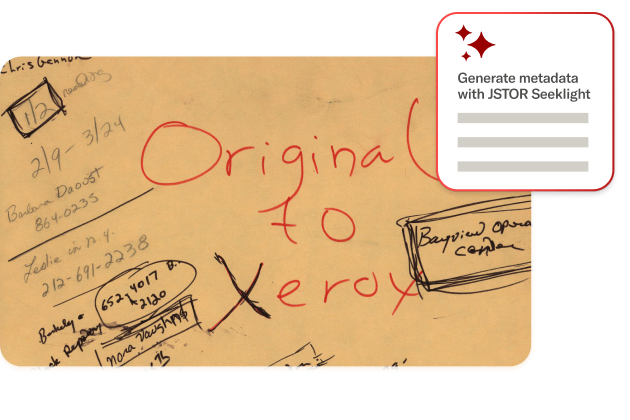
Accelerate impact with JSTOR Seeklight—purpose-built AI that helps archivists and librarians process, describe, and publish collections responsibly, keeping human expertise at the center.
-
JSTOR Seeklight now generates transcripts for typed and handwritten items, making every word searchable and accessible while keeping editors in control. Available now for Tier 3 participants.
-
Bias is inherent to description, but description can and should be revised over time. We’re evolving JSTOR Seeklight’s safeguards against bias and harmful content to reflect our values, our engineering ethos, and our commitment to transparency.
-
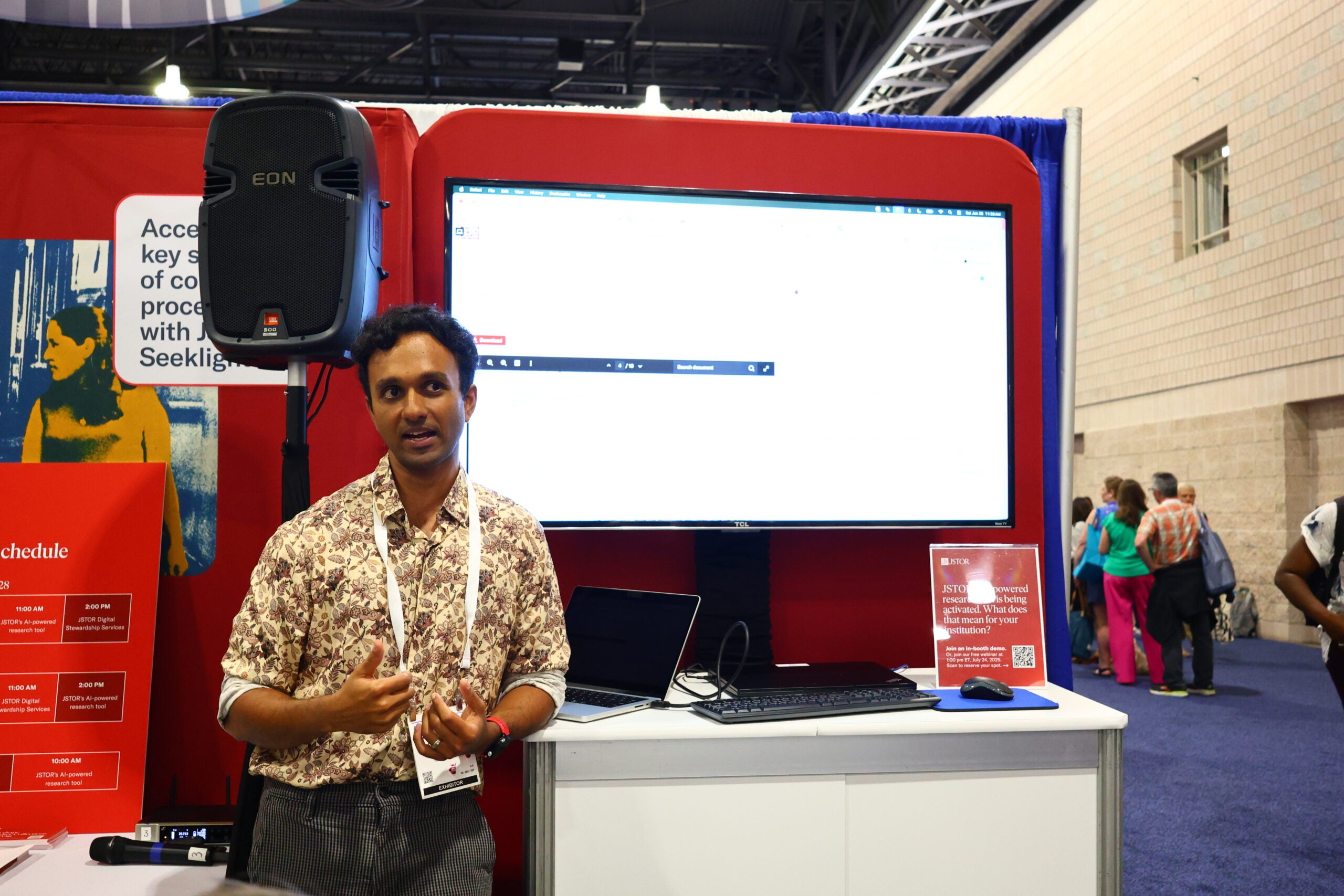
This year’s American Library Association (ALA) Conference in Philadelphia offered an opportunity to share how JSTOR is addressing two interconnected needs: helping researchers navigate trusted content more intuitively, and helping libraries manage, preserve, and activate distinctive collections at scale.
-
JSTOR’s AI research tool (formerly known as the Interactive Research Tool) has officially launched for all JSTOR-participating institutions. In this blog post, explore the tool’s development history, recent updates, and community insights JSTOR team learned from this year’s American Library Association conference.
-
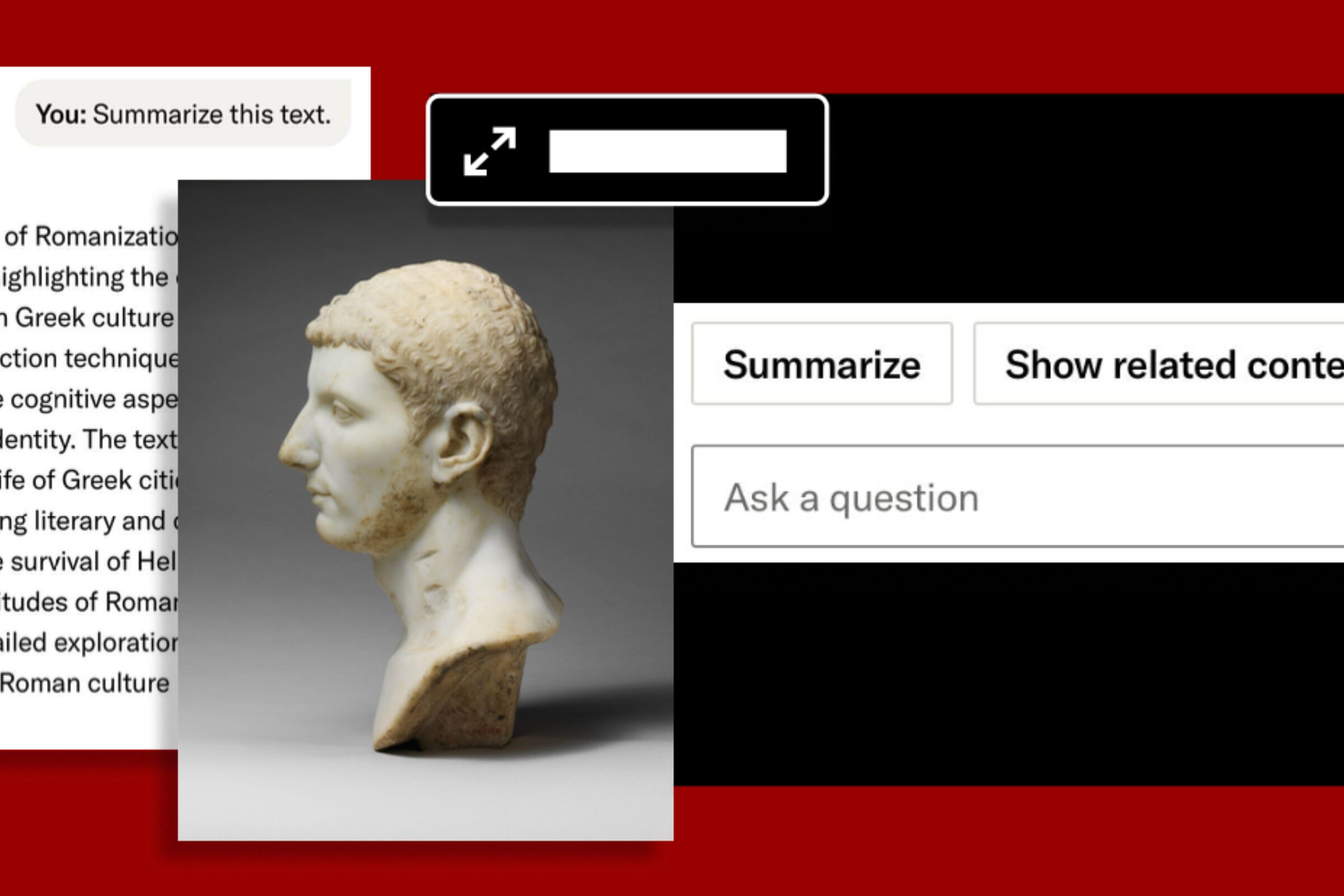
JSTOR’s AI-powered research tool enables users to quickly identify key points within scholarly texts, discover new topics and content, and query for deeper engagement.
-
Senior Product Manager Ann Connolly shares how JSTOR Digital Stewardship Services addresses key collection management issues with a unique integration approach.
-
Senior Product Manager Syed Amaanullah shares how JSTOR Seeklight blends technology and human expertise to deliver a purpose-built AI application for archives.
-
At SXSW EDU 2025, educators gathered to discuss the promises and pitfalls of AI in the classroom. This post reflects on the evolving role of humanities instructors, advocating for AI as a collaborative tool to support metacognition, process-based learning, and critical engagement.
-
At ACRL 2025, JSTOR marked its 30th anniversary while unveiling JSTOR Digital Stewardship Services—built to support libraries in managing and preserving digital collections using AI-assisted metadata creation and community-driven collaboration.
-
Discover how secondary school teacher Madeleine Champagnie integrates JSTOR’s research tool into her English classroom to make scholarly research more accessible, inclusive, and efficient.
-
Explore how Dr. Alexa Alice Joubin builds trust in AI-powered educational tools through open-access models, humanities-based insights, and participatory design—fostering ethical, critical engagement between students and AI in the classroom.
-
An archivist explores how AI can help surface hidden histories, improve metadata, and support digital stewardship while emphasizing the need for human expertise in shaping archival narratives.
-
Join JSTOR’s community of institutions advancing responsible, AI-assisted digital stewardship. Help shape how technology enhances discovery, access, and care for digital collections.
-
Discover how archivists and librarians shaped JSTOR Seeklight, an AI-powered technology that streamlines collections processing and enhances digital stewardship.
-
JSTOR’s interactive research tool allows users to actively engage with texts by asking questions directly within the tool. Based on user feedback, we created this guide to help you get the most out of this feature. We’ll explore how asking the right types of questions can help you quickly find relevant content, understand complex arguments,…
-
Explore JSTOR’s powerful platform features—AI-assisted discovery, Workspace, text analysis, image tools, multimedia, and teaching resources designed to advance learning and research.





















Sign up for updates
Never miss a thing. Get updates from JSTOR delivered straight to your inbox.
By signing up you agree to our Privacy Policy. You may unsubscribe at any time by clicking on the provided link on any marketing message.
"*" indicates required fields