The Gardiner Museum has contributed more than 500 images to Artstor on JSTOR. The Gardiner welcomes and inspires audiences of diverse backgrounds, abilities, and experiences through the rich history and storytelling power of clay.
Scanning slides.
That’s how I started my career at the Gardiner Museum more than two decades ago.
We were about to undergo a substantial renovation that would close the museum to the public for two years. With the entire collection going into storage, one of the goals we had was to make our collection accessible to the public by creating an online database. At the time, digital photography for museums was still in its infancy; only a small portion of our collection had been digitally photographed, so there I sat, for 16 weeks, scanning slides of the collection taken in the late 80s/early 90s.
I share this because the early 2000s was a turning point for museums as they started to look beyond their physical boundaries. Online collections were just the beginning; social media, digital exhibitions and interactives exploded onto the scene, and digital image libraries became the norm. Never before had art been more accessible.
Happily we have since had new photography done for the majority of our collection and we are thrilled to be working with Artstor on JSTOR to share some of our artworks with its subscribers. The Artstor on JSTOR platform enables us to responsibly share images of our artworks to further the education, research and scholarship of the arts. Sharing images of our collections alongside other institutions will help showcase how important ceramic art has been over the course of human history, making connections perhaps where none have been made before. Ceramics tell the tale of technological innovation, transcultural research, exchange and trade, socio-economic issues, cultural practices, stories and mythologies, and many other issues being researched today.
The Gardiner Museum features collections with a specific focus on ceramic art. We do not have the capacity to collect ceramics from every geographic area and every time period. Instead, we have built upon the foundational collections of 18th-century European porcelain, Italian Renaissance Maiolica, English Delftware, and artworks from Ancestral Abiayala (previously known as the Ancient Americas collection) donated by George and Helen Gardiner in the early 1980s. We’ve expanded our mandate from time to time as new collections were offered to us, and it became necessary to help tell the stories we wanted to tell or to help fill critical gaps. Our Modern and Contemporary Collection is an example of such a collection, with artworks made in the past 100 years from ceramists all over the world.
The first two collections we’re sharing on Artstor on JSTOR explore ceramics from China and Japan.
Chinese Ceramics Collection
Our collection of Chinese ceramics focuses on blue-and-white porcelain made during the Ming (1368-1644) and Qing dynasties (1644-1911), and includes pieces made for both the Chinese and export markets.
The majority of this collection was donated by Robert Murray Bell and Ann Walker Bell in the late 90s/early 2000s. Subsequent donations of Chinese porcelain from the Pamela G. Osler Delworth collection, the Anne Gross Collection and the Estate of Helen Gardiner expanded our holdings to introduce other styles of Chinese porcelain from earlier and later time periods.
The production of porcelain in China began as early as the 6th century. Composed of kaolin and china stone, when fired over 1250˚C, porcelain is strong, white, translucent and impermeable. Jingdezhen emerged as the porcelain capital in China in the 13th century. Not too long after, in 1320, Jingdezhen potters introduced blue-and-white decorated porcelain, a style that expanded to all corners of the earth.
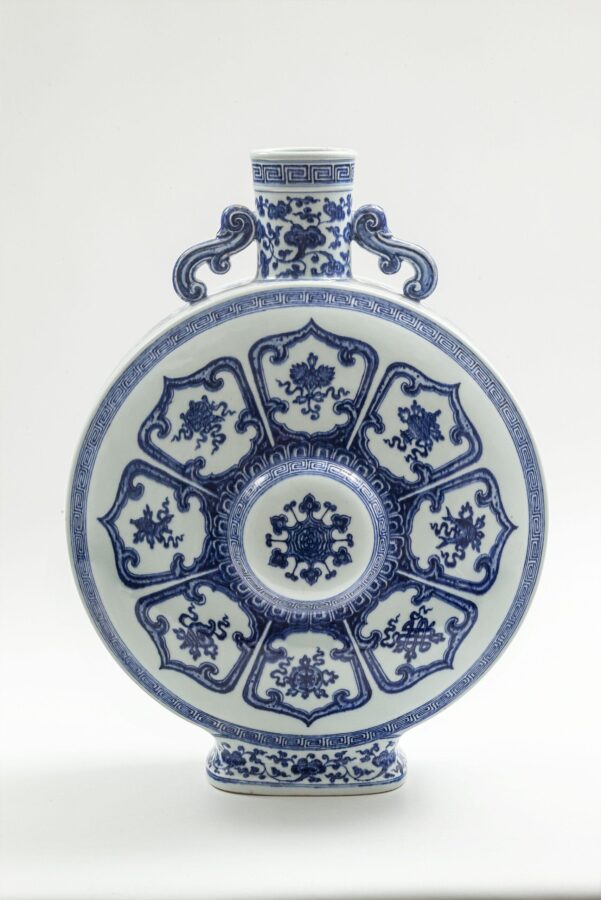
This Bianhu’ (flask) with bajixiang or the eight Buddhist emblem (Qianlong period, 1736-1795) is one of the highlights from the blue-and-white collection. Used for display, the composition of the Buddhist emblems, which served as religious teaching tools, was inspired by Islamic pottery and inlaid metalware.
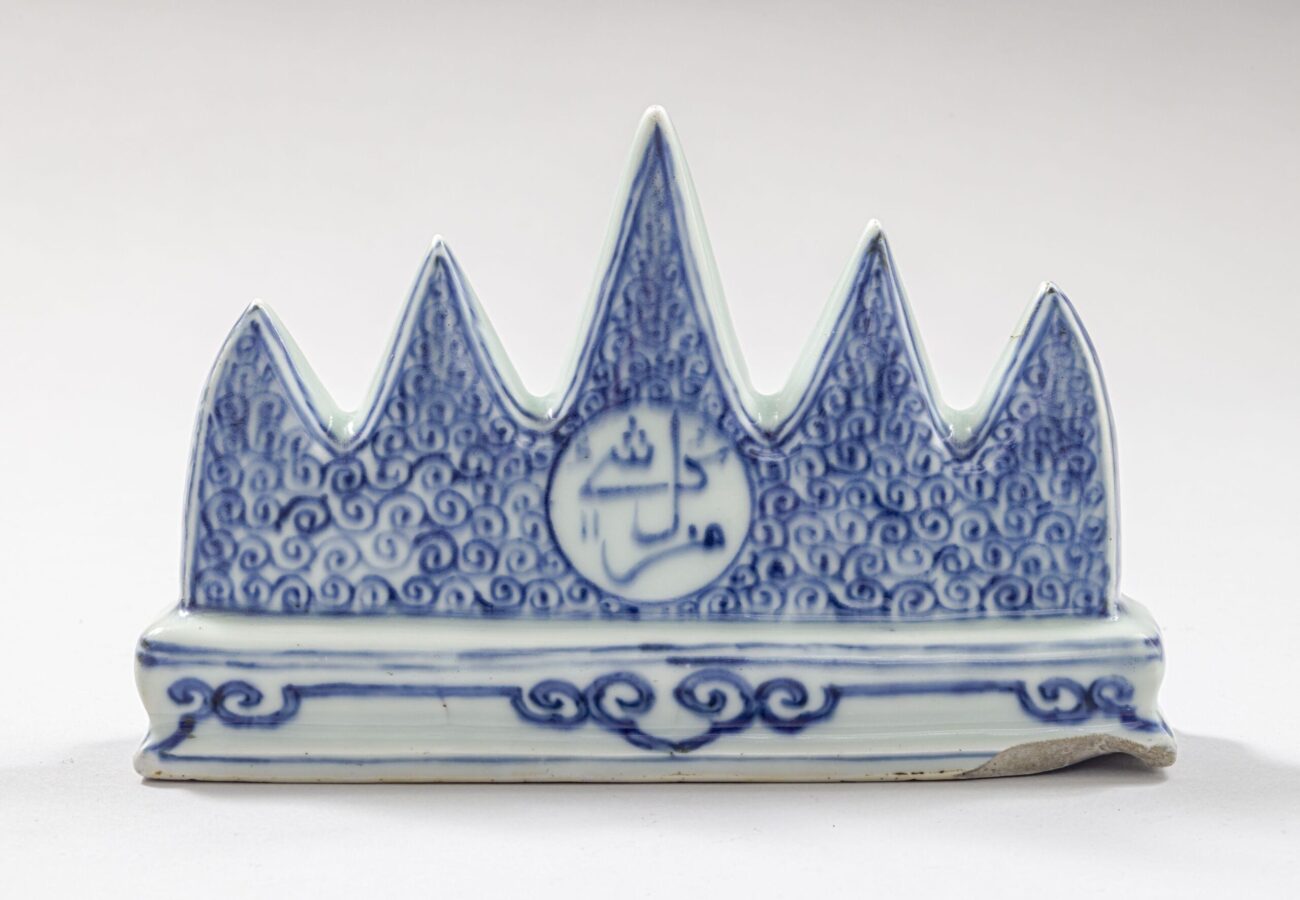
The Mountain form brush-rest (Zhende period, ca.1506-1621) is an example of porcelain made with a purpose and would have been used by Chinese scholars. The Arabic inscription on either side reads “the pen is superior to everything”.
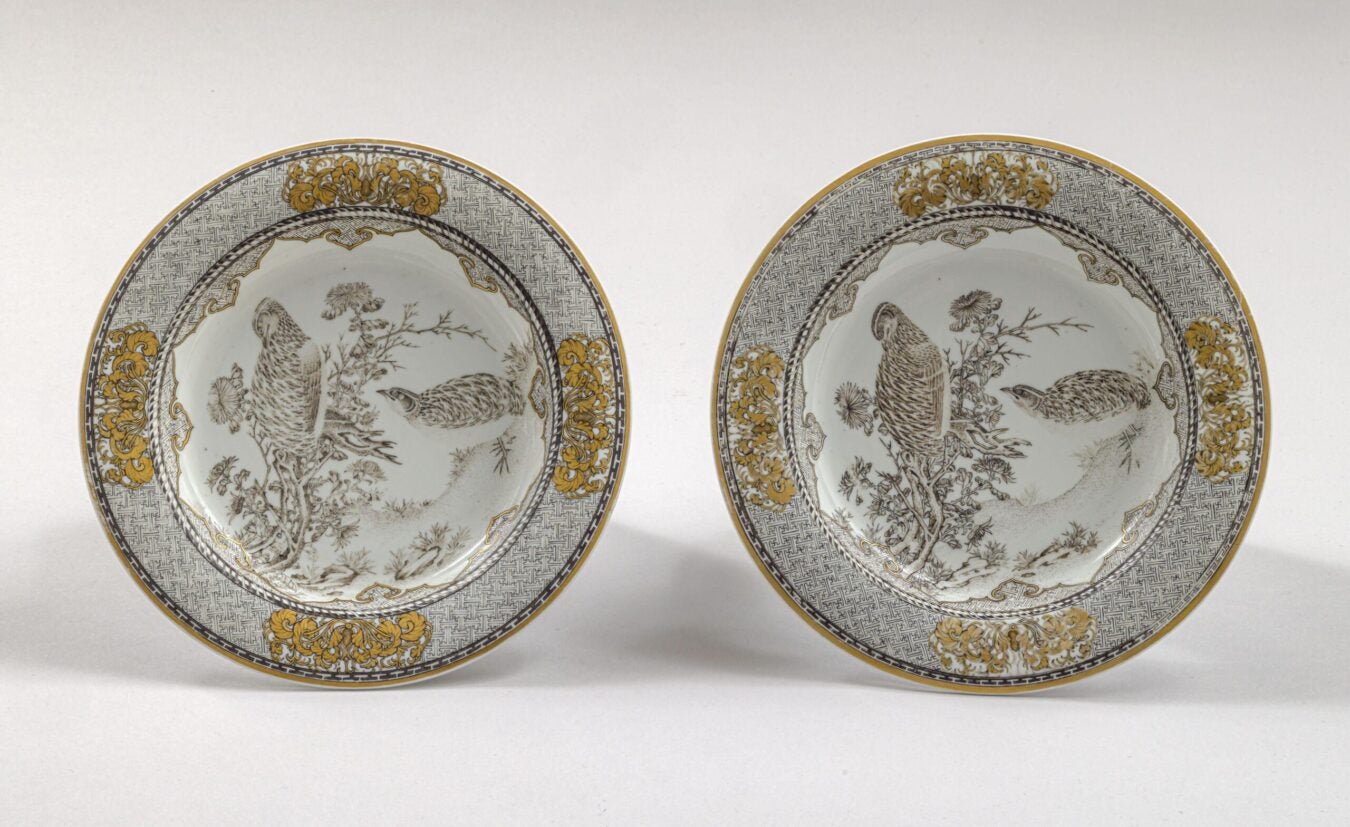
Porcelain was heavily exported from China, with Europe being a leading consumer. This Pair of grisaille and gilt plates with quail and chrysanthemums (“An ju le ye”) (ca. 1730-50) were designed for export to the European market during the 1700s, and have borders decorated in a style desired by European consumers, but the artists featured Chinese motifs of quail and chrysanthemums, homophones for peace and living.
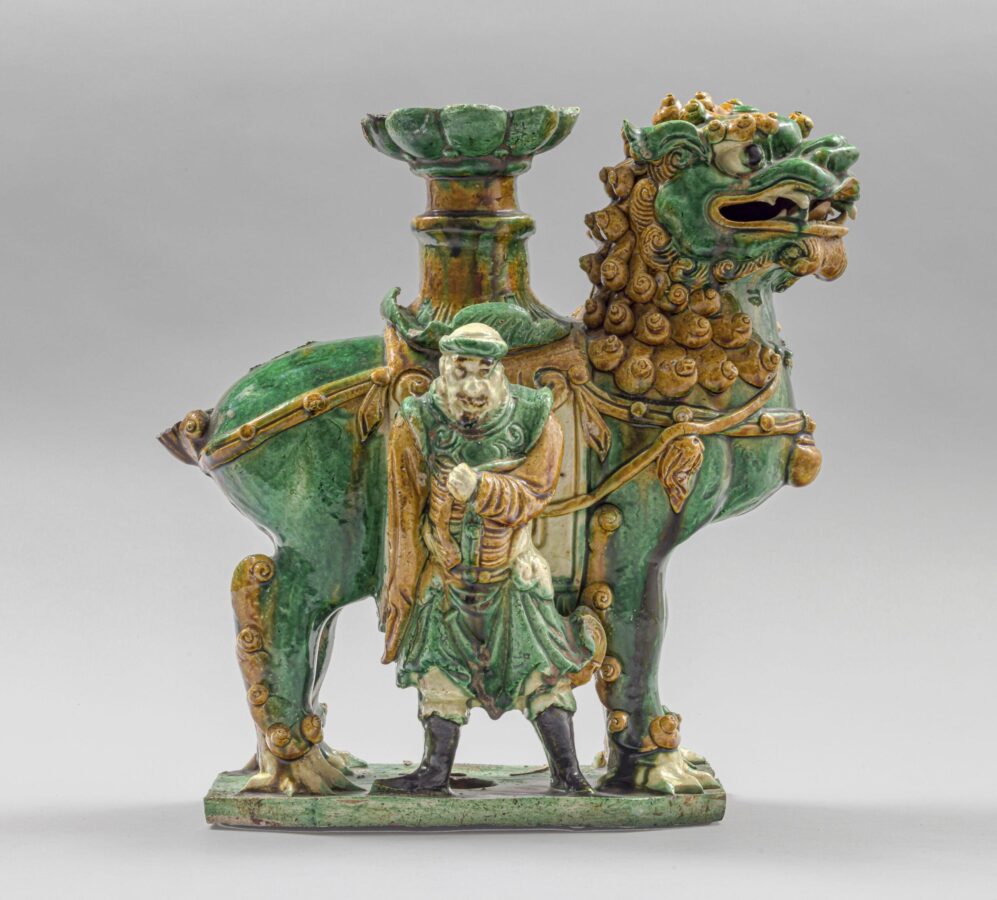
One of the earlier non-porcelain pieces from our Chinese ceramics collection, this Sancai-glazed Lion-form Candlestick (Ming dynasty, 15th – 16th century), has a distinctive colour palette known as sancai (three colours).
Learn more about the Chinese Ceramics collection at the Gardiner Museum.
The Macdonald Collection of Japanese Porcelain and its influence
With a long relationship already established with the Gardiner since its opening in 1984, Bill and Molly Anne Macdonald cemented their legacy as collectors in 2004 with the promised gift of over 300 pieces of Japanese, Chinese and European porcelain. Their passion for porcelain emerged when Molly Anne learned about and became fascinated by the transmigration of style and design throughout the history of ceramic art. With Bill’s work frequently taking them to Japan, they discovered Kakiemon porcelain and how it captured the interest of newly emerging porcelain manufactories in 18th-century Europe. Along with an interest in the production of porcelain in 17th-century Arita, their collection grew into one of the best of its kind in the world.
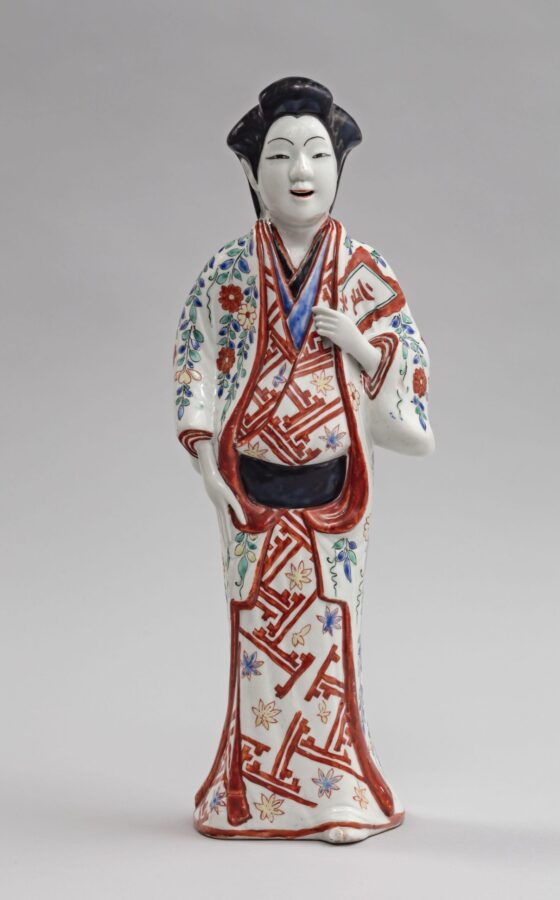
A personal favourite is the Bijin (Beauty) figure made in late 17th-century Japan, who has stood in the gallery for over 20 years. Made using two press moulds for the front and back, her kosode is colourfully decorated with traditional kakiemon colours of persimmon, blue, and teal.
A trio of square plates with the hen and rooster motif exemplifies the transmigration of style that Molly Anne Macdonald so quickly became enamored with. The design itself originated in China in the 15th century, however it appears here that China (ca.1710-20) and then England (ca.1755)–in the centre and on the right–copied the design from the Japanese dish (ca.1670-90) on the left.
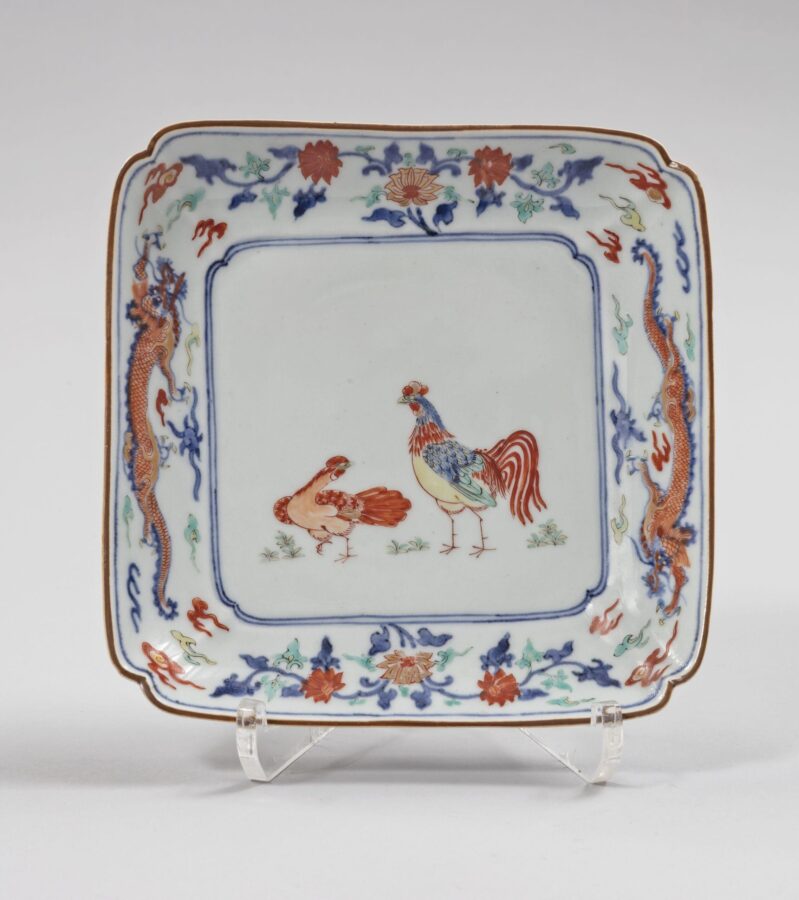
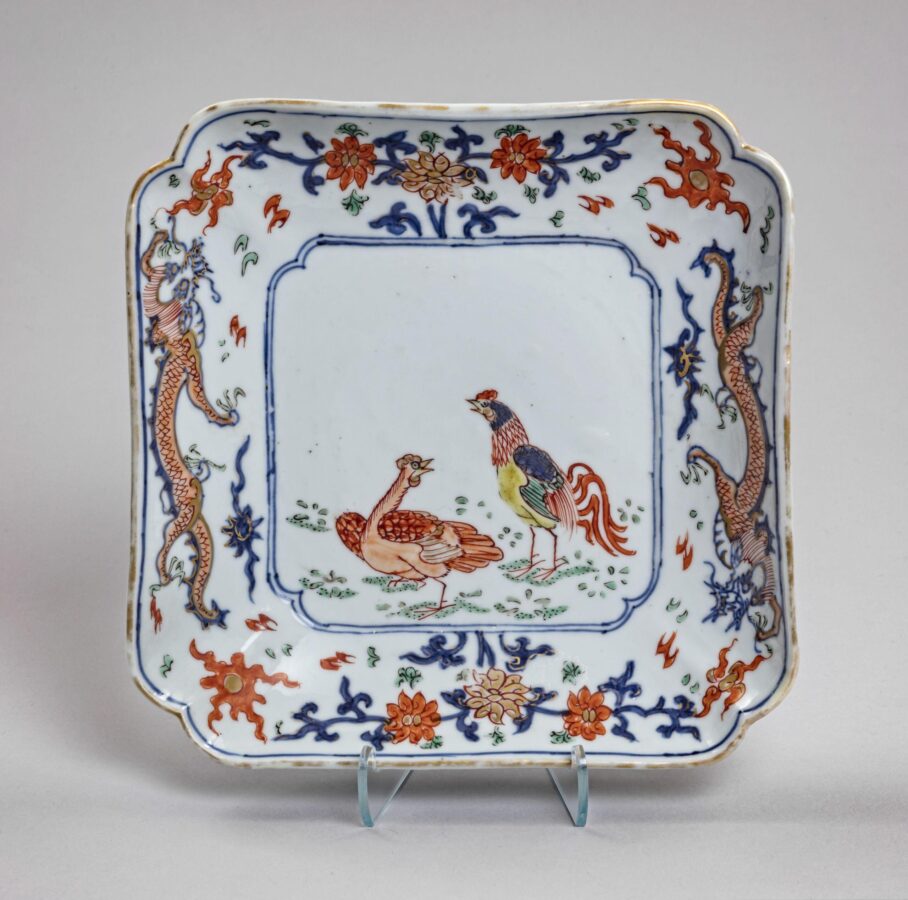
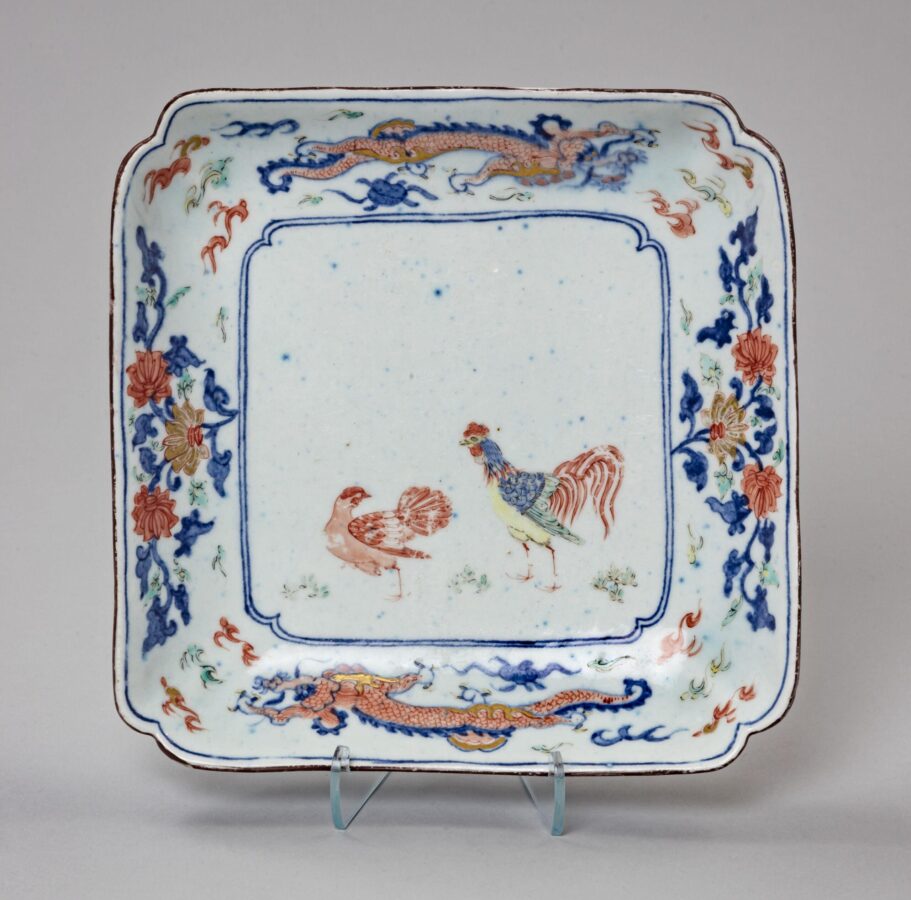
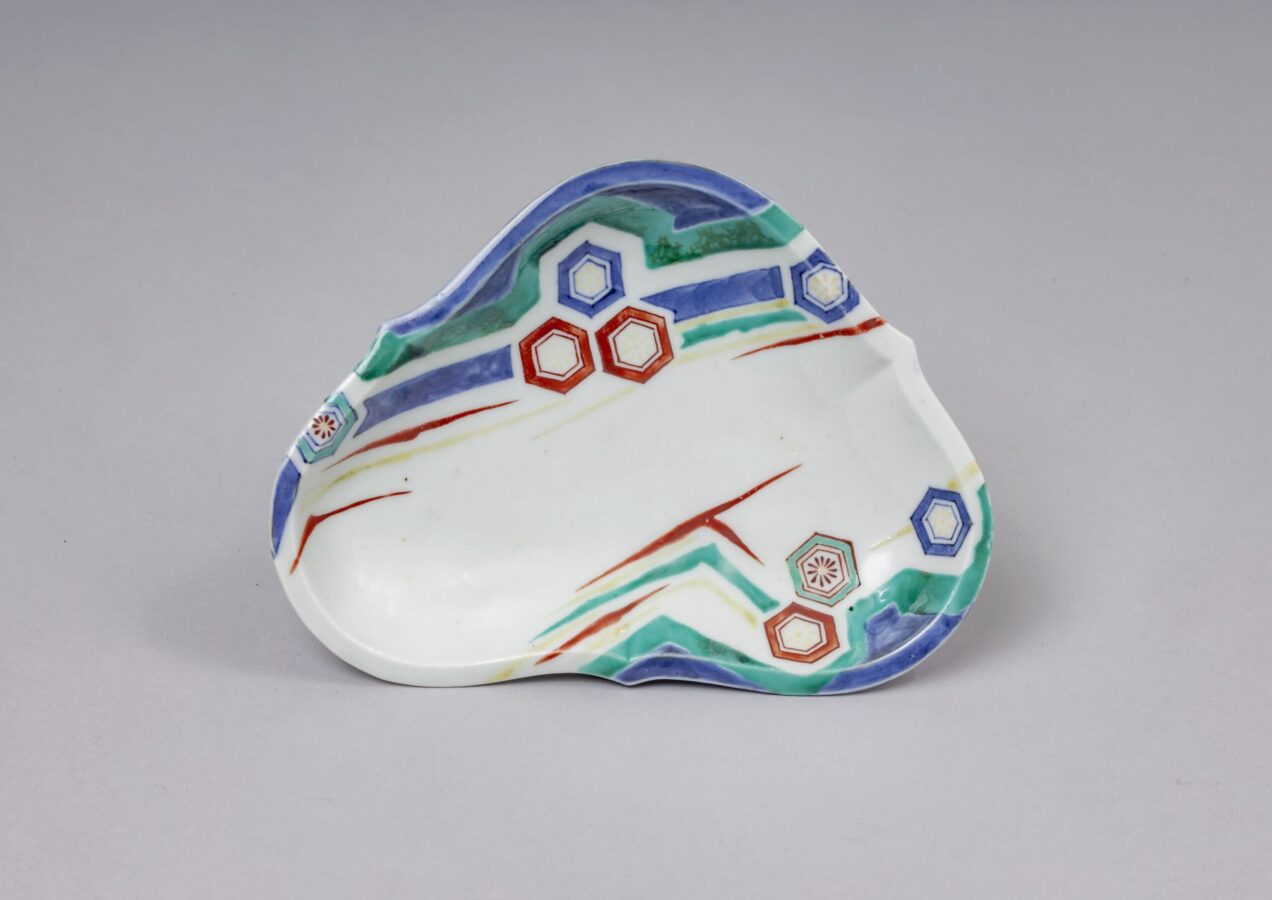
This Nabeshima Triangular dish, with vibrant blue, red, and green decoration, dates to 1650-70 and is an example of earlier 17th century-Japanese porcelain within the Macdonald Collection. Nabeshima was a luxurious and exclusive type of porcelain, made to be offered as part of a ritual gift from the Nabeshima daimyo to the shogun in Japan.
Learn more about the Macdonald Collection of Japanese Porcelain and Its Influence.
We look forward to sharing more of our collections in the future, and are grateful to the Artstor team for creating such an important platform.