
Build awareness and engagement with JSTOR’s AI research tool with these ready-made resources. From training materials and social media posts to customizable web copy, our toolkit has everything you need to help your community get the most out of this innovative tool.
Training and support resources
Find guides, FAQs, and step-by-step instructions for getting the most out of JSTOR’s AI research tool.
- About JSTOR’s AI research tool:
- Support resources:
- Video: JSTOR’s AI Research Tool: demonstration, design, and use
Let’s collaborate
Have a great idea or success story you want to share? We want to hear about it! Complete this form to get the conversation started.
Learn with us: Insights and updates
Stay informed with the latest findings from real-world applications, usage trends, and user feedback on JSTOR’s AI research tool.

Usage data in an AI world: key shifts, challenges, and JSTOR’s response
As generative AI reshapes how people discover and use scholarly content, traditional usage metrics no longer tell the full story. This post explores what “invisible use” means for libraries, how COUNTER and the wider community are responding, and how JSTOR is adapting to ensure library value remains visible in an AI-mediated research environment.

Shaping responsible AI in research: new Against the Grain article co-authored by JSTOR’s Beth LaPensee
An article co-authored by Beth LaPensee, Principal Product Manager at JSTOR, has been published in the December issue of Against the Grain. Written with Anne Grant of Clemson University Libraries, the piece examines how libraries and nonprofit research platforms can work together to design and implement embedded AI tools that support ethical, transparent, and inquiry-driven research and instruction.
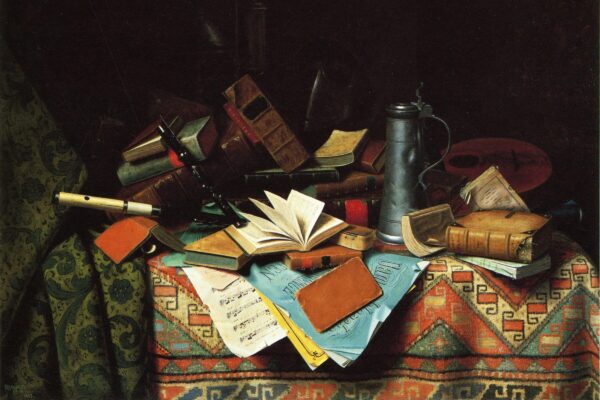
Your time constraints are our concern: How JSTOR’s AI research tool maximizes efficiency
Educators Bess Wilhelms and Steve Hermann use JSTOR’s AI research tool to save time, plan lessons, and boost student engagement through accurate, trusted insights.
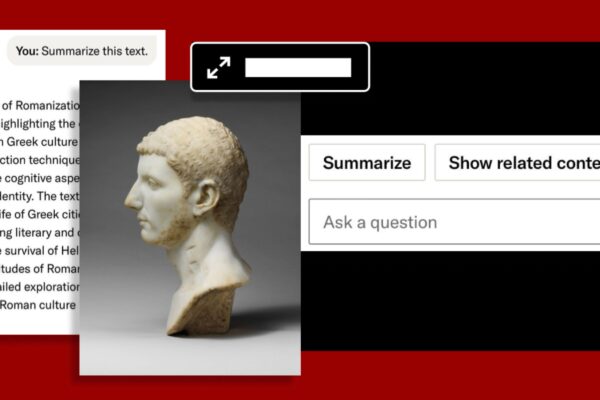
Bridging access with JSTOR’s AI research tool
For Yuimi Hlasten—both a librarian and international student—JSTOR’s AI research tool became a bridge to understanding. By helping her organize and synthesize sources efficiently, it allowed her to balance work and study while empowering students to find their academic voice.
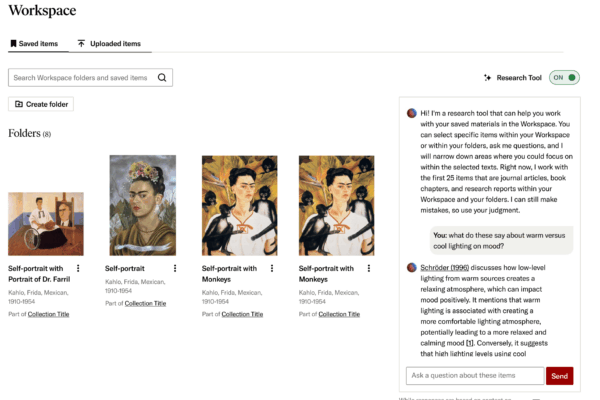
Advancing discovery, access, and stewardship together: An ALA 2025 reflection
This year’s American Library Association (ALA) Conference in Philadelphia offered an opportunity to share how JSTOR is addressing two interconnected needs: helping researchers navigate trusted content more intuitively, and helping libraries manage, preserve, and activate distinctive collections at scale.
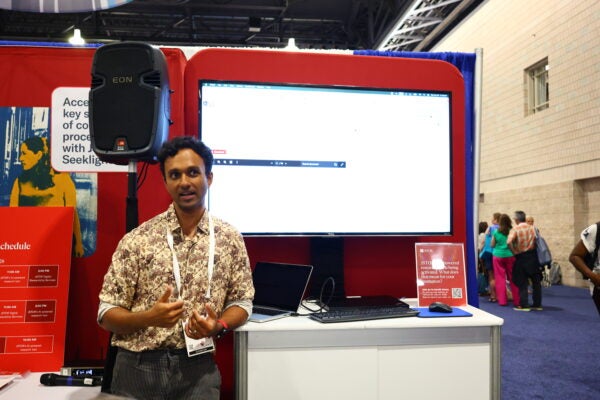
A new chapter for JSTOR’s AI research tool: Reflections on community engagement, insights from ALA, and what’s next
JSTOR’s AI research tool (formerly known as the Interactive Research Tool) has officially launched for all JSTOR-participating institutions. In this blog post, explore the tool’s development history, recent updates, and community insights JSTOR team learned from this year’s American Library Association conference.

The next 30 years: Building JSTOR’s future
How do we hope to meet the challenges of the future? This blog post details some of the inroads we’re making in charting the path ahead, including through digital collection stewardship, faculty engagement, open scholarship initiatives, and editorial excellence.
Enhancing research accessibility for students
Discover how secondary school teacher Madeleine Champagnie integrates JSTOR’s research tool into her English classroom to make scholarly research more accessible, inclusive, and efficient.
Fostering trust in AI-powered tools for education: An interview with Dr. Alexa Alice Joubin
Explore how Dr. Alexa Alice Joubin builds trust in AI-powered educational tools through open-access models, humanities-based insights, and participatory design—fostering ethical, critical engagement between students and AI in the classroom.
View image credits from this page

Odra Noel. Apoptosis. n.d. Wellcome Collection, Artstor.