
JSTOR Digital Stewardship Services
-
Preserving digital collections is essential to safeguarding cultural memory. Discover how JSTOR’s Digital Stewardship Services help libraries and archives maintain accessible, durable, and meaningful collections for generations to come.
-
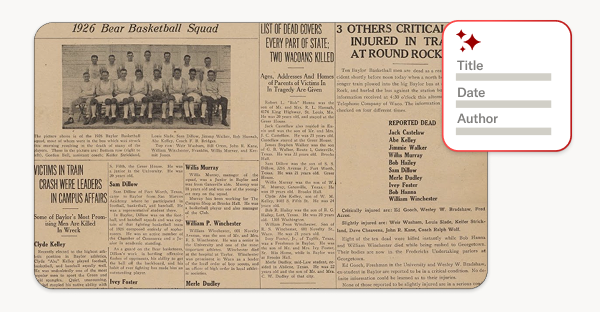
At ACRL 2025, JSTOR marked its 30th anniversary while unveiling JSTOR Digital Stewardship Services—built to support libraries in managing and preserving digital collections using AI-assisted metadata creation and community-driven collaboration.
-
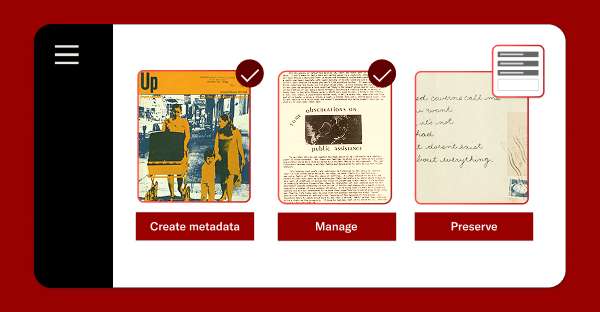
JSTOR Digital Stewardship Services is designed to help libraries and archives scale preservation through a seamless, mission-aligned workflow that combines digital asset management, AI-assisted metadata creation, and long-term preservation support.
-
JSTOR announced today a new digital collection stewardship solution designed to help libraries and archives describe, preserve, manage, and share their unique collections at scale–—reducing backlogs and increasing discovery. JSTOR Digital Stewardship Services integrates digital asset management, long-term preservation (powered by Portico), increased discovery through JSTOR, and a first-of-its-kind AI-assisted metadata generation tool that accelerates…
-
An archivist explores how AI can help surface hidden histories, improve metadata, and support digital stewardship while emphasizing the need for human expertise in shaping archival narratives.
-
Join JSTOR’s community of institutions advancing responsible, AI-assisted digital stewardship. Help shape how technology enhances discovery, access, and care for digital collections.
-
Discover how archivists and librarians shaped JSTOR Seeklight, an AI-powered technology that streamlines collections processing and enhances digital stewardship.
-
At the Charleston Conference 2024, JSTOR presented its vision for managing and preserving digital collections into the future. “Not Just Another AI Session” highlighted how cutting-edge tools—including JSTOR’s digital collection processing prototype and interactive research tool (beta)—can transform access to archival materials while staying true to JSTOR’s nonprofit mission.
-
ITHAKA innovates with Project Odyssey using generative AI to help libraries process digital collections efficiently by automating metadata creation, addressing bottlenecks, and reducing backlog.
-
At JSTOR, our mission is to improve access to knowledge and education for people around the world. We’re excited to share several new initiatives leveraging cutting-edge technology to make scholarly materials more accessible, interactive, and engaging for our users. Here’s a detailed look at the latest advancements we recently shared at ALA 2024 in San…
-
Discover how Meghan Kelly and the Wyoming Community College Commission secured permanent access to JSTOR’s extensive collection of archival journals and primary sources for seven Wyoming community colleges without recurring fees. A unique one-time payment option made this initiative possible.
-
Portico preserves underrepresented digital content to safeguard diverse narratives and cultural heritage for future generations. Join us in maintaining a richer historical record.
-
For Middlebury and other small liberal arts schools, taking part in JSTOR’s shared collections program is almost a no-brainer, Irwin says, since JSTOR is a database with which many students are already very familiar.
-
In 2020, Johns Hopkins University faced sudden closure due to COVID-19. Discover how the Special Collections team adapted by partnering with JSTOR Forum, revolutionizing access to materials for faculty and students alike.
-
Explore how Skidmore College digitizes its special collections in this insightful blog post detailing David Seiler’s efforts in leading the transition to the digital age.
-
Discover highlights from the Coalition for Networked Information’s biannual membership meeting, where discussions revolved around networked information technologies in higher education and research. Explore the outcomes of JSTOR’s Open Community Collections program, showcasing the benefits for participant libraries in terms of reach and visibility.
-
Partnering with libraries, publishers, and museums, ITHAKA reduces costs and preserves scholarship for the future with digital special collections.
-
Libraries asked for long-term preservation. ITHAKA’s Preserved Collections with Portico delivers a managed, workflow-friendly way to safeguard diverse collections, extending Open Community Collections and JSTOR into durable digital stewardship.
-
JSTOR Open Community Collections are now available through OCLC WorldCat Discovery and ExLibris Primo/Summon, in addition to EBSCO Discovery Service (EDS). OCLC, ExLibris, and EDS participants will gain access to a breadth of freely accessible primary source content including artwork, photographs, publications, recordings, and other artifacts from hundreds of library collections around the world. Community…
-
JSTOR will be taking part in the VALA 2022 library conference in Australia. John Lenahan, ITHAKA’s AVP of Published Content, will be presenting the paper “Publishing and global usage of open content on JSTOR and the understanding of data.” We encourage all VALA participants to attend this online session on June 14 at 12 noon…
-
This month, the Open Community Collections initiative marks a new milestone with more than 700 contributed collections. With this achievement, we have announced the extension of the Charter period for all Community Collections participating institutions until December 31, 2022. Spark unexpected discoveries 705 collections from 180 contributors (and growing). The top ten most used collections…
-
This month we have reached (and have grown past) the 500 Community Collection milestone, with 591 collections from 162 contributors. Through this initiative, JSTOR has partnered with universities, museums, and other institutions around the world to expand the reach of their special collections. These rare primary source materials cover nearly every discipline, content type, and…
-
In August, JSTOR will be taking part in the Society of American Archivists (SAA) virtual conference to share recent initiatives and developments, including updates on the Open Community Collections. We recognize and commend the work of archivists as our partners in uncovering and preserving essential primary source materials for generations of researchers to come, most…
-
After more than a year collaborating with institutions around the globe, JSTOR’s Open Community Collections initiative now hosts over 450 collections. These contributions are digitized from the special holdings of more than 135 libraries, museums, universities, and other archives, bringing rare primary source items into the research workflow, alongside related essential scholarship. These freely available…
-
As vaccines continue to dominate our attention–from struggles with misinformation to equity problems–the subject of public health cuts across disciplines, including science, economics, law, education, sociology, psychology, and public policy. JSTOR offers a wide variety of types of content on one platform to make your research on the topic richer and deeper. This year, Artstor’s…
-
Since 1983, April has been observed as School Library Month, designated by American Association of School Librarians. As the month comes to a close, JSTOR would like to recognize our partners at libraries, in the United States and abroad, for the work they do to support patrons in many integral roles. We celebrate your dedication…
-
The Canadian Research Knowledge Network (CRKN), a national consortium serving the 75 universities in Canada, has begun freely sharing more than 10,000 items of a growing collection of digitized documentary heritage in JSTOR’s Open Community Collections. When completed, the collection on JSTOR will feature historical pre-1900 colonial, provincial, and federal government documents, including pre-Confederation official…
-
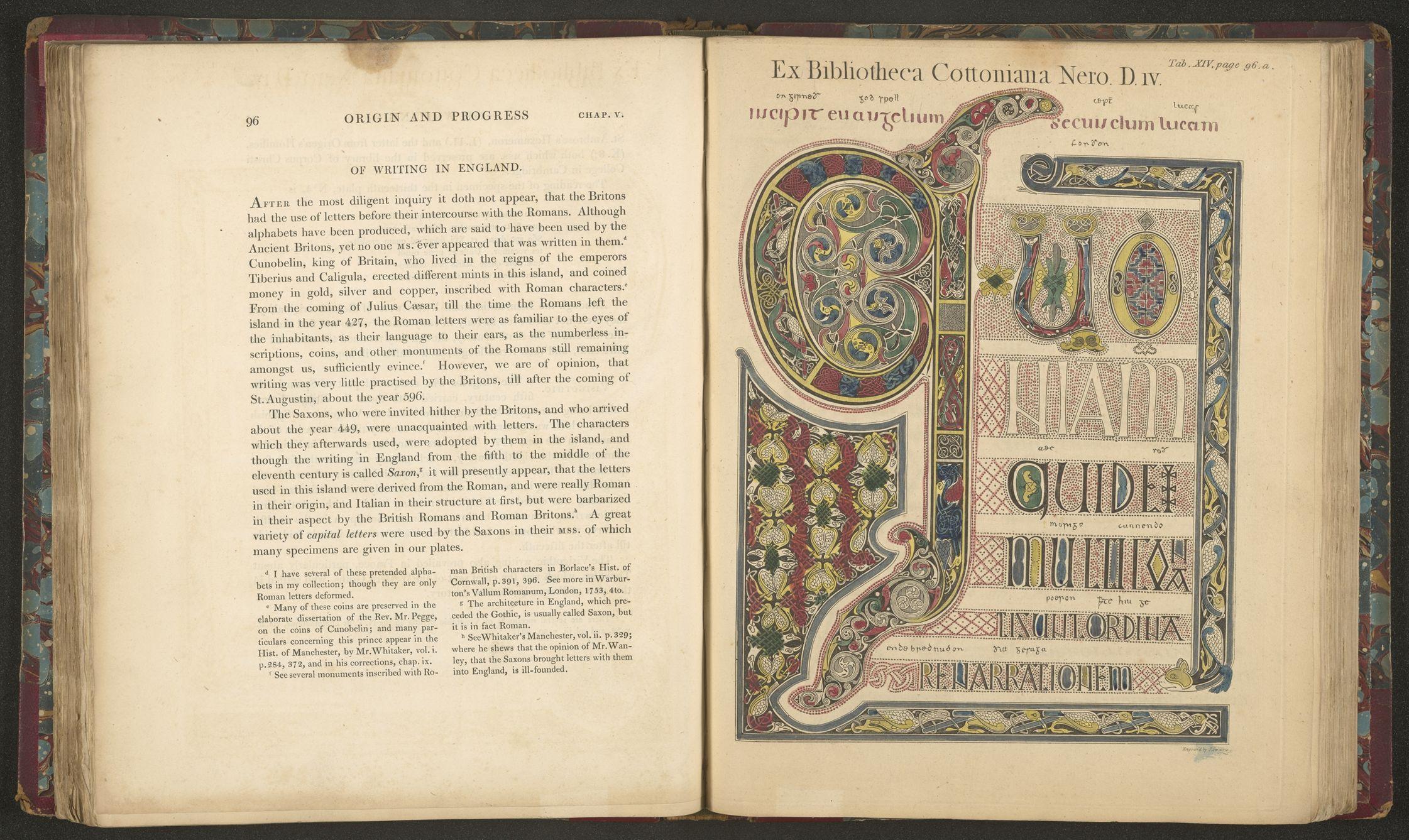
JSTOR’s Open Community Collection initiative has surpassed the 350 collection mark and is steadily growing, with more than 100 current contributing partners at libraries, museums, universities, and other institutions around the world. We’ve gathered highlights of some of the trends we’re seeing emerge from the contributions: Illuminated manuscripts Functioning as devotional objects, religious texts, and…
-
This month, JSTOR’s Open Community Collections initiative has surpassed the 300 collections mark, gathering contributions from 89 institutions worldwide. Recently added collections from University of Lancashire, University of Cambridge, University of California, Riverside, and University of Pennsylvania continue to diversify content available with cartoons by famed New Yorker artist William Steig, maps and…
-
One year after launching with the South Asia Open Archives (SAOA), JSTOR’S Open Community Collections celebrates a new milestone: 200 collections. Researchers across the world have taken to the collections; as of the first week of October, users at 4,570 institutions from 192 countries had viewed or downloaded 181,000 items. The collections feature freely accessible…








Sign up for updates
Never miss a thing. Get updates from JSTOR delivered straight to your inbox.
By signing up you agree to our Privacy Policy. You may unsubscribe at any time by clicking on the provided link on any marketing message.
"*" indicates required fields