
JSTOR for college readiness
Prepare students for success in higher education with an affordable solution widely adopted by AP, IB, and other advanced secondary school programs. Students and teachers gain access to trusted academic journals, books, primary sources, and images that support rigorous, college-level learning and research.

2,700+
Leading academic journals
2M+
Primary sources across four collections
4,600
Participating secondary schools worldwide
Students build essential college-level research and critical thinking skills
Using JSTOR in high school helps students build the research and analytical skills needed for college-level work:

- Access trusted scholarly resources to conduct in-depth research, a key part of AP and IB curricula
- Develop independent research and writing skills while learning to locate, evaluate, and cite scholarly sources
- Strengthen critical thinking and analysis by assessing arguments, interpreting data, and synthesizing sources
- Engage with professional scholarship across diverse subjects to explore future areas of study
- Gain a global perspective through access to resources from institutions worldwide
Teachers enrich learning with trusted academic resources and tools
JSTOR supports teachers with trusted academic resources that enrich curricula and make research and teaching more engaging. Educators can:
- Use our free self-directed and ad-free Research Basics course to help students strengthen essential research skills
- Stay organized with Workspace, a tool for saving articles, book chapters, and other scholarly materials with notes and citations
- Incorporate JSTOR Daily articles that connect news and current events to scholarly research—perfect for classroom discussion prompts
- Draw on the Understanding Series for accessible analyses of widely studied texts, from Shakespeare to Martin Luther King Jr. and Louisa May Alcott
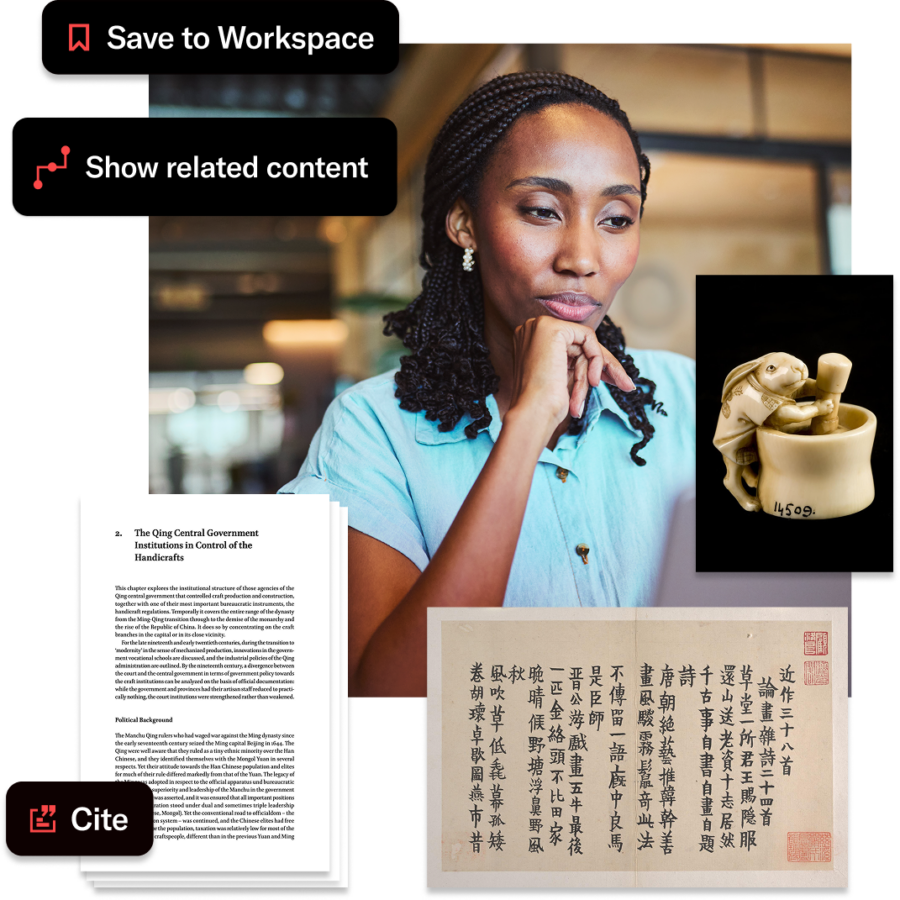
Innovative, cost-effective solutions for student success
Secondary schools can extend their resources by including multiple types of high-quality digital content on JSTOR’s feature-rich, easy-to-use platform. These content types—including journals and primary sources, books, and images—enable students to expand their avenues of research and streamline workflows for academic success.
01
Journals and primary sources for college-level research
Prepare students for college research with access to the vast majority of JSTOR’s archival journals and primary sources—all at a fraction of the cost. New content is added each year as the moving wall advances, ensuring continuous growth.
- 2,700+ leading journals across literature, history, biology, mathematics, and more
- Emerging fields such as sustainability, public health, and international security
- Millions of primary sources—pamphlets, manuscripts, oral histories, images, and more—to support research and teaching
02
Affordable academic ebook access
Search and discover ebooks, journal articles, and primary sources in one place with Books at JSTOR. JSTOR’s ebook package offers unlimited access to 93,000+ titles from 115+ publishers—valued at over $18 million—for a modest annual fee.
- Fully integrated search across books, articles, and primary sources
- Unlimited simultaneous use for students and teachers
- Annual fee: $995 (U.S.) with 75% reserved to automatically purchase your most-used titles
- Perpetual access on JSTOR to your purchased titles each year
03
Trustworthy images and multimedia to boost visual learning
Strengthen visual literacy with Artstor on JSTOR, featuring over 2 million high-quality images from museums, libraries, and archives—integrated alongside JSTOR’s trusted texts.
- Interdisciplinary depth across art, history, anthropology, and more
- Curated and credible images with complete metadata
- Interactive tools for zooming, comparing, and creating image presentations
- Ideal for arts, humanities, and social sciences classes—or for building visual analysis skills essential to college success
Empower your students with JSTOR
Join more than 4,600 secondary schools worldwide using JSTOR to prepare students for higher education. With affordable, comprehensive access to scholarly journals, books, primary sources, and images, JSTOR gives schools the tools to inspire inquiry, strengthen research skills, and foster a lifelong love of learning.
The latest from JSTOR
Stay up-to-date on all things JSTOR.
From model to practice: Evaluating Publisher Collections in academic libraries
How are academic libraries assessing new approaches to ebook acquisition, and what early signals help determine their value?

JSTOR ranks in top 1% of most accessible home pages worldwide
JSTOR ranks in the top 1% of most accessible home pages worldwide in the 2026 WebAIM Million report, achieving zero automated accessibility errors.
From jailhouse lawyer to fellow: How legal literacy at work is changing what I thought was possible
In “From jailhouse lawyer to fellow,” Joseph Sanchez reflects on how learning the law to navigate his own case became a way to support others and ultimately led to his work with the Legal Literacy at Work fellowship.

Education is My Contraband
In recognition of Fair Opportunity Month, “Education is My Contraband” traces Taveuan Williams’s journey from survival to self-discovery through reading and learning. Inside a system designed to reduce him, education becomes both resistance and refuge, offering a way to rebuild identity, confront the past, and imagine a future beyond confinement.
Restorative Justice: The Casuistic Approach
In recognition of Fair Opportunity Month, “Restorative Justice: The Casuistic Approach” brings together lived experience, philosophy, and theology to reexamine how we define justice. Drawing from their own lives inside the Colorado Department of Corrections, Robert Ray and Clarke T. Clayton explore restorative justice as a human-centered practice.
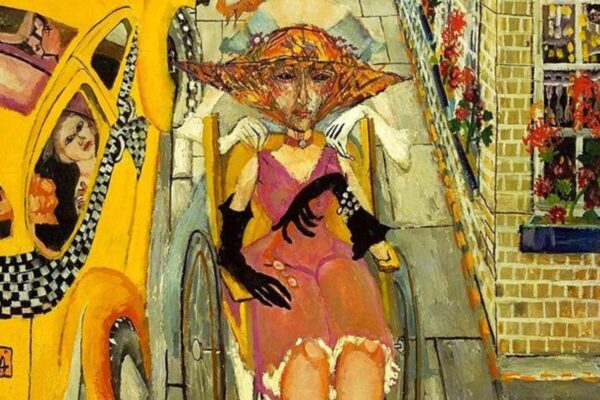
Clamoring to be Heard
In recognition of Fair Opportunity Month, “Clamoring to be Heard” shares Lisa Lesyshen’s experience navigating incarceration as a wheelchair user—and the assumptions that shaped it. After being denied meaningful work, she creates her own path by launching Inmate.com, a prison-run TV program that gives voice to incarcerated people and challenges misconceptions about disability, dignity, and life inside.
Middle Tennessee State University will move to JSTOR Digital Stewardship Services for digital asset management, preservation, and access
Middle Tennessee State University joins JSTOR Digital Stewardship Services, migrating 13,000+ items from CONTENTdm to a unified platform for preservation, management, and expanded discovery on JSTOR.
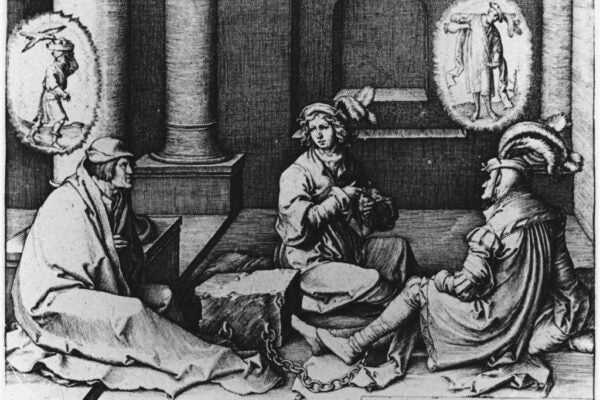
Leaders and Followers
An acting workshop becomes a lesson in trust, responsibility, and shared experience. Reflecting on moments of leading and following, William Davenport considers what it means to guide others, to rely on them, and to recognize that both roles are essential to how we learn and grow.

Star Dog by Jeremy Moss
This post introduces Star Dog by Jeremy Moss, the first published piece from an Unbound Authors student, a program supporting incarcerated writers across Colorado. Moss’s story follows a stray dog bearing witness to a man’s final moments, offering a quiet reflection on presence, dignity, and what it means not to be forgotten.
Get JSTOR
Interested in JSTOR for your secondary school
Connect with our team to explore access options for your institution and discover how JSTOR can support your library’s teaching and research goals.
View image credits from this page
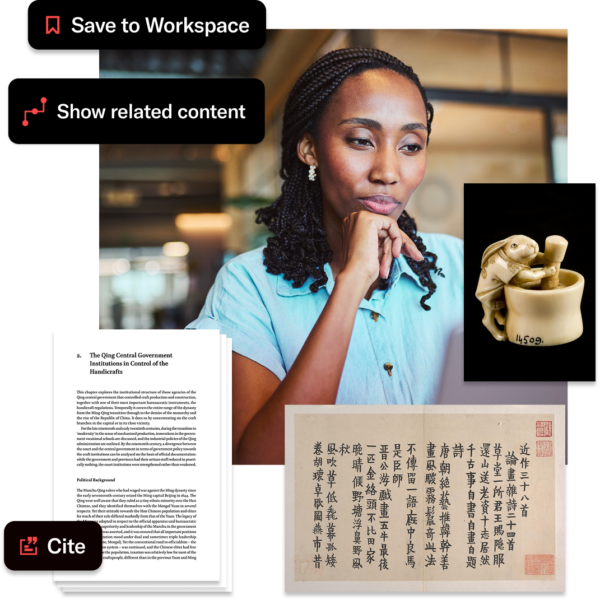
Christine Moll-Murata. State and Crafts in the Qing Dynasty (1644-1911). Amsterdam University Press, 2018.
Jin Nong. Poems on Paintings, Written for Ma Yueguan. 1754. Part of Open: The Metropolitan Museum of Art, Artstor. https://www.jstor.org/stable/community.18706184.