The Ion Bitzan Foundation has contributed more than 500 images to Artstor on JSTOR. Ion Bitzan (1924–1997), regarded as one of the most important Romanian artists to emerge during the 1960s and ’70s, was a subtle and versatile creator whose prolific career spanned a wide array of styles, concepts, and ideologies. He achieved recognition both in Romania and internationally.
His oeuvre, counting well over 1500 works, structured around an impressively wide range of recurring themes, showcases his mastery of diverse media, including painting, collage, etching, ceramics, monumental art, objects, and installations, and reflects a remarkable technical intelligence and skill.
The following text is Cǎlin Dan’s “The Prisoners of the Avant-Garde. For a Different History of Art in the Communist Bloc,” originally published in Ion Bitzan (MNAC Books, 2023, DCV – Dr. Cantz’sche Verlagsgesellschaft, Berlin 2023), and is reproduced here in full.
The following lines conclude a historical, curatorial and editorial journey started in 2017, when MNAC opened The Prisoners of the Avant-Garde. A Ion Bitzan Retrospective (November 23, 2017 – May 27, 2018). Looking in retrospect, I must acknowledge that MNAC has given quite a special treatment to Ion Bitzan’s body of work. Regardless of the minor mishaps that managing a complicated institution like the MNAC might ensue, mishaps that extended the interval in question, Ion Bitzan’s oeuvre has been used by the museum, for more than six years, as a benchmark to assess the history of Romanian visual arts. Organising the retrospective in a space where we currently display our permanent collection, organizing a symposium dedicated to the artist in May 2018 and working arduously to put together this volume are proof not only of a subjective interest in the creation of an artist from the second half of the XXth century, but also of how crucial he is when it comes to defining that period.
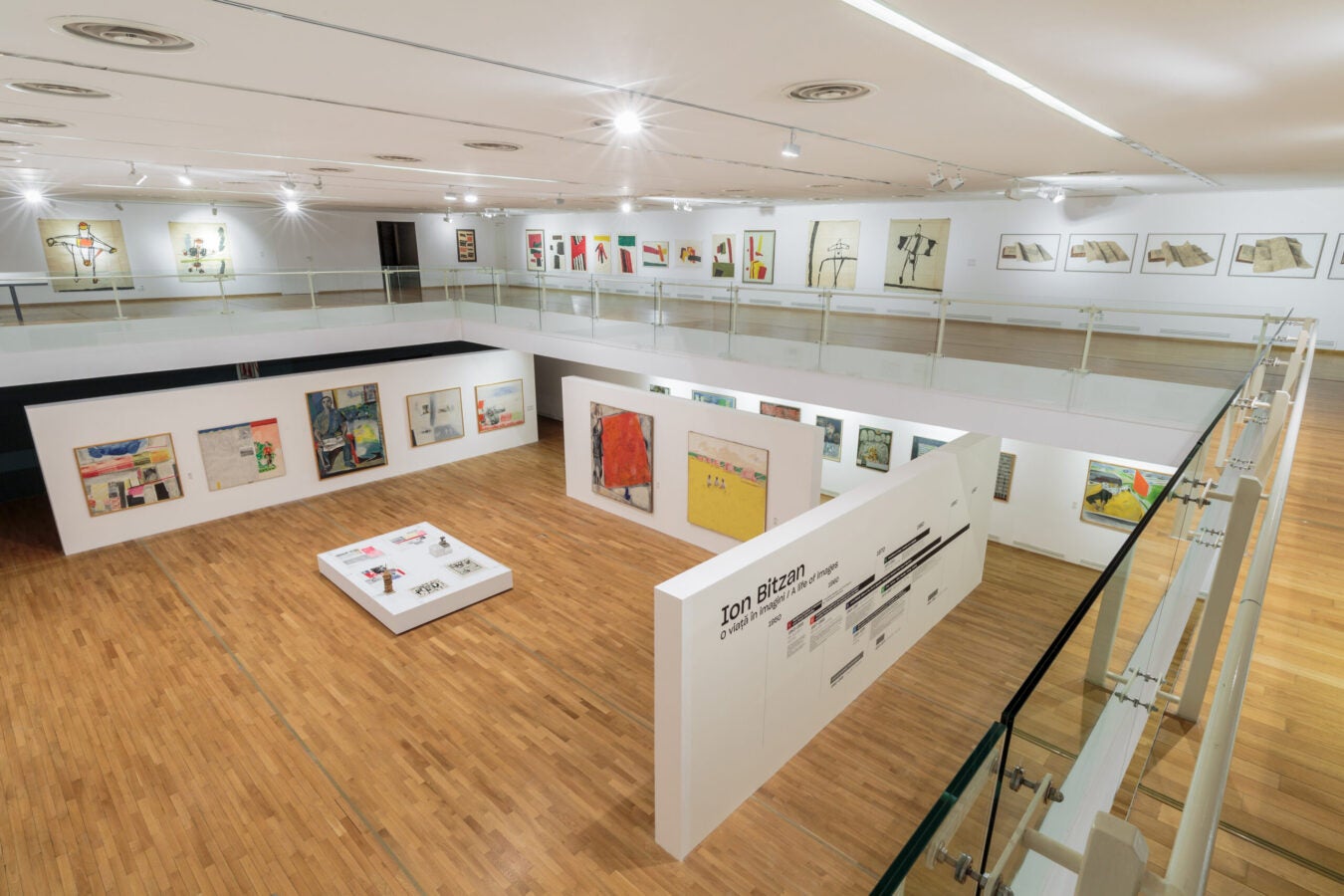
Photo credit: © Serioja Bocsok, 2017
I always treated my relation with Ion Bitzan cautiously. He was a celebrity when I was just a rookie in art criticism but, nevertheless, whenever we crossed paths, Bitzan was extremely considerate and formal, demonstrating unostentatious politeness and also – something no longer observed in human interactions nowadays – some sort of calm curiosity towards his conversational partner. One can easily notice Bitzan was curious by nature when looking at his paintings, which will be referred to later on. This feature enabled him to carefully inspect the successive generations that came under his scrutinising eye, to weigh their chances with both critical reflex and a propensity for teaching. Socialite gossipers of those times used to joke about his stinginess but they failed to notice his academic generosity – both in class and outside it – the time he willingly shared with anyone around, leaving the impression that each and every one was special to him.
Something less discernible at first glance is the attention he paid to survival. Survival of both the man and the oeuvre. Or perhaps survival of the man through his oeuvre. Or the other way round. I can only hypothesize over scarce biographical evidence arguing that Ion Bitzan, raised and educated in a very complicated political and economic environment, was, throughout his life, the advocate of a self-supporting strategy that he designed then constantly refined meticulously. A humble social background, the geography of a childhood spent in a province (Dobrogea) historically situated on the verge of the nation’s identity and economy, his wandering across the country during the vulnerable period of studious adolescence, the tremendously volatile political context in which his personality was shaped, all of the above account for a self-made man, an individual who knows deep down that nothing should be taken for granted, that nothing is for free. The cautiousness I mentioned earlier (obviously mutual) was due, in my case, to a feeling of constant tension that Bitzan exuded, as if he would be prowling to identify threats and seize opportunities. Cautiousness amplified by my confusion with respect to his political strategy exhibited in the oppressive 1980’s.
To understand the origins of The Prisoners of the Avant-Garde one must reproduce the specific atmosphere of that specific decade wherein the personality of Ion Bitzan can serve as an excellent case study. His former students, informally aggregated into a group under the influence of conceptualism, adored him, everyone in the branch respected him (or so I thought back then), therefore Ion Bitzan was a “must” in every exhibition, event or special meeting used by the visual artists community in order to preserve, tenaciously and desperately, the autonomy seemingly gained between 1962 and 1974 and once again lost under the ceaseless assault of political censorship during the ninth decade. At the same time Ion Bitzan authored (sometimes alongside Vladimir Şetran) a series of images that praised Nicolae and Elena Ceauşescu clamorously, and with great exposure. Between these two extremes his art was streaming unremittingly, raising again my cautiousness due to an overwhelming feeling of inflationistic, formula-repeating production.
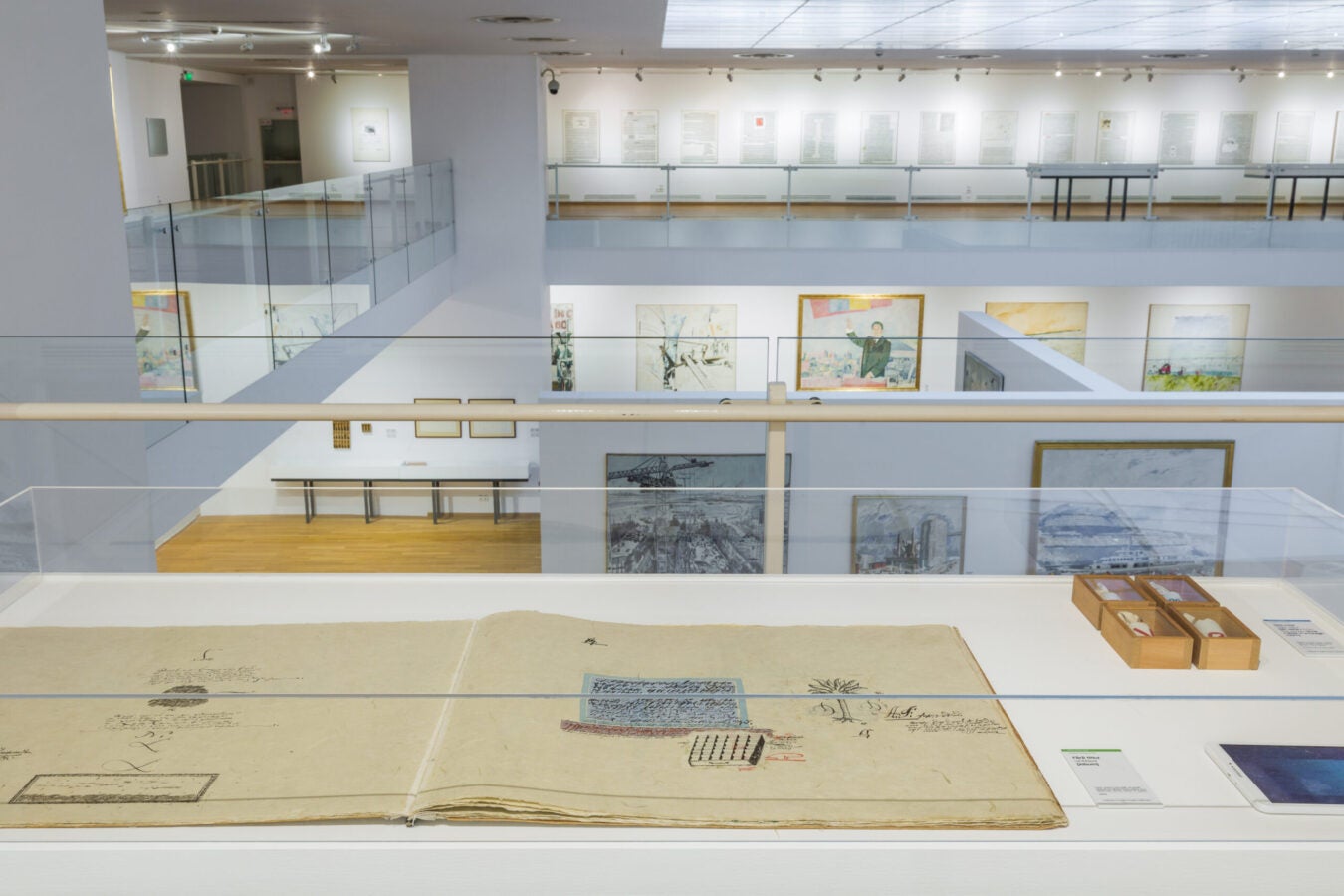
Ion Bitzan was blessed with a special gift, an absolute visual acuity, the counterpart of perfect pitch in music. This perfect (eye)sight enabled Bitzan to detect all the nuances of an artistic proposal or those of a visually perceivable shape, to find the right solutions and spot the faux pas, no matter how subtle they were. This gift commanded integrally his approach as an artmaker and was both a blessing and a curse. The blessing is obvious: Ion Bitzan had the ability to yield, just like Mozart did, series after series of constantly good quality works. As for the curse, it was about redundancy: his production lacked depth, the form, once decided, was overcharged and repeated ceaselessly until it got away from the initial core of the matter.
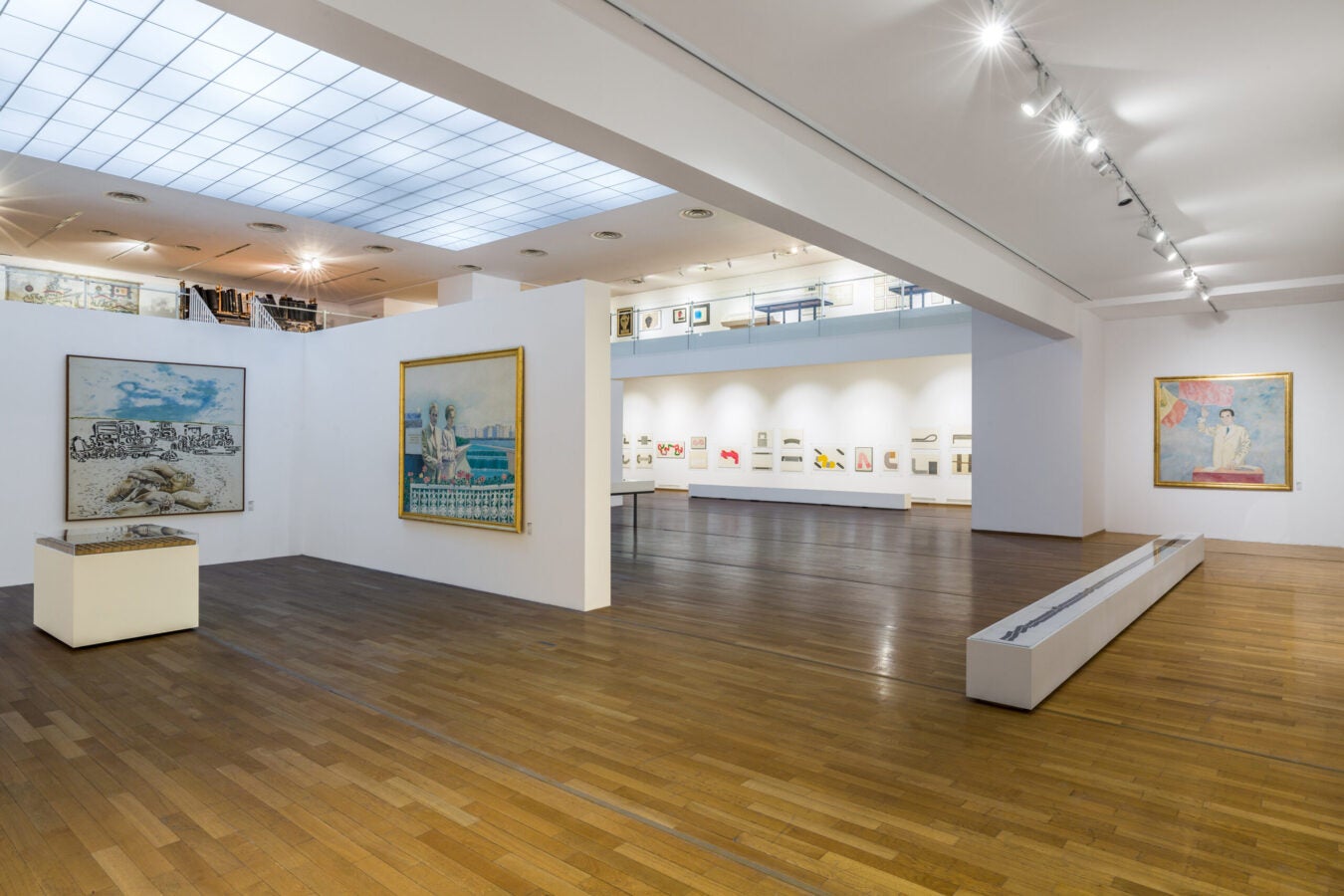
Photo credit: © Serioja Bocsok, 2017
To the idle-oppressive context of the 1980’s, Ion Bitzan opposed a creative ebullience matched only by a few fellow artists, a bounty of cultural references issued from the opportunities to travel abroad and meet foreigners, a Protean discourse that turned him into an untouchable figure of the art world. On the one hand, it would have been impossible to criticize his non-political work in the absence of equal access to data regarding his sources; it would have also been indecent to analyze those works otherwise than by implicitly acknowledging their opposition to the political regime,especially then, when censorship usually focused right on those pieces that did not observe the rules of soft modernism set in the mainstream of the 1960’s. On the other hand, his ideologically-propagandistic art production was exempt from being scrutinized: technically speaking, the artist just pulled one more modernist trick – accepted therefore unconditionally – out of his bottomless pockets; from a moral standpoint, Bitzan was given carte blanche due to his reputation as an agent of creative freedom, reputation he had thoroughly consolidated in almost two decades of pedagogical and artistic practice.
Some sort of bizarre double blindness marks the way Ion Bitzan was positioned (by his peers, by art critics, by ideologists and censors and eventually even by himself) in the artistic canon that was spontaneously but inevitably taking shape in those years. Praise must go to The Prisoners of the Avant-Garde exhibition, as it brought these dilemmas and contradictions to the public attention through a series of well-thought, significant juxtapositions. First and foremost, The Prisoners of the Avant-Garde rises above a taboo subject which is all the more embarrassing as it was never said out loud and which turned Bitzan – once more, but not in the same way – into an untouchable figure of the 1990’s. The “long 1990s” seemed to last longer in Romania, where complicity with the former regime extended their tentacles in every aspect of social and cultural life. I vividly remember a conversation with prominent figures in the political and cultural institutions of those times on the topic of the analysis (or lack thereof) of what looked like – in retrospect – Bitzan’s notorious collaborationism. I was almost scolded for my lack of savoir-faire and explained that both Bitzan and Vladimir Şetran were trustworthy, good friends, and that one cannot judge friends publicly, not even symbolically.
Got a teaching idea worth sharing?
Contribute a tried-and-true resource that shows how JSTOR supports teaching and research needs in real classrooms and libraries.
Compensation available for accepted submissions.
I am not particularly fond of counterfactual discourses, yet I am sure Bitzan would have been intellectually equipped and strong enough to face an open talk about his personal policies within the framework of the broad politics in Ceauşescu’s Romania. I might be wrong. However, within the Museum space, The Prisoners of the Avant-Garde displayed both types of works produced by Bitzan: those commissioned by the regime as well as those created for a different reason. Binding together – physically – a catalogue containing problematic artworks and themes was an outstanding methodological triumph. Moreover, it also ensued an utterly unexpected revelation: set against the sophisticated, diverse and composite backdrop of his “avant-garde” creation, Bitzan’s propaganda works acquire a formal and an implicitly moral scope that sets them, historically speaking, higher than the rest of his artistic oeuvre. Interestingly enough, this work hypothesis, extracted from the factual inventory of the MNAC exhibition and clearly stated in the accompanying brochure, resulted in abashed silence both from the contributors to this volume as well as from the press columnists.
Nevertheless, the reasoning behind my thesis is supported indirectly. Magda Predescu drew up a comprehensive review of all the influences/correspondences in Bitzan’s body of work and the result is a collection of stars, impressive both in its magnitude and in its diversity: Renato Guttuso, Robert Rauschenberg, Nouveau Réalisme, Nouvelle Figuration, Alexander Rodchenko, El Lissitzky, Hans Hartung, Franz Kline, Julius Heinrich Bissier, Pierre Soulages, Piero Manzoni, William Tucker, Eva Hesse, Barry Flanagan, Richard Serra, Robert Morris, Hanne Darboven, Sol LeWitt, Henri Michaux, Juan Miró, Anselm Kiefer, Max Ernst. The list testifies for the aforementioned absolute visual acuity curse that made Ion Bitzan almost spontaneously dependent on his elective (but not equally selective) encounters with an assortment of seductive celebrities in contemporary art history. Seduction is, indeed, one of the powers held by Bitzan (though not one of his main qualities), therefore any well-informed art consumer can add to Magda Predescu’s list way beyond the limits self-imposed by her subtle research.
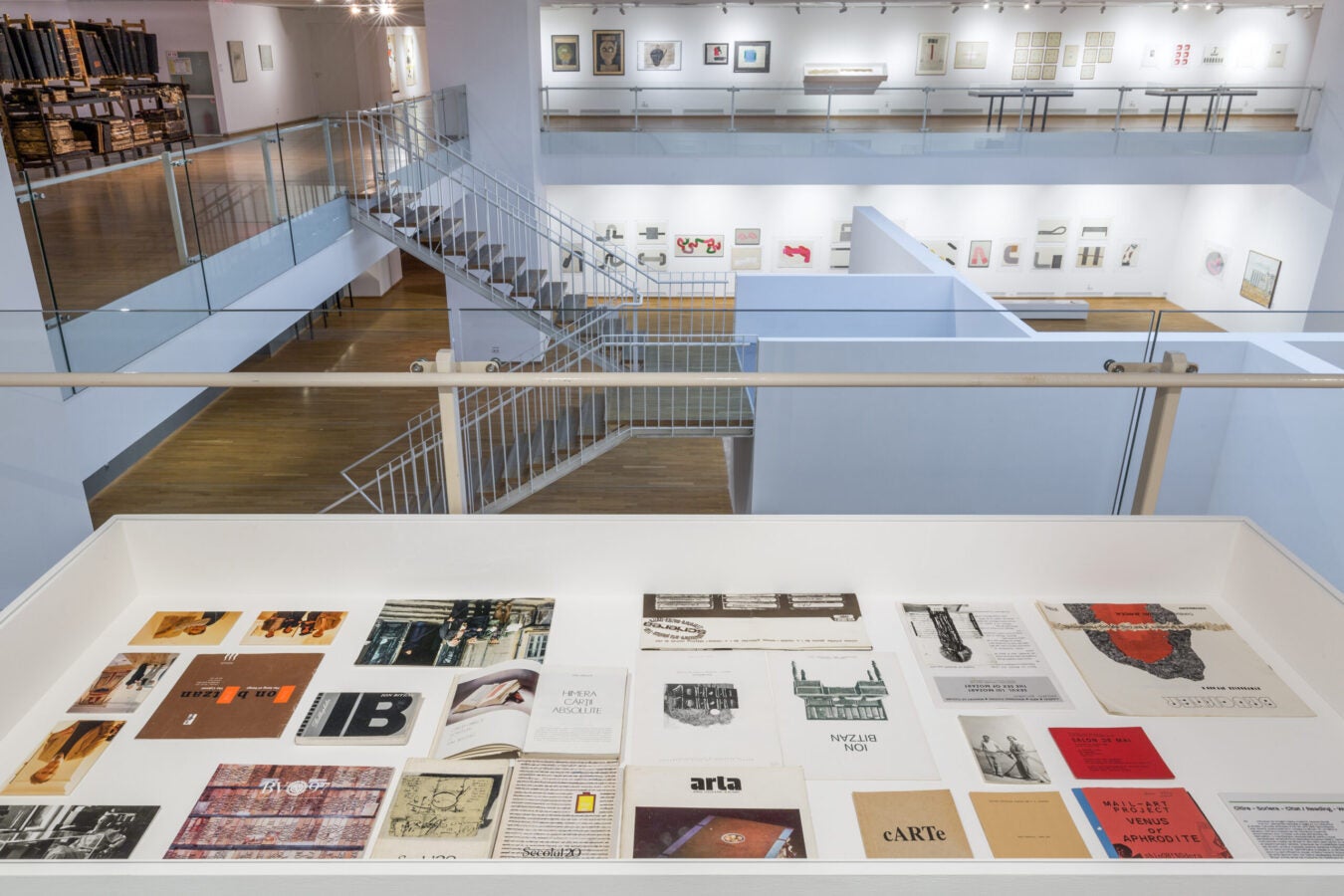
Photo credit: © Serioja Bocsok, 2017
After a remarkable analysis compelled by the Protean nature of Bitzan’s production (highlighted in The Prisoners of the Avant-Garde by means of the unconventional timeline of art movements the artist affiliated to), Magda Predescu concludes that the artist’s “chameleonic personality” found “most fulfillment in postmodernism”. Cătălin Gheorghe also concurs in an essay where he chooses to look at Ion Bitzan’s body of work from the factual perspective of socialist modernism, preoccupied to render an objective reality that antagonizes international modernism, although the author notices a crack in this doctrine, considering that the artist “seems to be in complete agreement with the postmodernist adventure of inventing encyclopedias with no attempt at a systematisation, in the sole interest of conducting various explorations”. Starting from different points (of view) with different supporting arguments, the two contributors see eye to eye and reckon Bitzan has right of residence in the realm of postmodernism. Is there any better way to legitimize Bitzan’s quotational bulimia than postmodernism?
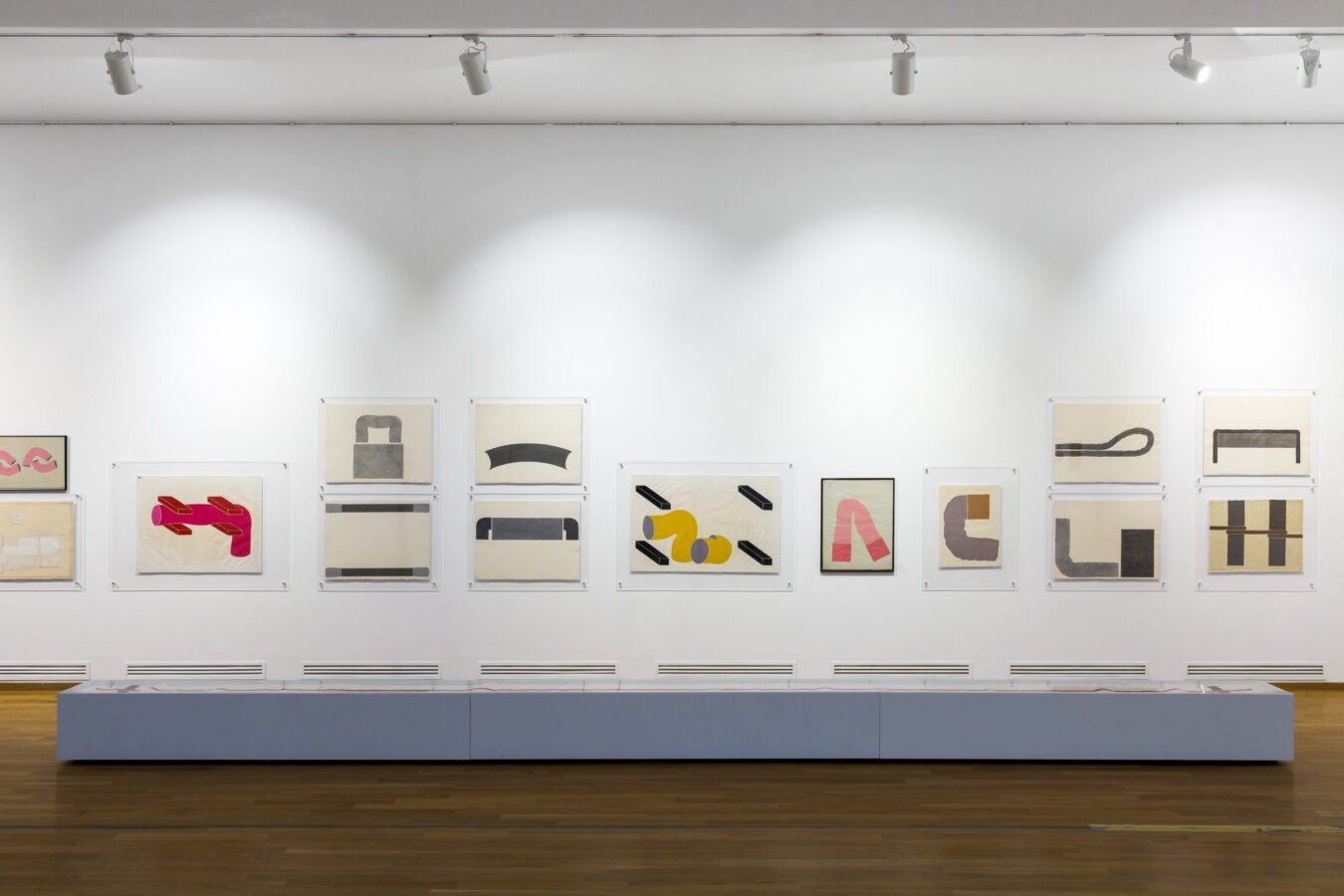
Photo credit: © Serioja Bocsok, 2017
The issue here is that Ion Bitzan does not quote with an attitude, strategically and in complicity with the viewer, but spontaneously, as particular needs of composition arise. He does it consistently, although not systematically, therefore the encyclopedic suspicion is overruled. Anca Arghir notes, with the ease of someone who closely witnessed the artist bloom from his youth to his prime, that “Bitzan is an out-and-out bricoleur”. Not meaning to belittle a term so dear to visual culture like le bricolage, one must acknowledge that this type of approach has nothing to do with the eventually distant, (self-)criticizing, (self-)ironic endeavour of postmodernism as it is rather an exploitation – for personal gain – of a culturally saturated context without “paying the bill” once the quote is taken and used. Hence that slight impression of captivity that Ion Bitzan’s creation – and also that of his many peers who were part of the same generation – gives to any inquisitive viewer who cares to investigate the sources.
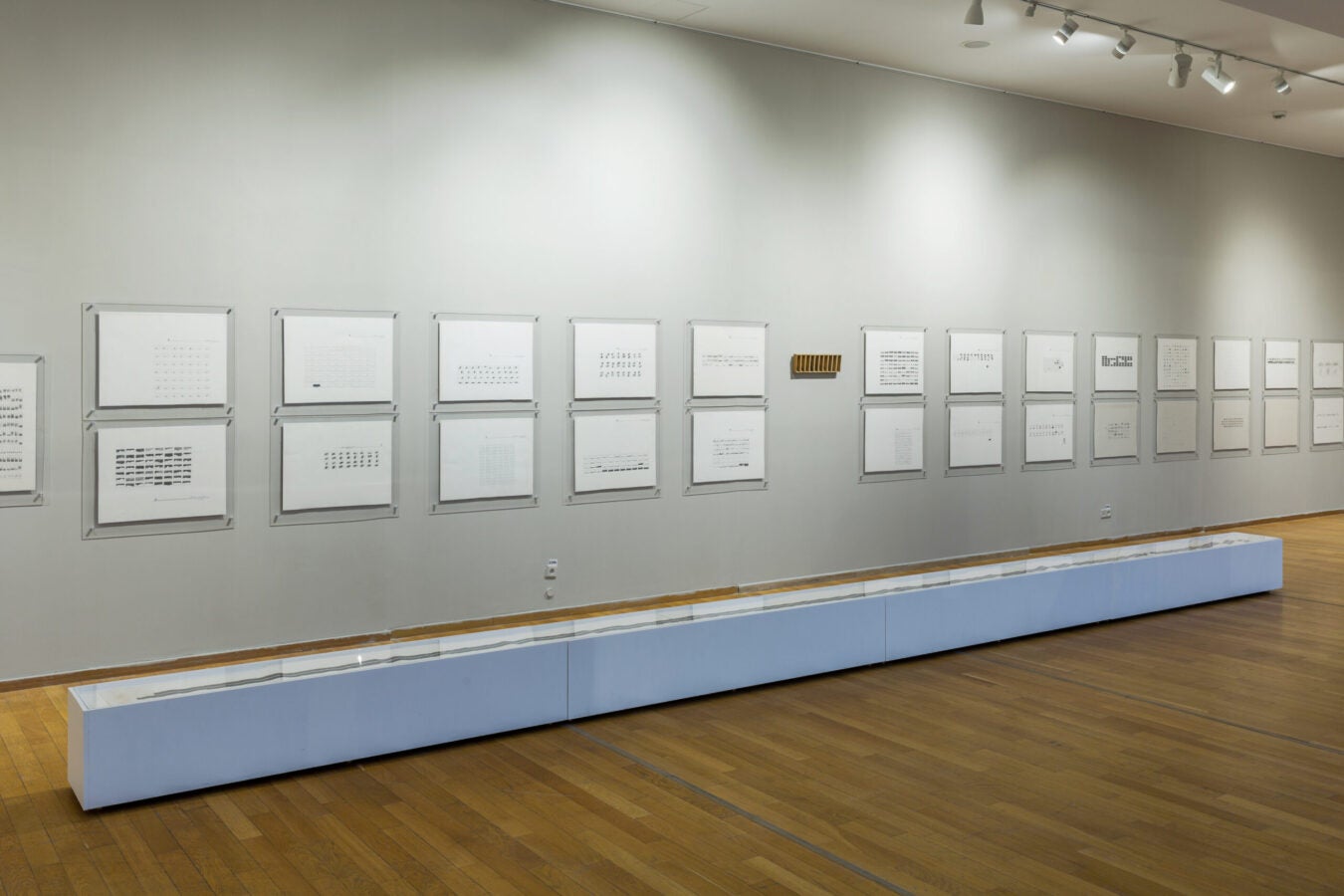
Photo credit: © Serioja Bocsok, 2017
Artists belonging to – in broad terms – the communist ideological camp (in the literal, administrative meaning, as in “prisoner camp”) neither practice a “critique of the far Western cultural ideology’s subsidiarity” nor do they reset “the relationship between the need to create social representation and the possibilities of visual experimentation”, as per Cătălin Gheorghe. Why so? Because when you are part of an oppressive, propaganda-infused regime, you cannot estimate an artist’s percentage of genuineness or how deeply they felt the need to visually represent society. Such artists explored “modernity’s eclectic sources in works with an overtly ideological content” (Magda Predescu). Retaining that this ideological content is not necessarily obvious, we must point out that the double contamination of creation – on the one hand with the – explicit – requirements of the propaganda apparatus, on the other hand with the – no less important – subliminal pressure to be and to act as per the grand Western models, create the prerequisites of a formal and moral ideological imprisonment that some of the artists had to live in during Communism.
Ion Bitzan is no exception to this ontological model. We can only detect some subtle differences in close connection with the historical steps he takes. Like any other cultured person who was educated in communist times, Bitzan adopts, at one point, the propagandistic techniques of historical modernism which yielded, without a doubt, great formal although morally doubtful examples (the Soviet constructivism, the quotation from mass-media, the collage, the heroic-simplifying figurative art, and so on). This stage, reloaded throughout his career as a soft-prop activity where he approached ideological themes and aesthetic formulas with discreet, experienced conformism, is followed by one in which Bitzan assimilates with stunning speed and adaptability all sorts of artistic formulas from the universal art of the period. Under the pressure of Nicolae Ceaușescu’s cult of personality that expanded until it reached its North Korean highest, he eventually starts the era of major ideologically compromised pieces of work using the recipe book offered by different moments in art history – with a twist.
One of the surprises in The Prisoners of the Avant-Garde was the “accordion”-like characteristic of Ion Bitzan’s official portrait production. Let me explain: there is a certain type of exhibition where the perception regarding the amount, the quality and relevance of the artworks changes time and time again until the final formula is found. It’s either not enough pieces or too many pieces or they aren’t relevant enough, although the body of works is irreversibly finite; this nightmare can disappear only by thoroughly contextualizing the available inventory. Somehow similarly, Bitzan apparently painted a huge amount of propagandistic portraits back in the 1980’s. I remember vividly that so many of them were constantly showcased and they were so present in every exhibition. While working on the exhibition display at MNAC, I noticed there were only 12 such works, which – for the whole of Ion Bitzan’s yield – is insignificant. However, just like almost 40 years ago, those paintings were jumping off the rails crushing anything around, they had a life of their own, so different from any other image.
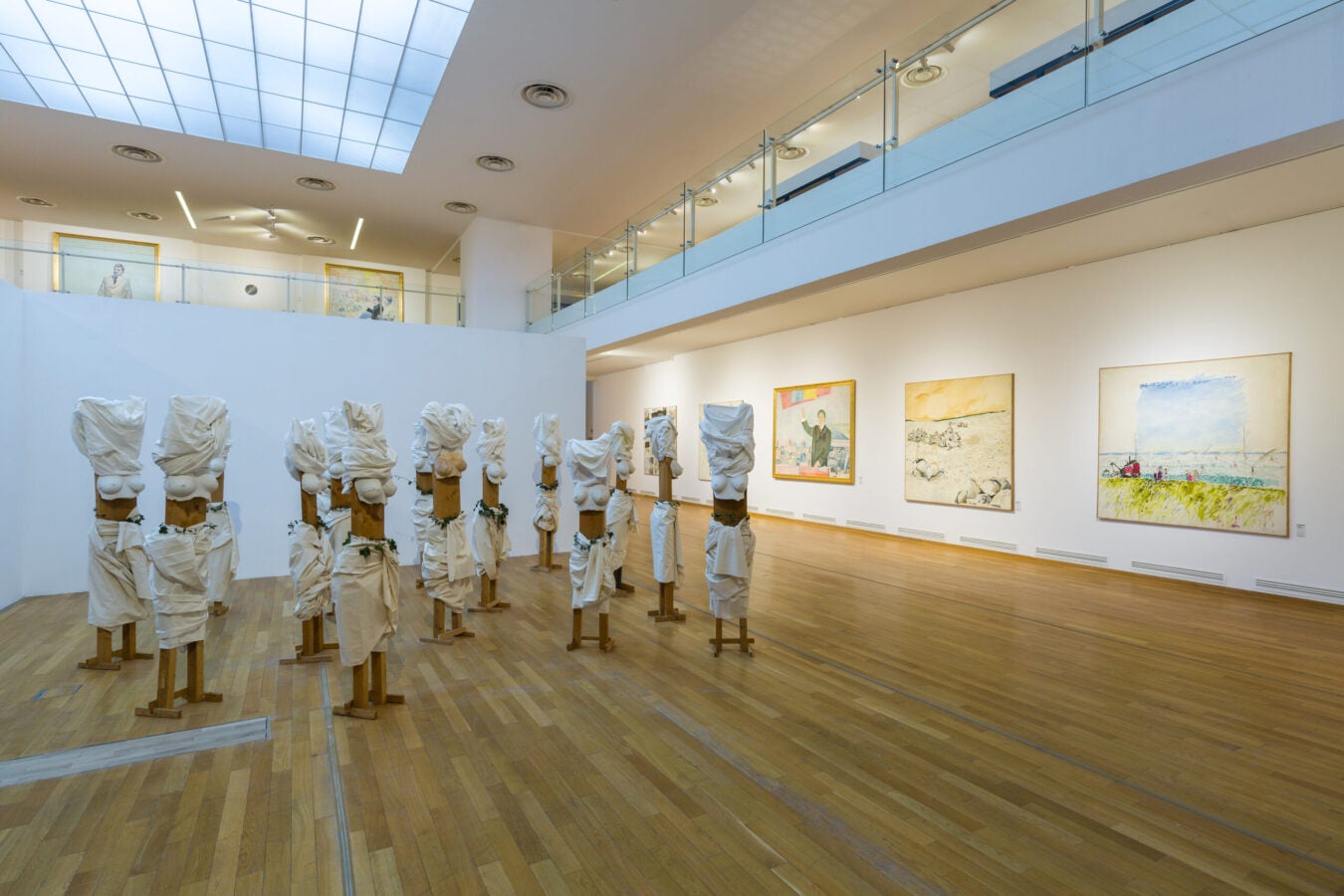
Photo credit: © Serioja Bocsok, 2017
This immediately raises questions concerning the level of autonomy in the aesthetic perception of those images. Do the political circumstances of the time when they were painted define them? Yes, without the shadow of a doubt. Is their reading influenced by the broader context of Bitzan’s body of works? Well, there’s a nuance here and it comes from the historic evolution of collective sensitivity. Like I mentioned earlier, back in the day, Bitzan’s experimental art acted as collateral for his ideologically imbued creation. The unequivocable cultural value of the first category made the second one bearable. In those years, the affiliation of his official portraits to the ongoing art history in Romania was not a topic. Those pieces were doomed to be forgotten. The brutal death of the dictator and his wife reversed the trend. Any object displaying even the slightest shadow of a tribute to the couple, all the more so their portraits, suddenly became records of an era that ended appallingly, but which was however handed down to posterity via an iconographic corpus that proves to be addictive in its ludicrous comicality. This peculiar distortion of the significant dimension of an object oscillating between ideology and commerce, transforming thus the propaganda (compulsory consumerism) in comically imbued memorabilia (mass consumerism) is a phenomenon comparable to the spiral consumerism / propaganda / anti-consumerism / neo-consumerism, characteristic to the cultural revolution installed by Pop Art.
Ion Bitzan, by keeping a watchful eye on Pop Art, was able to incorporate what he learned from Warhol and Rauschenberg so as to craft a discourse adjusted to fit the Communist Party propaganda. Bearing in mind the remarkable versatility of his modus operandi and adding to it his impeccable taste in colour and composition, we can speculate that Bitzan made a calculated decision to quote Pop Art in his politically themed artwork. “Ugliness” and Kitsch, that had become acceptable (also) due to this remarkable diffusion of the movement in the former Communist bloc, were used in a subversive manner by the artist in a production that was meant to glorify absolute political power. This decision implied he paradox that no one could have foreseen: as time went by, the images conceived as ironic failures earned a suggestive force that proved superior to those produced as free artistic creations in the cozy confinement of the artist’s studio.
However, it is suggestive that Ann Albritton recalls a conversation she had with Ion Bitzan in which he insisted that none of the tribute paintings had ever been executed in his “secret space”, therefore mentally keeping the studio untouched by the politically compromising activities. This post-factum statement that cannot be verified is, on the one hand in contradiction with my remarks from above that refer to the deliberate undermining of the discourse glorifying Ceauşescu and, on the other hand it confirms the artist’s choice to remain aesthetically “imprisoned”, like I said before. Thus Ion Bitzan explicitly ranks his own works and does not take upon himself the subversive nature of his official portraits. Inside information gathered from the close circle surrounding the artist might explain why he deliberately painted outside his studio. Rumour has it that at least some of Bitzan’s tribute art canvases, certainly those co-authored alongside Vladimir Şetran, had been concocted in the studio occupied by the last in the stalinist compound on Ermil Pangratti Street “in Bucharest – some sort of an Olympus for the officially accredited artists. Unlike Bitzan’s studio in the courtyard of the Fine Arts Academy – quite small and literally packed-out with artwork – Şetran’s room offered plenty of space and allowed them to work with slide projectors, an instrumental element in their creative approach.
This information could also be used to partly account for the never-explained cooperation of the two artists in the production of tribute art (portraits but not only). Moreover, they were also friends (or rather intellectual accomplices, I dare say) and Vladimir Şetran had some sort of a cynical and jovial temperament, a kind of laxity that might have been a useful mental support in Bitzan’s complicated ballet between the (formal) avant-garde and the (political) arriere-garde. I recall a scene from the past, when I used to work as a museographer-conservationist at the Art Museum of Socialist Republic of Romania where, in the 1980’s, homage-paying exhibitions were frequently organized. On one of these instances, Bitzan and Setran were making on the entrance wall a monumental montage representing the president and his wife in a celebratory context. They used a photographic technique with painting interventions, all on a colossal scale. The artists were surrounded by their design students who were swarming busily, climbing the scaffolding, successfully executing orders, but of the two only Şetran was visibly energized by the whole situation that he probably perceived as just another performance completely devoid of any moral implications.
Regarding Ion Bitzan’s perception of this (according to him) extra-curricular activity, I remember yet another episode that occurred in the same place and around the same time; I felt it was revealing when I witnessed it and I still think it is emblematic although I cannot really tell why. Bitzan was hidden in an empty room on the ground floor, contemplating in visible discontent the piece entitled Tribute (1987) that was supposed be added to the exhibition due to be on soon. Passing by, I told him, tongue in cheek: “Beware that the left sleeve is longer than the right so he looks like a retard”. Bitzan glanced at me in disbelief, so I went on: “I can tell for sure, I grew up at my grandma’s, she was a seamstress”. We both laughed and I left the room. When I returned, after a while, I found him checking, with some strips of coloured paper as pale as the bloodless skin of the dictator, if I was right.
He always used the joint visual-tactile approach when checking the level of accomplishment in a new work. And yet the painting was never altered, and the dictator still looked as if he suffered from an incurable bloating, unbalanced and with his face painfully distorted (you can find the reproduction at #268 in this book).
Provided that the grandiloquence and the pathos in the paintings dedicated to the two Ceauşescus were generally ingrained with involuntary comic, with the notorious exception of Dan Hatmanu’s cynical Anniversary (1983), in Bitzan’s case the situation comedy and ensuing irony are obviously manipulated by the conscious artist in such a way that it precipitates the image semantics into ambiguity. Magda Predescu is right when she says that the artist introduces “many diverse ways in which [he] challenged the referent” without analyzing how this method generates a new type of image. Painting homage-paying portraits and compositions by means belonging to historical avant-garde (using photography for the most part, magnifying images with an epidiascope / projector, imitating photo collage on the canvas) while assuming tactical, subversive operating hypotheses help Ion Bitzan in creating a safe harbour of autonomy difficult to accept nowadays due to the fact that it applies to a genre perceived as exclusively encomiastic, celebratory.
The reproduction techniques are distorted just like the load of quotes from early modernism (be it impressionism, postimpressionism or expressionism) or its later manifestations (Pop Art and Hyperrealism) are reinterpreted in a cartoonish manner. The execution speed becomes a benchmark and this is obvious from the way details are hurriedly left “in plain sight”, the composition is worn out (exhausted) and the viewer is marooned in a bizarre frustration I would link to anti-painting, to the phenomenon known as “bad painting”. The current semantic key of reading the political circumstances in which these images were produced validates ther (partial) autonomy. The homage-paying paintings are not exempt from moral defects but their visual virtues intended to exonerate them are acquiring unexpected aesthetic value.
Bitzan did not paint Ceauşescu, he only used him as motif in his compositions and as a carrier when trying on different techniques. The artist did not paint the dictator’s portraits by means of realism, he did it by transfer; projecting a cut-out from a newspaper on the canvas and painting over it is already an alarming ideological and iconic leap. This decal is subsequently filled with ramshackle paint, the visible brushstrokes and the choice of colours decompose the dictator’s features turning them into dead tissue, Nicolae and Elena have the lost, tragi-comic look of disarticulated dolls. The image silently screams tyrannicide and, even though we are, in our turn, prisoners of a posthumous reading, we can’t help wondering: how was it all possible – the dictator, the regime, this worshipping image, its devastating irony?
In a perverse way, certainly, Ion Bitzan’s art escapes the imprisonment of the avant-garde through his tribute-paying works because the focus shifts from an unsupported visual hedonism towards an anti-aesthetics that nuancedly reflects a mediocre, precarious political regime, a murderous one, but average. This escape can be explained through the object(ive) value of the image: if in his secondary, avant-garde inspired works Ion Bitzan fetishizes the art object until it gets irrelevant, in his political works, especially in the homage-paying ones, the object becomes a totem (“the final product […] works like a totem” as per Anca Arghir, although she meant a completely different type of works), and therefore it gets a proportionally corresponding reference identity.
It is also Anca Arghir who unpromptedly presents us with the last reason why the artist was a prisoner of the avant-garde when she states that Bitzan’s pop art inspired objects “do not challenge obsolete elitist preconceptions about art”. She puts the finger right on the relation with avant-garde in an isolated Eastern Europe. Decontextualizing avant-gardes by replicating them incompletely and only formally, devoid of the theoretical and ideological stakes decisive with respect to those mutations in visual art (mutations that were perceived as “obsolete from outside those cultures) – this is a phenomenon that established a subtle imprisonment wherein avant-gardes that appeared in domineering cultures as symptoms / cures of/ for the crises of the social-cultural body were just “emissions adopted on the other side of the Cold War as elements that “lend themselves to a subtle intellectual game and require a play partner with an eye for such refinements” (Anca Arghir). Here is the explanation – from inside, by an authority in the matter of accidental imprisonment in the cage of second-degree avant-garde – for the foundations of visual experiment in a culture such as the one in Romania, where the visual on the whole and the experiment for the most part have not been historically instrumental.
We had the chance to work with the oeuvre of such a special artist like Ion Bitzan, whose indisputable qualities, combined with a fascinating creative personality, turned him into the litmus solution (to use a chemical metaphor) of this phenomenon that was the centerpiece of art behind the Iron Curtain – being a prisoner of the avant-garde illusion. Ion Bitzan might have lacked the theoretical penchant, the spiritual propension or the tragic deontology of peers such as Horia Bernea, Ion Grigorescu or Mihai Olos. And yet he remains an endless source of information regarding a period full of contradictions as well as the author of unforgettable pieces of work, including the ones created for political propaganda purposes.
Credit Line: Cǎlin Dan, Ion Bitzan. The prisoners of the Avant-garde. For a Different History of Art in the Communist Bloc DCV – Dr. Cantz’sche Verlagsgesellschaft, Berlin, 2023