The JSTOR Digital Stewardship Services community is expanding—uniting libraries, archives, and cultural heritage organizations to strengthen responsible, mission-aligned digital collections practices. Through AI‑assisted collections processing, integrated digital asset management, long‑term preservation, and sharing their unique materials on JSTOR, Stewardship participants are advancing discovery and broadening access in ways that reflect their values and aspirations.
This month’s Stewardship update features new members of our community, notable collections made available by our participants, and updates from the broader community. If you’re looking to scale your digital collections program—or simply curious to see what peers are doing—we hope these stories provide inspiration.
New to the Stewardship community
We’re excited to welcome new institutions to JSTOR Digital Stewardship Services—each contributing distinctive collections, innovative projects, and unique insights to our growing community. Explore the full participant list.
New to Tier 2
These institutions will use JSTOR’s integrated, cloud-hosted Stewardship platform for digital asset management, Portico-backed preservation, and discovery—including the ability to share materials on JSTOR.
The American Library in Paris – Paris, France

The American Library in Paris, the largest English-language lending library on continental Europe, holds 100,000+ print volumes and an archive dating to its founding in 1920. By joining Stewardship, the library aims to make more historically significant materials publicly accessible, starting with a curated set of photographs documenting its evolution over the past century.
Read the full American Library in Paris announcement.
Assumption University – Worcester, Massachusetts
Assumption is engaging JSTOR’s professional migration team to move university archives and publications from Digital Commons into JSTOR Stewardship, with the goal of strengthening long-term sustainability, streamlining management, and increasing visibility and impact for students, researchers, and the broader scholarly community.
Read the full Assumption University announcement.
The University of Wyoming (UW) – Laramie, Wyoming
Working with JSTOR’s migration team, UW will move collections—including parts of the WyoScholar repository (faculty, student, staff research) and WyoDigital’s maps, books, photos, audiovisuals, yearbooks, and manuscripts—from DSpace into JSTOR’s cloud-hosted platform.
Read the full UW announcement.
New to Tier 3
These institutions will join our charter program dedicated to advancing responsible, sustainable digital collections stewardship; gain access to JSTOR Seeklight plus the integrated Stewardship platform for digital collections management, preservation, and sharing; and help shape JSTOR Seeklight through working groups, user testing, and cohort discussions.
Creighton University – Omaha, Nebraska
Creighton plans to use JSTOR Seeklight to work through their processing backlog, prepare for its 150th anniversary in 2028, and offer enhanced support to faculty, students, and others. They also look forward to using built-in publishing capabilities to share their collections directly on the JSTOR platform.
Read the full Creighton announcement.
Northwestern University – Evanston, Illinois
Northwestern will use JSTOR Seeklight to generate descriptions, transcripts, and collection-level insights—moving more quickly through processing backlogs while responsibly bringing more distinctive collections into view for campus communities and the broader scholarly ecosystem.
Read the full Northwestern announcement.
North Shore Community College (NSCC) – Massachusetts
NSCC plans to use JSTOR Seeklight to accelerate workflows, and JSTOR’s digital asset management capabilities to manage and share collections, including the papers of the late Thomas W. McGee of Lynn, MA, a community servant and former Speaker of the Massachusetts House of Representatives.
Read the full NSCC announcement.
The Disciples of Christ Historical Society (DCHS)
DCHS—the primary archives for the Christian Church (Disciples of Christ)—will transition collections from Digital Commons into the integrated Stewardship platform, and use JSTOR Seeklight to increase capacity for providing online access to digitized materials.
Read the full DCHS announcement.
Collection spotlight
As stewards of unique materials, our participants make a diverse array of collections available on the JSTOR platform, where they can be discovered alongside scholarly materials by researchers on-campus and worldwide.
Browse thousands of open access collections on JSTOR.
JSTOR Seeklight-generated, human-reviewed description and transcription: Drew University’s Freeborn Garrettson Collection
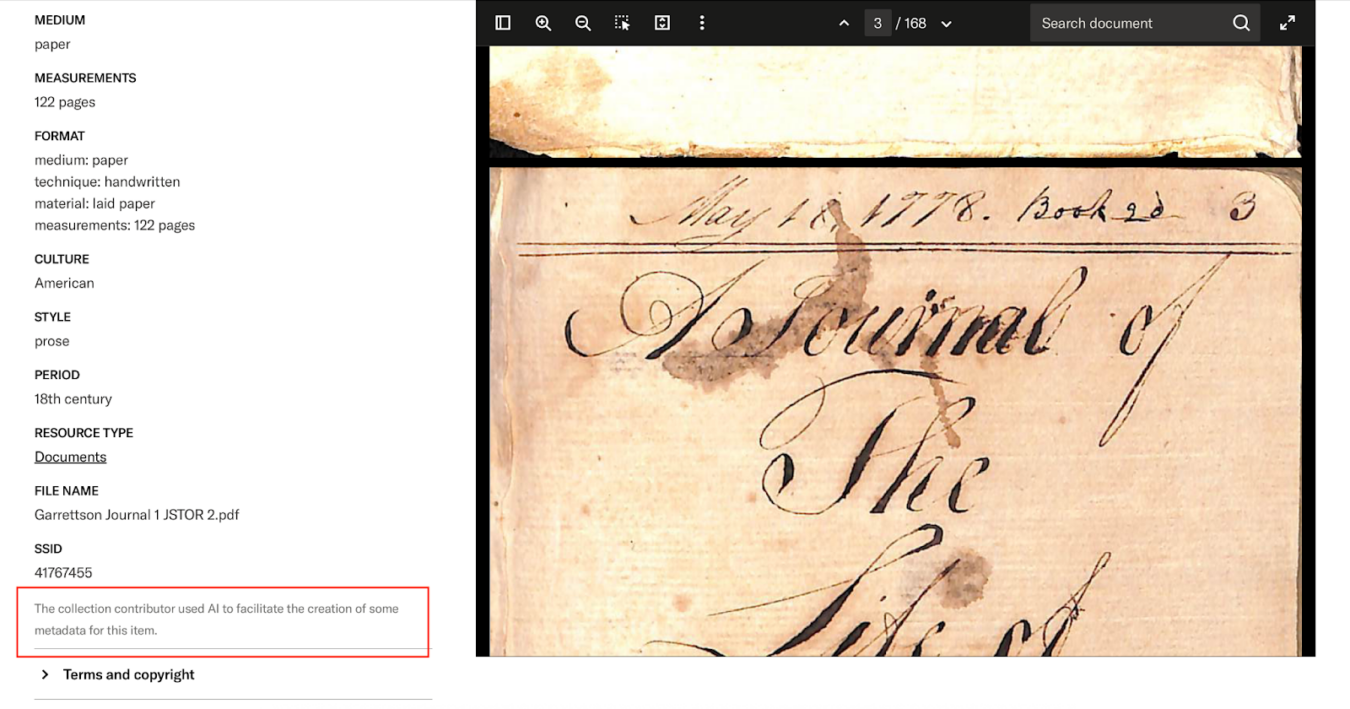
Explore the Revolutionary War-era journal of Freeborn Garrettson (1752-1827), a Methodist preacher, abolitionist, and pacifist—described with AI-assisted, human-reviewed metadata and clearly labeled with transparency notes so viewers understand how descriptions were created.
Browse the Freeborn Garrettson journal on JSTOR.
The University of Alabama in Huntsville: Space City Collection
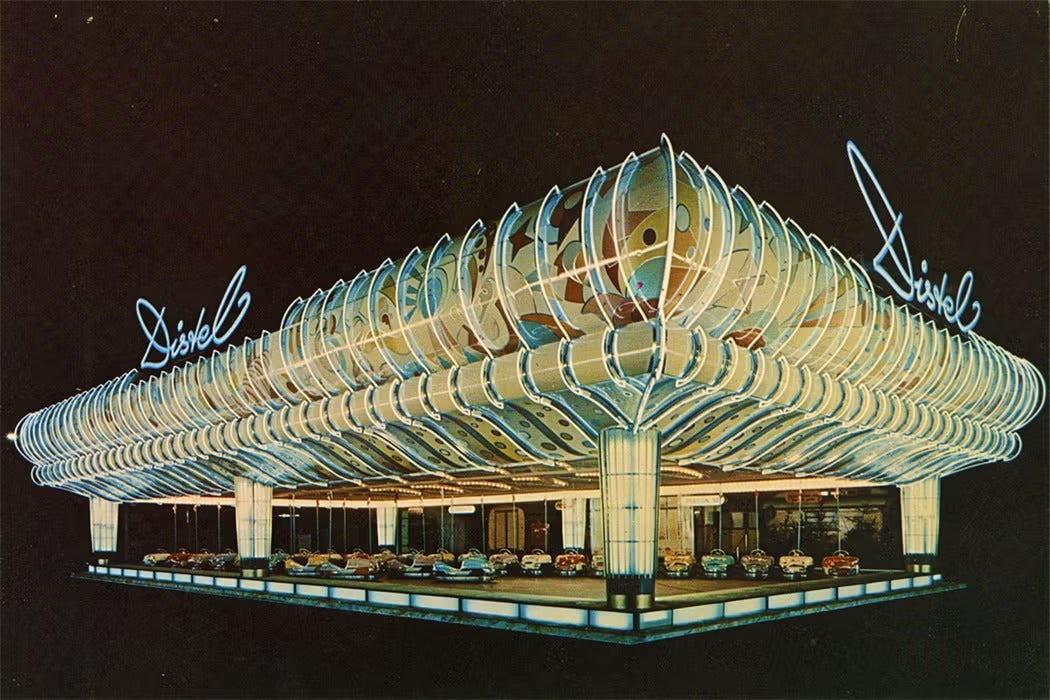
Discover Space City USA, a never-finished 1960s theme park planned for Huntsville, Alabama, fueled by Space Race optimism and Hubert Mitchell’s $5 million vision. Preserved in UAH’s Space City Collection on JSTOR, pamphlets, telegrams, photos, and planning files sketch attractions like Moon City, flying saucers, “Super Jets,” chairlifts, and a walk-through volcano.
Explore the Space City Collection on JSTOR.
Read the JSTOR Daily feature: “The Space Race’s Forgotten Theme Park.”
Cornell University: Andrew Dickson White Collection
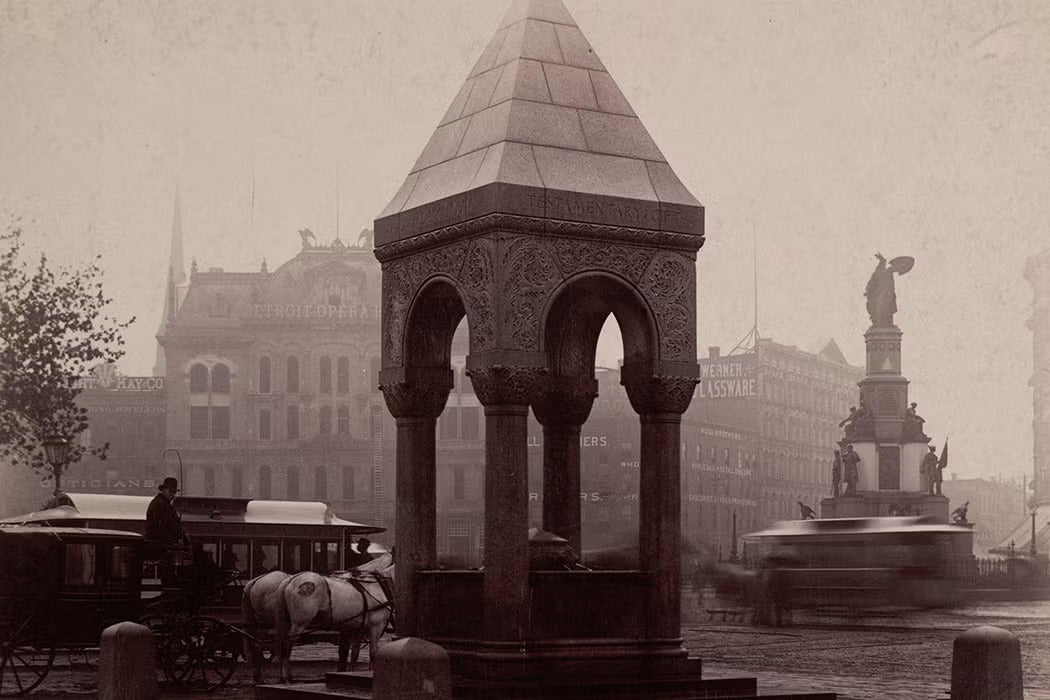
Follow architect H. H. Richardson’s rise through historic photographs from Cornell’s Andrew Dickson White Collection on JSTOR. Images of Trinity Church, Albany City Hall, and Harvard’s Austin Hall spotlight Richardsonian Romanesque hallmarks—heavy rusticated stone, asymmetry, polychrome detail, and bold round arches—showing how his short career reshaped late-19th-century American architecture.
Explore the Andrew Dickson White Collection of Architectural Photographs on JSTOR.
Read the JSTOR Daily feature: “H. H. Richardson and the Making of an American Romanesque.”
Contributions and conversations
Through presentations, written pieces, conference panels, and more, the Stewardship community is committed to sharing back what they do and learn. Visit our events page to catch up on past recorded events, register for new ones, and find opportunities to meet up at an upcoming conference.
“AI drafts, people decide”: How Goldey-Beacom College scales archival access and enriches student learning with JSTOR Seeklight
Goldey-Beacom College scaled archival access and student learning by pairing JSTOR Seeklight’s AI-assisted metadata drafting with human review. A small student-powered pilot described 172 images in under four hours (about a 170× speedup versus previous methods), shifted students from data entry to critical reviewers, and used clear guardrails and sensitivity checks to preserve ethical stewardship under the guiding principle, “AI drafts, people decide.”
Want to learn more about becoming a part of JSTOR Digital Stewardship Services? Get in touch with our team!