
Maximize the discovery, reach, and impact of your collections
JSTOR Digital Stewardship Services is a seamless, cloud-hosted platform that helps you process, manage, preserve, and share collections, expanding access worldwide.
300+
Participating institutions worldwide
13+ million
Items processed, preserved, managed, and shared
81+ million
Users discover collections on JSTOR annually
Accelerate discovery with integrated, community-built stewardship
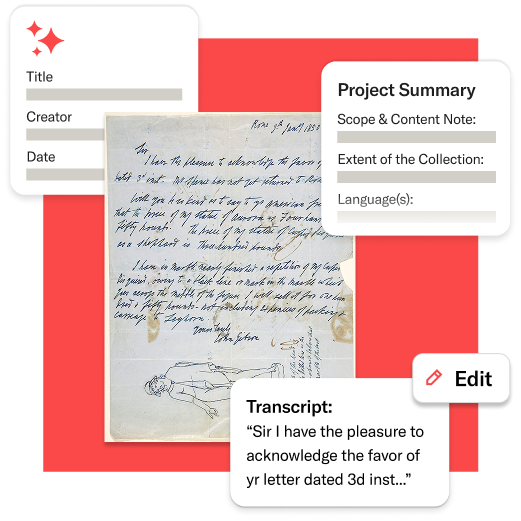
AI-assisted collections processing with JSTOR Seeklight
- Maintain expert oversight while rapidly generating descriptive metadata at scale
- Accelerate processing with collection-level insights
- Transform discovery and access with transcripts and descriptions
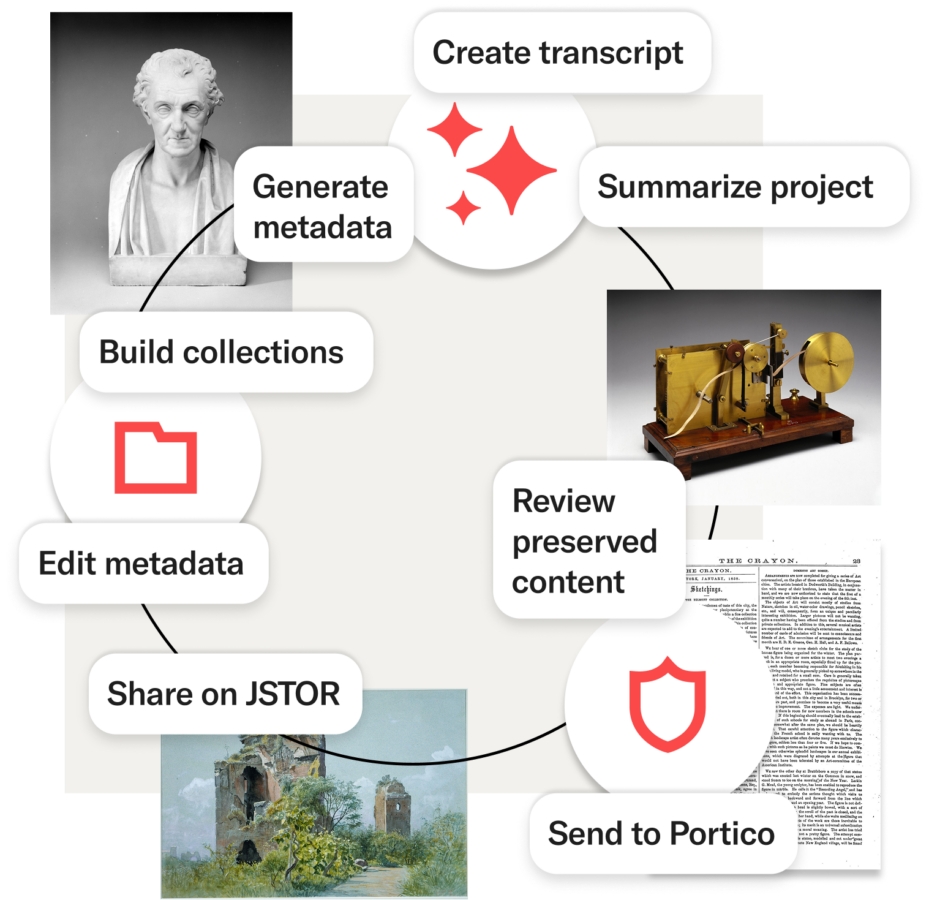
One unified, cloud-hosted solution that combines tools for:
- Digital asset management, including flexible cataloging and bulk metadata editing
- Accelerated description and transcription
- Long-term preservation: Safeguard against data loss, obsolescence, and technical advancements with Portico’s OAIS-compliant preservation
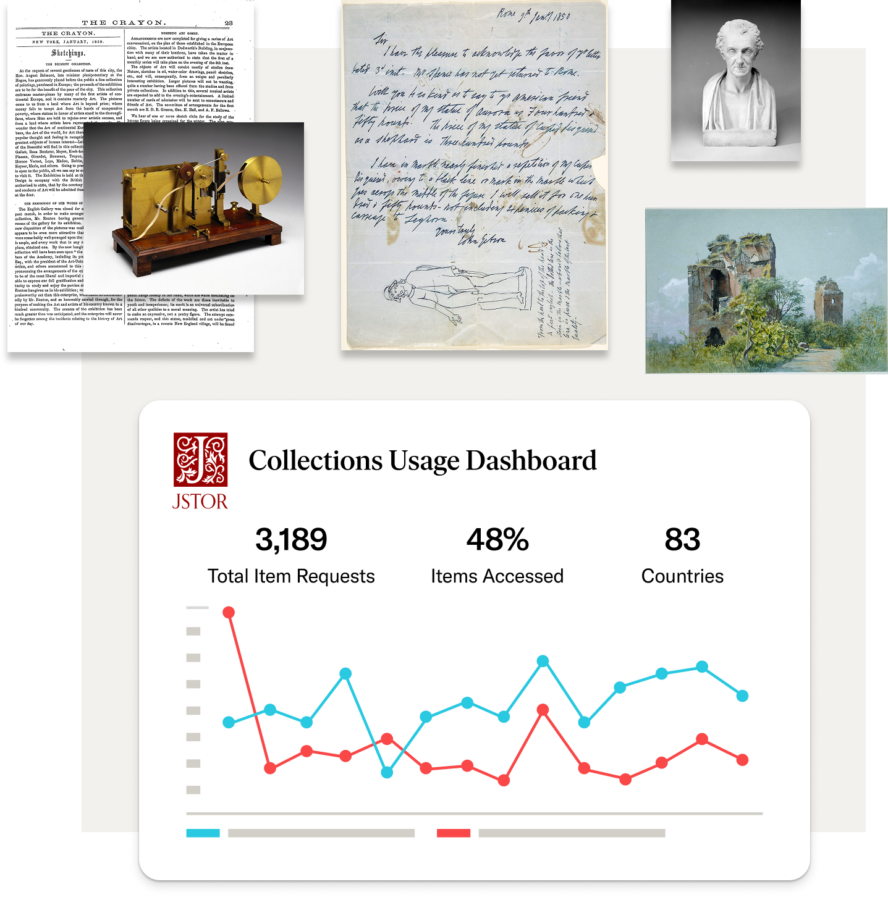
Unparalleled visibility and impact by sharing on JSTOR
- Reach your core user community, and 81M more users annually
- Place your primary sources directly in context with the secondary literature about them
- Extend access across platforms like Omeka, DPLA, and your catalog through OAI-PMH
Evolving with our community
For more than 30 years, JSTOR has partnered with libraries and archives to build shared solutions that strengthen access and preservation. JSTOR Digital Stewardship Services is the next step in that collaboration—created with and for the community to meet the challenges of a changing world and the growing complexity of digital collections.
Want to see who’s already involved? View participating institutions currently using JSTOR Digital Stewardship Services, including charter program members.
Select the tier of functionality that best meets your needs
Compare features and find the best fit for your collections, team, and budget—with onboarding and migration support available.
Tier 1
Share on JSTOR
Share collections on JSTOR to:
- Provide access within your institution or openly
- Boost engagement alongside scholarly content
- Increase discoverability via search engine indexing and discovery service integration
- Enhance visibility with a branded collections page
- Expand access to audio and video with auto-generated transcripts
- Track impact with usage analytics
Tier 2
Preserve, manage, and share
Everything from Tier 1, plus:
- Manage holdings with comprehensive digital asset management capabilities
- Preserve with Portico’s OAIS-compliant digital preservation
- Organize records and collections with user-friendly tools
- Create structured metadata with standard or custom schemas and linked authorities
- Efficiently catalog with templates, bulk editing, and flexible workflows
- Share collections to JSTOR and beyond via OAI-PMH
Comprehensive
Tier 3
AI-assisted stewardship with JSTOR Seeklight
Everything from Tier 2, plus:
- Accelerate collections processing with the AI-powered tools of JSTOR Seeklight
- Rapidly prepare large volumes of materials for access and preservation
- Generate descriptive, standards-compliant metadata at scale
- Support discovery and accessibility with transcripts for text-based materials
- Create structured summaries to support finding aids
- Maintain expert oversight through streamlined review and editing tools
Effortless migration and harvesting for your collections
Transition your digital collections to JSTOR Stewardship without the stress. Our expert-led migration and harvesting services handle setup, transfer, and integration—so your collections move seamlessly and stay preserved for the long term.
Help us shape the future of AI-assisted digital stewardship
Institutions have a unique opportunity to collaborate with our purpose-driven nonprofit to shape AI-assisted digital stewardship and help enhance, not replace, human expertise.

Community voices

I can demonstrate usage and reach at the drop of a hat—and show that key numbers have quadrupled since our move to JSTOR.

With JSTOR Seeklight, we’ve processed more than 500 photographs in under 45 minutes. The scale is really life altering in terms of workload, but also impact—we can make materials discoverable faster, better and in places where people are already working.

JSTOR gives us a path forward to meet libraries’ immediate needs and to build for the future with a values-aligned partner.

Professors are excited that the students are… going to be learning how to use Digital Stewardship Services, or that their work will then be presented on JSTOR.

JSTOR was a partner I could trust, that was not beholden to paying stockholders or making a profit off of me, but actually partnering with me.
Stewardship in action
A field report on archives and special collections
Discover how archivists and librarians are balancing care, ethics, and capacity in an evolving field shaped by digital transformation and shifting resources.
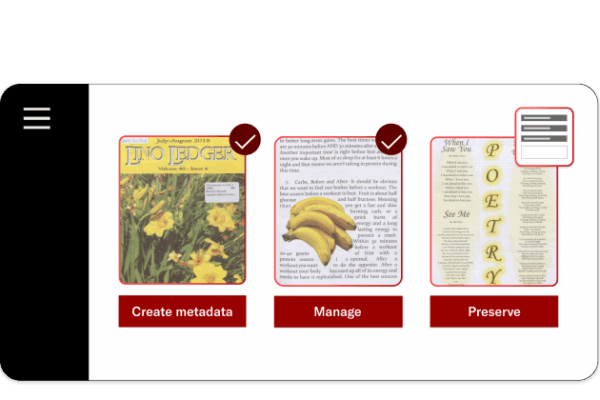
Building together: Reflections on JSTOR Seeklight and the 2025 C.F.W. Coker Award
How JSTOR Seeklight brings together archival expertise, AI, and community insight—reflections on winning the Coker Award and building values-driven tools.

Animating the archive: How Drew University uses JSTOR Digital Stewardship Services to expand access to scholarship and increase student engagement
At Drew University, digitization isn’t just preservation, it’s participation. Using JSTOR Digital Stewardship Services, Drew’s Special Collections team transformed rare materials, from Mary Shelley manuscripts to Byron memorabilia, into accessible digital archives. The initiative not only safeguards scholarship but also brings students into the process, teaching digital curation, metadata creation, and archival storytelling.
Frequently asked questions
What are the differences between the JSTOR Digital Stewardship Services offerings?
JSTOR Digital Stewardship Services is offered in three tiers to meet the diverse needs of institutions:
- Tier 1: Share collections on JSTOR, making them discoverable alongside scholarly research. Includes audio/video hosting, usage analytics, and indexing in search engines and library discovery services.
- Tier 2: Everything in Tier 1 plus digital asset management with flexible cataloging tools, broader sharing options, and OAIS-compliant preservation.
- Tier 3: Everything in Tiers 1 and 2, plus the AI-powered tools of JSTOR Seeklight for accelerating collections processing—including rapid generation of metadata, transcripts for text-based documents to drive discovery and enable accessibility, and collection level intelligence—while maintaining expert oversight and control.
What are the fees to participate?
As a nonprofit, JSTOR operates on a cost-recovery model to sustain and expand our services while keeping them accessible to a broad range of institutions. Pricing varies based on institution type and selected services:
- Tier 1 and Tier 2: To find the most relevant pricing details for your organization, please visit our fees and classifications page.
- Tier 3: Institutions can participate in our charter program, which provides a unique opportunity to help shape AI-assisted digital stewardship while benefiting from:
- Expanded processing capabilities.
- Direct collaboration with a mission-driven nonprofit.
For additional questions or customized guidance, reach out to participation@ithaka.org.
Is JSTOR offering a charter program for Digital Stewardship Services?
Yes. In keeping with our community-driven, continuous learning approach to developing solutions, JSTOR views charter programs as an essential part of our process, providing a structured onramp for institutions that are early adopters of new resources.
Institutions opting into Tier 3 of JSTOR Digital Stewardship Services can participate in our charter program, which offers additional support, peer collaboration, and other incentives for those integrating AI-powered collection processing support into their workflows.
Charter participants receive expanded processing capabilities and the opportunity to collaborate with JSTOR and peer institutions to shape the evolution of these services.
Learn more about the charter program.
Do JSTOR’s services integrate with other systems?
Yes, our services are designed for seamless interoperability with a range of library technologies, ensuring broad discovery, preservation, and data portability. Key integrations include:
- Discovery and access: Collections shared on JSTOR are indexed in Google and other major search engines, as well as library discovery services, including EBSCO Discovery Service™ (EDS), OCLC WorldCat, and ProQuest/Ex Libris Primo/Alma.
- Metadata sharing and harvesting: Support for OAI-PMH enables integration with Omeka, DPLA, library catalogs, and beyond, ensuring metadata can be harvested for broader dissemination.
- Long-term preservation: Portico integration provides trusted long-term digital preservation, safeguarding collections against obsolescence.
- Data portability: Flexible data export allows institutions to use their collections and metadata in other systems as needed.
How does JSTOR ensure long-term preservation of digital assets?
JSTOR ensures robust, standards-compliant digital preservation through its integration with Portico, a leading digital preservation service. JSTOR and Portico are both nonprofit services of ITHAKA. Key features include:
- Portico-powered preservation: JSTOR leverages Portico’s proven infrastructure to provide secure, long-term digital preservation.
- Active monitoring: Scheduled scans detect format obsolescence and perform necessary format migrations to maintain usability.
- Fixity checks: Regular integrity checks detect and address data corruption.
- Geographically distributed storage: Multiple redundant copies ensure long-term protection.
- Compliance with preservation standards: Adherence to established digital preservation standards, including the Open Archival Information System (OAIS) and Preservation Metadata (PREMIS), ensure a trusted preservation environment.
Learn more about our preservation standards and process or explore guidance on best practices for using our services to preserve your content.
How do JSTOR’s services improve discoverability?
Once your collections are shared to JSTOR, your institution benefits from the strengths of the JSTOR platform, including:
- Availability to millions of researchers worldwide.
- The ability to cross-search your collections alongside other scholarly materials on JSTOR.
- Indexing in Google and major search engines (JSTOR is one of the world’s top ranked websites on Google).
- Integration with library discovery services, ensuring seamless academic access.
With Tier 3, JSTOR Seeklight enables the creation of descriptive item-level metadata at-scale, as well as machine-readable transcripts of handwritten and typescript documents that support vastly enhanced discoverability on your platform, and via search engines.
Additionally, institutions can enable broad metadata sharing via OAI-PMH, allowing integration with Omeka, DPLA, and library catalogs, expanding discoverability beyond JSTOR’s platform.
Are collaborative workflows supported?
Yes, our cloud-based solution provides real-time access from anywhere, enabling unlimited collaboration and improved accessibility. With multi-user support, role-based access, and real-time updates, it seamlessly scales across departments and projects to streamline workflows.
What type of files are supported?
Our services support the management of a wide variety of digital assets, including images, documents, audio, and video. Learn more.
Please note: AI-assisted collection processing tools from JSTOR Seeklight (Tier 3) currently support text-based documents, handwritten materials (PDF), and images (JPG) only. We are exploring future expansions to support additional file types such as audio and video.
What training and support are available?
We offer a range of education and support resources to help ensure your success:
- Personalized onboarding
- Included in Tier 3 (up to 3 hours) and Tier 2 (up to 2 hours)
- Tailored to your institution’s workflows and priorities
- Flexible format—can be split across multiple sessions
- Self-service resources
- Unlimited access to a dedicated support site with documentation and tutorials
- Tier-specific video tutorial playlists for Tier 1, Tier 2, and Tier 3
- Playlists are easy to embed in your institution’s local guides and documentation
- Ongoing training
- Regular live training webinars
- Recordings of open sessions are shared with registrants and posted on JSTOR’s YouTube channel, including captions and transcripts for accessibility
Is migration support available for transitioning from another platform?
Yes. For institutions moving from a legacy system into JSTOR Digital Stewardship Services, a one-time, fee-based content migration service is available. This add-on service is designed to support a full transition, making it easier to consolidate digital collections into JSTOR Digital Stewardship Services as the primary content management platform. Contact participation@ithaka.org to learn more.
Is there a service for regularly adding content to Digital Stewardship Services?
Yes. JSTOR Digital Stewardship Services offers harvesting as an add-on option for institutions that want to keep their collections up to date by regularly transferring content from another system into their JSTOR Stewardship environment.
Harvesting is ideal for institutions that manage collections across multiple platforms and need a reliable, hands-off way to bring new or updated content into JSTOR Stewardship on an ongoing basis. Learn more about what harvesting offers and how it works.
How can my institution participate?
You can request a demo or contact participation@ithaka.org to learn more. We look forward to hearing from you!
Learn more about Stewardship
Rowan University joins JSTOR Digital Stewardship Services as charter participant
Rowan University adopts JSTOR Stewardship to strengthen digital collections management, preservation, and discovery while joining a charter community shaping responsible, AI-assisted collections processing.
JSTOR Digital Stewardship Services: Seeklight Field Management workshop
A hands-on workshop for Tier 3 Stewardship admins: Enable and configure JSTOR Seeklight with the new Seeklight Field Management settings.
JSTOR Digital Stewardship Services: Seeklight Field Management workshop
A hands-on workshop for Tier 3 Stewardship admins: Enable and configure JSTOR Seeklight with the new Seeklight Field Management settings.
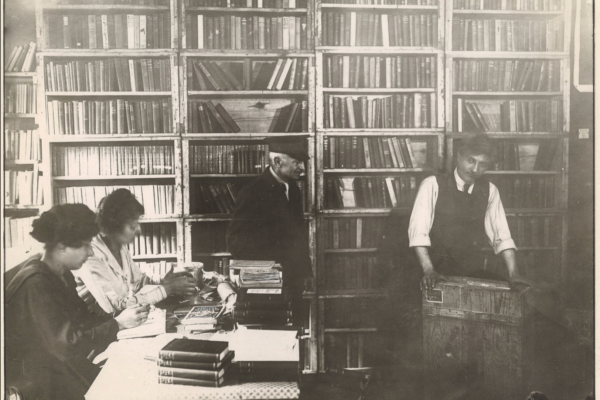
What’s new in JSTOR Stewardship: October 2026
Explore the latest from JSTOR Stewardship in October 2026, including new participating institutions, distinctive collections now discoverable on JSTOR, and community perspectives on digital preservation, collaboration, and the future of collections stewardship.
Reconsidering your digital collections platform: Lessons from MTSU’s move from CONTENTdm to JSTOR Stewardship
Join us for a conversation with Kathleen Schmand (Dean, Walker Library) about Middle Tennessee State University’s move from CONTENTdm to JSTOR Stewardship. Hear how MTSU evaluated its options, worked with JSTOR’s migration team to prepare and move its collections, and what the transition has made possible.
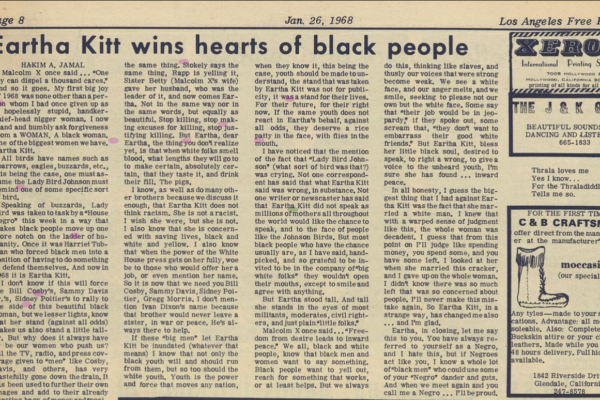
When distinctive collections become part of research
Libraries’ and archives’ collections shared through JSTOR Stewardship can become evidence for research, teaching, and public understanding.

JSTOR Stewardship: A modern foundation
JSTOR rebuilt the infrastructure behind its Digital Stewardship Services while hundreds of institutions continued their work. Learn how this modernization supports accessibility, reliable maintenance, and more flexible ways to organize and connect digital collections.

How Middle Tennessee State University planned its move from CONTENTdm to JSTOR Stewardship
Middle Tennessee State University evaluated seven digital collections platforms before selecting JSTOR Stewardship to replace CONTENTdm. Learn how staff from Walker Library and the Albert Gore Research Center aligned their needs, planned the migration of roughly 30 collections and more than 10,000 items, and are preparing to make distinctive materials easier for researchers to discover.
Are Libraries Prepared for the Second Digital Transformation of Distinctive Collections?
In The Scholarly Kitchen, Roger Schonfeld argues that libraries are entering a second digital transformation for distinctive collections, calling on library leaders to build an “activation infrastructure” that connects processing, digitization, and discovery to maximize their collections’ impact.
Interested in learning more about the flexible options of Digital Stewardship Services?
Fill out this form, and a member of our team will be in touch
Talk to our team
Learn more about JSTOR Digital Stewardship Services
Have a question or want a quick overview? Share your info and we’ll connect you with a JSTOR Stewardship team member.
View image credits from this page
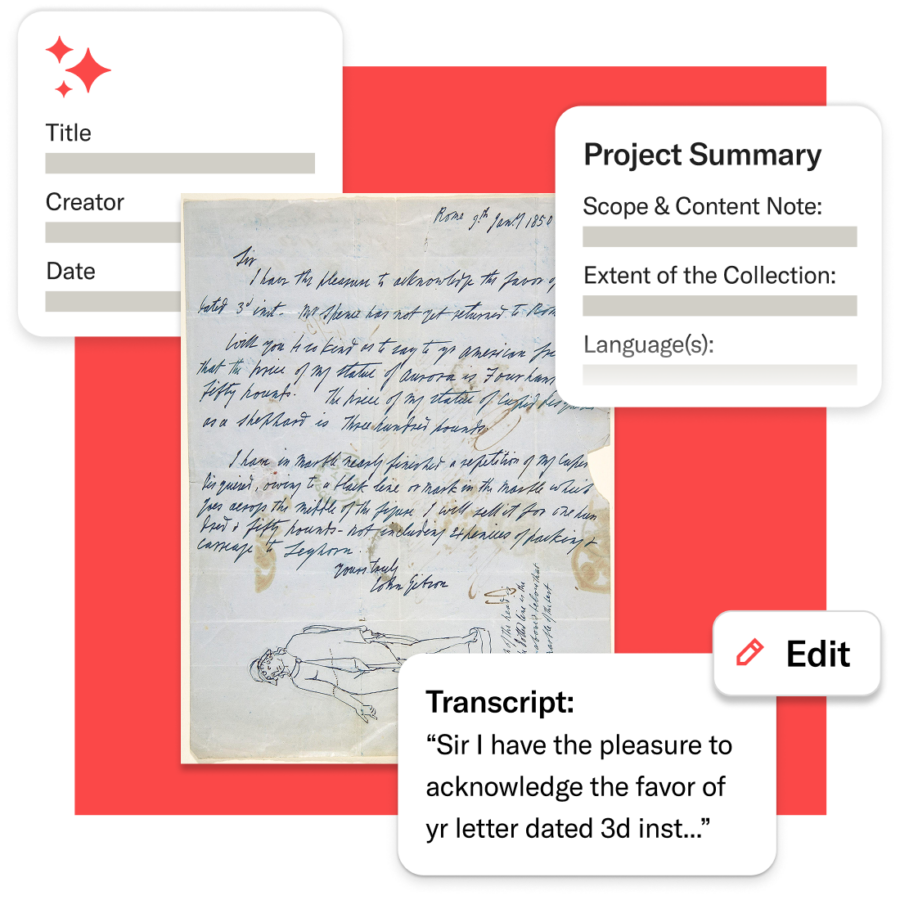
John Gibson. Letter from John Gibson to John Udny, Containing Information for Henry Farnum. January 9, 1850. Part of Open: The Metropolitan Museum of Art, Artstor. https://www.jstor.org/stable/community.18604581.
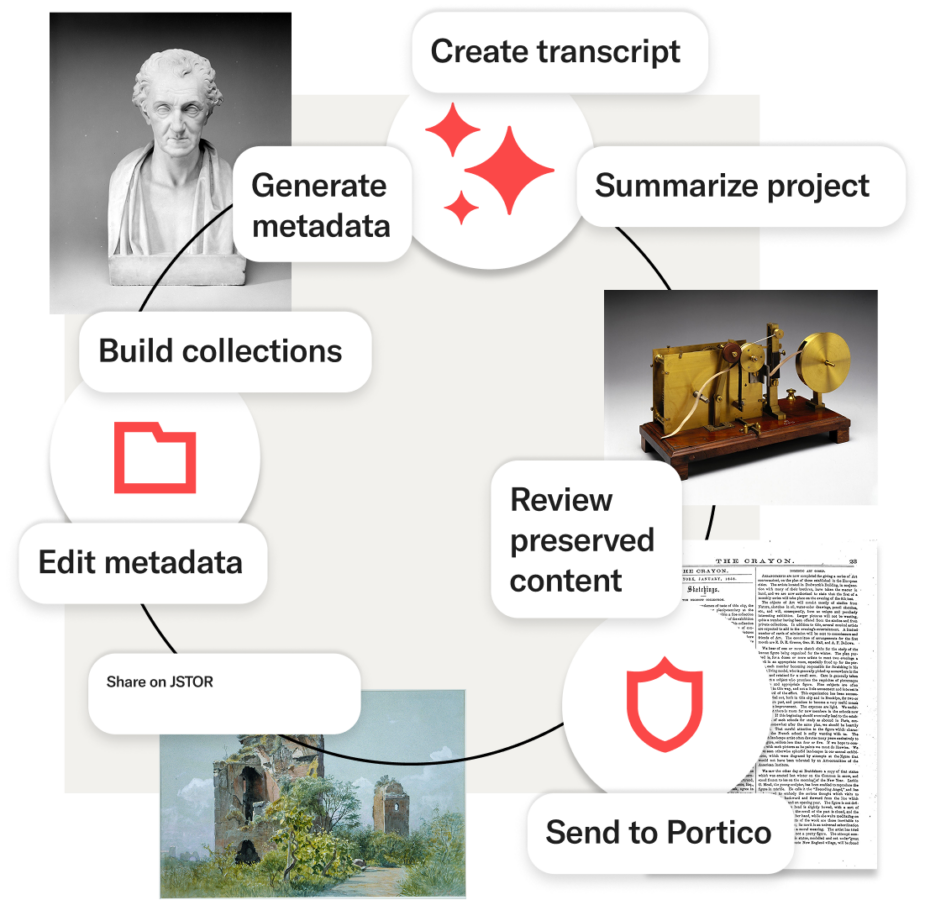
John Gibson. Bust of a Gentleman. ca. 1830–40. Part of Open: The Metropolitan Museum of Art, Artstor.
Unknown maker. Bain’s Chemical Telegraph, 1850. 1850. Part of Open: Science Museum Group, Artstor.
William Stanley Haseltine. Baths of Trajan (Sette Sale, Villa Brancaccio, Rome). ca. 1882. Part of Open: The Metropolitan Museum of Art, Artstor.
F., A. B. Durand, Gulian C. Verplanck, J. E. Freeman, and John Gibson. “Sketchings.” Thomas J. Watson Library, The Metropolitan Museum of Art. The Crayon 5, no. 1 (1858): 23–27.
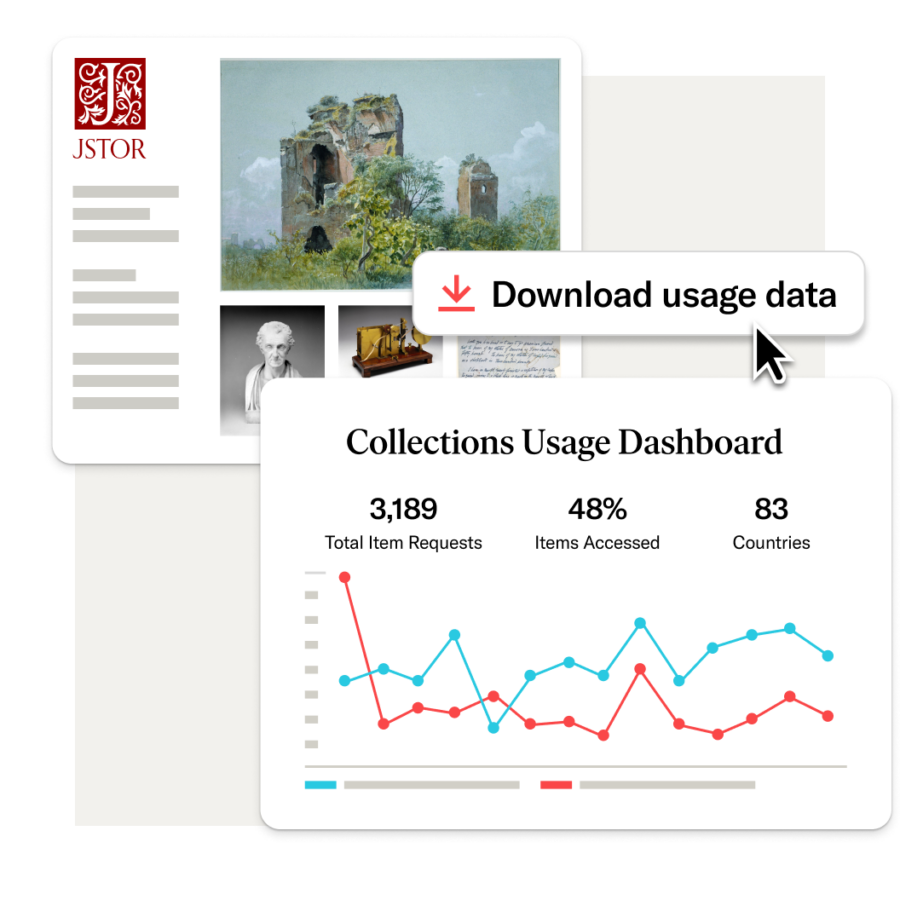
William Stanley Haseltine. Baths of Trajan (Sette Sale, Villa Brancaccio, Rome). ca. 1882. Part of Open: The Metropolitan Museum of Art, Artstor.
Chinese. Hall of Quiet Study. 19th century. Part of Open: The Metropolitan Museum of Art, Artstor.