The JSTOR Digital Stewardship Services community is expanding—uniting libraries, archives, and cultural heritage organizations working together to strengthen responsible, mission-aligned digital collections practices. Through AI‑assisted collections processing, integrated digital asset management, long‑term preservation, and sharing their unique materials on JSTOR, Stewardship participants are advancing discovery and broadening access in ways that reflect their values and aspirations.
This month’s Stewardship update features new members of our community, notable collections made available by our participants, and updates from the broader community. If you’re looking to scale your digital collections program—or simply curious to see what peers are doing—we hope these stories provide inspiration.
New to the Stewardship community
We’re excited to welcome new institutions to JSTOR Digital Stewardship Services—each contributing distinctive collections, innovative projects, and unique insights to our growing community. Explore the full participant list.
Royal Melbourne Institute of Technology, Melbourne (RMIT University) – Melbourne, Australia
RMIT joins as the first Australian institution in the JSTOR Digital Stewardship Services Tier 3 charter program. Their team will pilot JSTOR Seeklight to describe an architecture slide collection that currently lacks metadata, with plans to explore additional use cases such as student capstone projects.
Read the full RMIT announcement
North Carolina State University (NC State) – Raleigh, NC
NC State also joins the Tier 3 charter program, with a focus on processing digital archival collections at scale using JSTOR Seeklight. Building on a long history of digital innovation—including early JSTOR and Portico adoption—NC State brings leadership and experience to the Seeklight development community.
Read the full NC State announcement
Collection spotlight
As stewards of unique materials, our participants make a diverse array of collections available on the JSTOR platform, where they can be discovered alongside scholarly materials by researchers on-campus and worldwide.
Browse thousands of open access collections on JSTOR
JSTOR Seeklight-generated, human-reviewed description: Hofstra’s Hempstead, New York Photographs collection
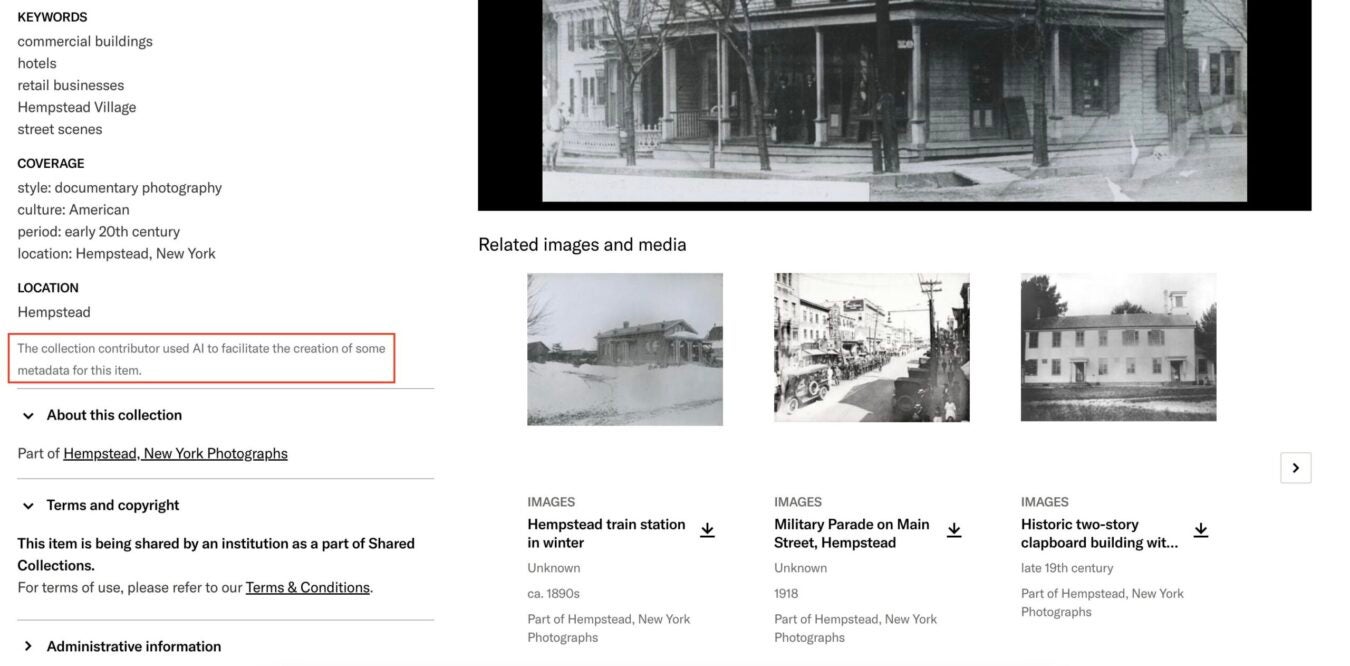
Explore late-19th and early-20th-century images of Hempstead Village, described with AI-assisted, human-reviewed metadata—clearly labeled with a new transparency note on each item page so viewers understand how the descriptions were created.
Browse the Hempstead photographs collection on JSTOR
Pennsylvania Horticultural Society Archive Collection
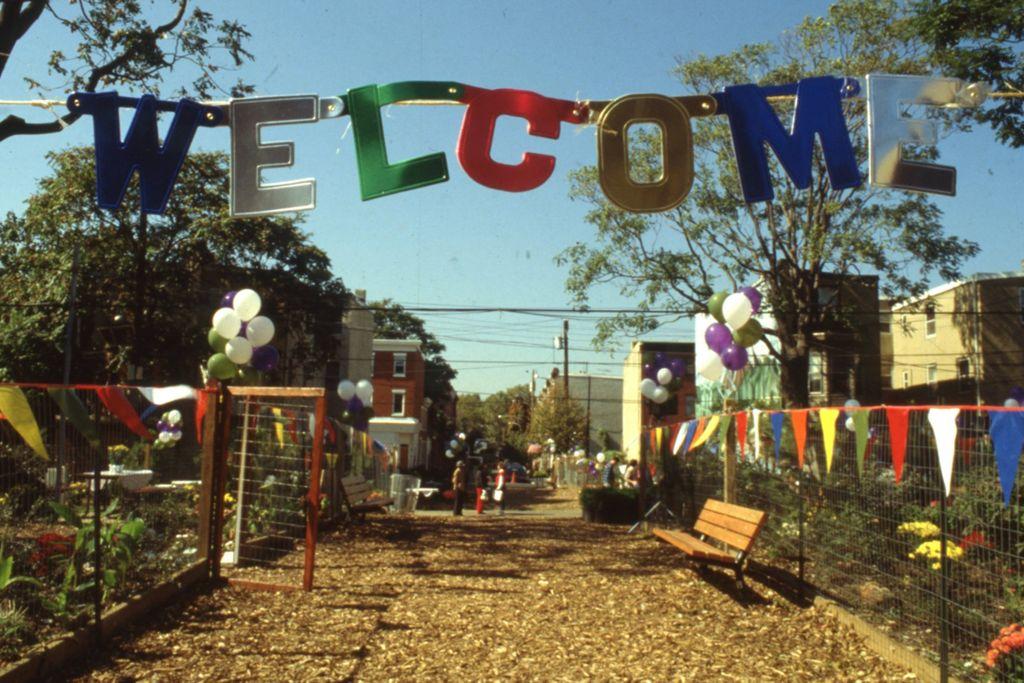
What began as a single community garden in West Philly blossomed into Philadelphia Green, a transformative, decades-long program led by the Pennsylvania Horticultural Society (PHS) to help turn neglected lots into vibrant gardens and green spaces.
Explore the PHS collection on JSTOR
Read the JSTOR Daily feature: “Greening Philly’s Neglected Lots”
The City University of New York: Indoor Voices podcast archive
Since 2017, Indoor Voices has been exploring the vibrant “CUNYverse” through conversations with scholars, creators, and community members across the City University of New York. Thanks to the Cultivating Archives & Institutional Memory project, the full eight‑year archive of the podcast—as well as all future episodes—is preserved and accessible on JSTOR.
Explore the Indoor Voices archive on JSTOR
Read more about the project’s impact
Vanderbilt University’s Lamar Alexander Papers

Explore the life and career of Lamar Alexander—Tennessee governor, U.S. secretary of education, and three-term U.S. senator—through a richly digitized archive documenting more than five decades of public service. From early student leadership and grassroots campaigning to bipartisan work in Washington, the collection offers a detailed look at one of the state’s most influential political figures.
Explore the Lamar Alexander Papers on JSTOR
Learn about the digitization project
Contributions and conversations
Through presentations, written pieces, conference panels, and more, the Stewardship community is committed to sharing back what they do and learn. Visit our events page to catch up on past recorded events, register for new ones, and find opportunities to meet up at an upcoming conference.
Advancing digital collections stewardship: From vision to practice (Charleston 2025)
At this year’s Charleston Conference, Stewardship Charter participants from Hofstra University, American University, and Goldey-Beacom College joined JSTOR for a panel exploring how they’re using JSTOR Seeklight to reduce backlogs, pilot new workflows, and build team capacity. Their stories reflected a shared belief: AI can be a powerful tool—when paired with professional expertise and community input.
Confronting Descriptive Debt and Considering Digital Futures for Archives and Special Collections
Also at Charleston, Emilie Hardman (Sr. Curator, Reveal Digital), Marta Brunner (Head of Collections, Research, and Instructional Service at Skidmore College), and Roger Schonfeld (Managing Director, JSTOR Stewardship) led a session to consider why so many digitized archival collections remain hard to discover online. Drawing on fieldwork across 24 institutions, they explored “descriptive debt”—the buildup of under-described materials—and how institutional priorities, staffing, and systems decisions shape the visibility and value of digital collections.
Want to learn more about becoming a part of JSTOR Digital Stewardship Services? Get in touch with our team!