
Equipping learners with information literacy is essential to supporting their success, but with limited access to educational materials or technology, students in prison often cannot build those key skills.
The JSTOR Access in Prison initiative offers students on the inside online and offline access to JSTOR’s extensive and ever-growing library of peer-reviewed journal articles, scholarly ebooks, and open research reports, granting them research experience commensurate with that of a traditional college.
If you’re interested in bringing JSTOR access to a jail or prison you work with, we’ve outlined the following steps. Schedule a consultation with us to review any questions you may have about the initiative or JSTOR implementation in jails, prisons, or detention centers.
Our mission
We believe that a freely available library of high-quality educational content can counter the growing impact of for-profit education and technology solutions in prison and play a positive role in helping to lower the cost and improve the outcomes for people in prison-based education programs.
The JSTOR Access in Prison collection contains the same respected corpus of secondary literature available to students on the outside.
How to get started
- Locate an IT professional from your partnering Department of Corrections facility. We can review security requirements and coordinate the whitelisting of jstor.org or pep.jstor.org.
- Receive permission from your higher education institution. Institutions already using JSTOR with active licensing agreements do not need to sign new agreements.
- Provide the new IP address and identify if the site will use jstor.org or the mediated version, pep.jstor.org.
- Designate a list of administrators and reviewers. Set them up in the system. If your site needs more than just a few, we can set it up for you.

Stay informed with The Catalyst
Stay updated on developments in prison education, new research, and JSTOR resources for correctional education programs.
Contact us
We’ll work with you to find a solution that fits your needs. Schedule a consultation to get started.
The latest from JSTOR Access in Prison

From jailhouse lawyer to fellow: How legal literacy at work is changing what I thought was possible
In “From jailhouse lawyer to fellow,” Joseph Sanchez reflects on how learning the law to navigate his own case became a way to support others and ultimately led to his work with the Legal Literacy at Work fellowship.

Education is My Contraband
In recognition of Fair Opportunity Month, “Education is My Contraband” traces Taveuan Williams’s journey from survival to self-discovery through reading and learning. Inside a system designed to reduce him, education becomes both resistance and refuge, offering a way to rebuild identity, confront the past, and imagine a future beyond confinement.

Restorative Justice: The Casuistic Approach
In recognition of Fair Opportunity Month, “Restorative Justice: The Casuistic Approach” brings together lived experience, philosophy, and theology to reexamine how we define justice. Drawing from their own lives inside the Colorado Department of Corrections, Robert Ray and Clarke T. Clayton explore restorative justice as a human-centered practice.

Clamoring to be Heard
In recognition of Fair Opportunity Month, “Clamoring to be Heard” shares Lisa Lesyshen’s experience navigating incarceration as a wheelchair user—and the assumptions that shaped it. After being denied meaningful work, she creates her own path by launching Inmate.com, a prison-run TV program that gives voice to incarcerated people and challenges misconceptions about disability, dignity, and life inside.

Leaders and Followers
An acting workshop becomes a lesson in trust, responsibility, and shared experience. Reflecting on moments of leading and following, William Davenport considers what it means to guide others, to rely on them, and to recognize that both roles are essential to how we learn and grow.

Star Dog by Jeremy Moss
This post introduces Star Dog by Jeremy Moss, the first published piece from an Unbound Authors student, a program supporting incarcerated writers across Colorado. Moss’s story follows a stray dog bearing witness to a man’s final moments, offering a quiet reflection on presence, dignity, and what it means not to be forgotten.

Welcome to Fair Opportunity Month: Centering the voices of people inside
JSTOR Access in Prison introduces Fair Opportunity Month, a reimagining of Second Chance Month that centers the voices and intellectual work of people inside. This year’s theme, We Learn Together, highlights writing, research, and creative work that challenges assumptions about who gets to participate in knowledge-making.

Pressing play with THEI: Excellence, agency, and the architecture of opportunity
The Tennessee Higher Education Initiative (THEI) rejects the idea that incarcerated students should accept “whatever is available.” Instead, their Navigating Forward project is built on the belief that learners inside deserve excellence—resources that are not only functional but dignifying.
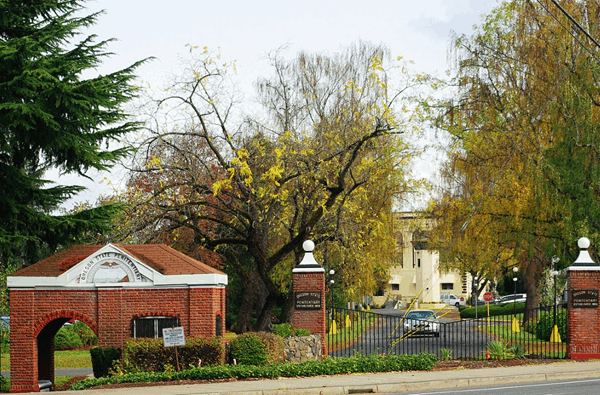
A visit to Oregon State Penitentiary: Reflections from a JSTOR engineer
In this deeply personal reflection, Ryan McCarthy of JSTOR Labs shares his experience visiting Oregon State Penitentiary (OSP) alongside Chemeketa Community College’s prison education team.
View image credits from this page
Illustration courtesy of Daniel Longan. April 2022.

Photo by Allison Shelley/Complete College Photo Library