
Effortlessly migrate or syndicate your digital collections
Enhance digital collection stewardship without adding complexity. Whether you’re migrating from another platform or syndicating content from an existing system, our expert-led services handle the technical work so your team can focus on impact.

Accomplish more with expert support
- Begin confidently with requirements gathering and compatibility confirmation by JSTOR specialists
- Migrate or harvest seamlessly—our team manages secure setup, transfer, and JSTOR landing page creation
- Extend stewardship, hands-free—we prepare materials for publication on JSTOR and preservation in Portico

Migrate or harvest?
Choose the approach that best supports your collections strategy.
Migration
- One-time transfer of collections from a legacy platform to JSTOR Stewardship
- Ideal for: Platform consolidation
- Frequency: One-time
- Fee structure: Custom, project-based
- Setup: Detailed project plan
Harvesting
- Ongoing updates from existing systems to JSTOR Stewardship to ensure consistency and accuracy
- Ideal for: Regular syndication needs
- Frequency: Ongoing or on-demand
- Fee structure: Flat annual fee
- Setup: Simple configuration
Stories from the community

The migration to JSTOR was accomplished in just 3 weeks… We then worked with the JSTOR team to do a quality check and they were really insightful in helping us figure out a workflow that our student workers could execute with us.
We instantly saw results—people that were already on JSTOR, doing research were discovering our collections. We see outstanding usage from all over the world, which we never saw with previous platforms.

The setup was really easy on our part. We shared the location of our digital collections, and JSTOR harvested the collections for us. It’s really nice to have a service that matches our particular workflow like this one does.

It’s easy to be able to just go in, give [patrons] one link or a link to a sub-collection… the functionality, the finding features—it’s been a really big benefit.

By the end of the pilot, everyone—from staff to administrators—was in agreement. When we shared our findings, everyone could immediately see JSTOR’s impact—cleaner visuals, easy analytics, no hidden IT costs.
Stories of seamless migration and harvesting
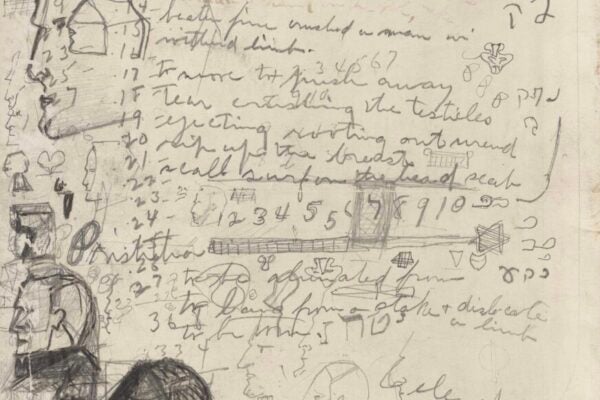
Moving beyond DIY: How Vanderbilt and UDC scaled stewardship with JSTOR
Vanderbilt University and the University of the District of Columbia moved from self-hosted systems to JSTOR Digital Stewardship Services, transforming digital stewardship from a technical challenge into a scalable, mission-driven practice.
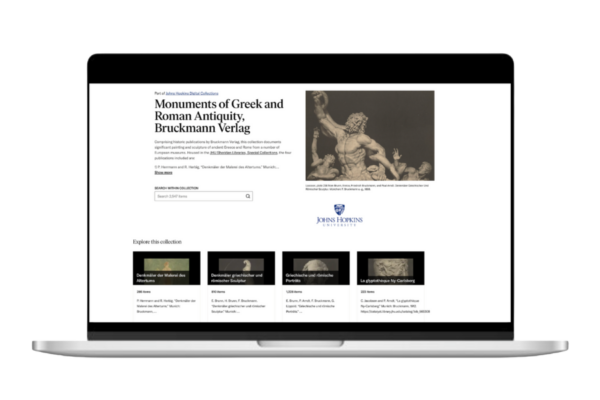
For each collection, a solution: How JSTOR Digital Stewardship Services’ flexible framework powers Johns Hopkins’ diverse digital collections
At Johns Hopkins University, JSTOR Digital Stewardship Services provides the flexible framework needed to manage and showcase a wide range of collections—from ancient papyri to modern archives—enhancing visibility, collaboration, and global access to rare materials.

Skidmore College uses JSTOR Digital Stewardship Services to amplify and future-proof its special collections
Discover how Skidmore College’s Lucy Scribner Library is using JSTOR Digital Stewardship Services to expand access, streamline preservation, and ensure the long-term impact of its special collections, making rare materials discoverable to scholars around the world.
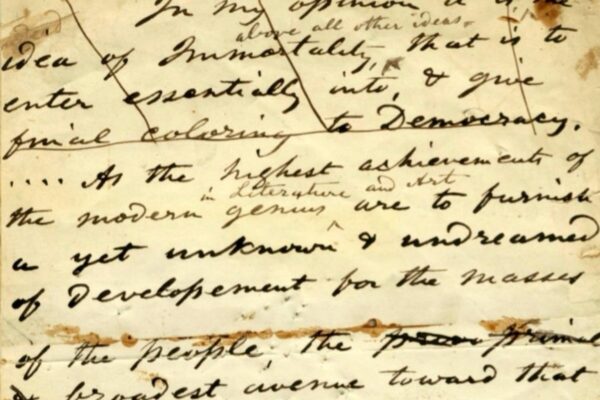
Reclaiming flexibility: How Rollins College and the University of Puget Sound modernized digital stewardship with JSTOR
Discover how Rollins College and the University of Puget Sound modernized digital stewardship with JSTOR, replacing fragmented legacy systems with a unified, mission-driven platform that streamlines workflows, enhances teaching, and reenergizes engagement across campus.

Design as dialogue: Building JSTOR Stewardship through listening and evidence
User research revealed differing bulk editing needs and guided a refined JSTOR Stewardship design that offers clearer context, stronger usability, and support for diverse workflows.

Beyond description: Introducing transcript generation in JSTOR Seeklight
JSTOR Seeklight now generates transcripts for typed and handwritten items, making every word searchable and accessible while keeping editors in control. Available now for Tier 3 participants.

Illuminating possibility: Early reflections on JSTOR Seeklight from our charter community
This summer, charter participants in JSTOR Digital Stewardship Services shared their early enthusiasm for JSTOR Seeklight, our AI-powered tool for accelerating collection processing. We share their feedback, ideas, and a glimpse of what’s ahead.

What we talk about when we talk about content management
JSTOR Digital Stewardship Services does more than store your collections. Explore content management that drives discovery, use, and impact.

Building evolving guardrails: How JSTOR Seeklight helps address bias and harm in descriptive metadata
Bias is inherent to description, but description can and should be revised over time. We’re evolving JSTOR Seeklight’s safeguards against bias and harmful content to reflect our values, our engineering ethos, and our commitment to transparency.
Frequently asked questions
What’s the difference between migration and harvesting?
Migration is a one-time, project‑based move from a legacy platform into JSTOR Stewardship, typically making Stewardship your primary system going forward. Scope, SLAs, and deliverables are defined in a Work Proposal.
Harvesting is an automated, ongoing service that retrieves media and existing metadata from your current repository into JSTOR Stewardship (and can syndicate to JSTOR and preserve in Portico). Priced as a flat-fee add‑on.
How long does a migration project take?
Timelines vary based on collection size and complexity. They are scoped during a discovery and planning phase of the migration, during which a dedicated JSTOR specialist works with your team to establish clear milestones and Work Proposal. We will try to accommodate any other factors that are discussed during the scoping conversation.
Which repositories are supported for migration and harvesting?
JSTOR can migrate or harvest from most widely used repositories, including CONTENTdm, DSpace, Digital Commons, Omeka, Islandora, and Preservica, though requirements gathering is still needed for confirmation. We can also harvest from any platform with an active OAI-PMH endpoint or through secure FTP transfer when needed. Learn more about options for migration and harvesting.
Can I migrate and harvest content together?
Yes. Many institutions migrate their primary repository to JSTOR Stewardship and continue to harvest new materials or partner collections. Our team can help you determine the right combination of services based on your current systems and goals.
What file types are supported?
JSTOR Stewardship supports common media formats such as PDF, JPEG, TIFF, and audio/video files. Learn more about supported file types in Stewardship.
Ready to scale your stewardship without adding complexity?
Partner with JSTOR experts to streamline migration or harvesting, and strengthen discovery, preservation, and access for your collections.
Get expert help
Need help with migration or harvesting?
Our specialists can guide you through next steps—whether you’re planning a one-time migration or ongoing harvesting from another system.