
JSTOR for students and researchers
JSTOR helps you find, organize, and analyze trusted academic sources—whether you’re on campus, studying remotely, or working independently.
With flexible access options, open and free content, and practical research tools, you can build stronger projects, papers, and publications on a platform you can trust.
01
Access options for every researcher
No matter where you are in your academic journey, there’s a way to use JSTOR. Many students and researchers already have full access through a school, university, or public library. For those without an institutional affiliation, JSTOR offers open and free content, personal accounts, and personal subscriptions to keep research moving forward.
Students
You may already have access to JSTOR through your school, college, university, or public library.
Once connected, you can search across journals, books, images, and primary sources—and use your personal account to save and organize what you find.
Alumni
Some institutions extend JSTOR access to their alumni communities, giving graduates a way to stay connected with scholarly literature after they leave campus.
Independent researchers
If you’re not currently affiliated with an institution, JSTOR still offers ways to access high-quality academic content:
Open and free content: Millions of items, including journals, books, primary sources, research reports, and images, are freely available to everyone.
Read online for free: With a free personal account, you can read up to 10 journal articles online every 30 days.
JPASS: For deeper, ongoing projects, JPASS gives you unlimited online reading and a set number of PDF downloads from 2,000+ journals.
02
Explore open and free content
Our partnerships with libraries and publishers help make a growing amount of content freely accessible worldwide, supporting learners and researchers wherever they are.
Key benefits:
- Truly free access: Search open and free content at no cost
- Integrated experience: Discover open access journals, books, primary sources, research reports, and images—all on one feature-rich platform
- Organize your research: Use JSTOR Workspace to save articles, reports, images, and primary sources in project folders you can return to anytime
03
Get more with a personal account
A free personal JSTOR account lets you do more than just read—it helps you return to what you’ve found, manage your research, and extend access beyond your institution.
Key benefits:
- Read online for free: Read up to 10 articles every 30 days
- Remote access connection: If your school or library subscribes to JSTOR, you can link your personal account to your institution for seamless off-campus access
- Research tools in one place: Save items, manage citations, and organize materials directly on JSTOR
04
Go deeper with JPASS for personal access
For long-term projects or intensive independent research, JPASS offers a flexible subscription that brings more of JSTOR’s corpus of scholarly research within reach with no institutional login required.
What you get with JPASS:
- Access to 2,000+ academic journals and the Struggles for Freedom: Southern Africa primary source collection
- Unlimited online reading so you can browse, read, and revisit articles as often as you like
- Downloadable PDFs—up to 10 per month or 120 per year, depending on your plan—to keep in your personal library
- Continuous growth: New content is added regularly, so your access expands over time
Plan options:
- Monthly plan: $19.50/month
- 1 month of unlimited reading
- 10 article PDF downloads
- Yearly plan: $199/year
- Best value for long-term research
- 1 year of unlimited reading
- 120 article PDF downloads

05
Build your research skills
Whether you’re just starting with academic research or returning after time away, JSTOR offers guided support to help you search strategically, evaluate sources, and use information responsibly.
Research with confidence
Research Basics is a free, self-paced online course that introduces search techniques, source evaluation, and citation basics—ideal for high school, college-bound, and early undergraduate learners.
How-to guides and support
Build a clear research roadmap
Turn “I have a topic” into a confident plan. This step-by-step guide shows you how to form stronger research questions, choose effective keywords, use Boolean logic, and refine your searches—giving you a solid foundation for any project.

Ask deeper scholarly questions
Great research starts with better questions. This activity helps you move beyond simple “why/how” queries and develop analytical, discipline-specific questions—skills that make your work more insightful and original.

Strengthen your research writing with a step-by-step process
Not sure where to start? This five-step model guides you from defining a strong research question to exploring sources, gathering evidence, drafting, and revising. It’s a clear, adaptable structure you can use for any research assignment.

Master summary skills with structured practice
Learn how to summarize academic texts using examples from JSTOR Daily. This resource teaches you what to extract, how to condense arguments, and how to adapt your writing style, essential skills for papers, presentations, and discussions.
Self-guided trainings to build your research skills
Research fundamentals on JSTOR
Get a clear introduction to JSTOR’s search tools and learn how to find journal articles, books, images, and primary sources. Perfect if you’re new to academic research or returning after a break.
Advanced research strategies on JSTOR
Ready to go deeper? Explore advanced features that help you refine searches, compare sources, follow citation trails, and build more rigorous academic work—useful for upper-level courses, capstone projects, and independent research.
Working with images and primary sources on JSTOR
Discover how to use JSTOR’s rich visual materials and archival documents in your research. Learn how images, manuscripts, photographs, and historical sources can strengthen your arguments and deepen your understanding of a topic.
Using JSTOR’s AI-powered research tool
Learn how to use JSTOR’s AI research tool to quickly gauge relevance, surface key points, and discover related content—all grounded in trusted scholarly sources. Great for breaking down complex texts and exploring new ideas responsibly.
06
Stay organized with Workspace
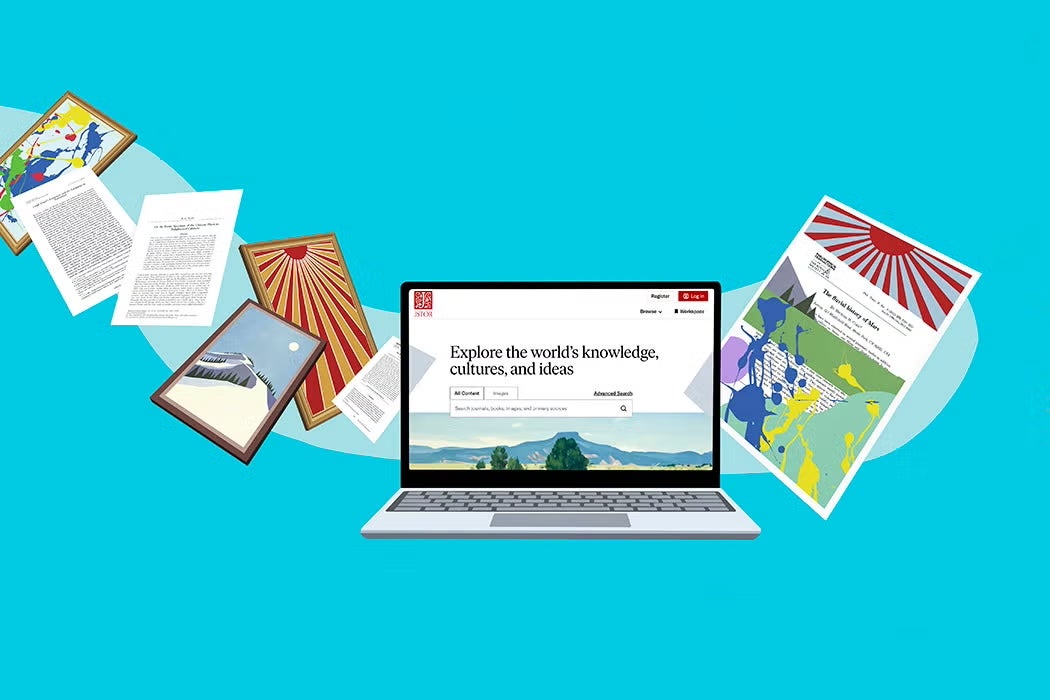
JSTOR Workspace is your personal research hub, built to help you keep track of everything you’re reading, thinking about, and citing.
With Workspace, you can:
- Save articles, primary sources, images, and more, to revisit anytime
- Create folders and subfolders to organize sources by project, course, or chapter
- Add notes and descriptions so your future self remembers why each item matters
- Export citations or collections into slides, PDFs, or reference lists when you’re ready to present or submit your work
07
Make complex texts more approachable
JSTOR’s AI research tool is designed to support your learning, not replace it. It can help you understand dense texts, surface related materials, and explore new directions for your research.
What’s possible:
- Quickly identify key points and arguments within an article or book chapter so you can decide whether it’s relevant to your research
- Explore related topics and materials across the JSTOR corpus
- Ask natural-language questions to discover new connections across millions of items in JSTOR’s corpus

08
Get context with JSTOR Daily
JSTOR Daily is a free online magazine that brings academic research into conversation with current events, culture, and everyday questions. It’s a helpful bridge between curiosity and deeper scholarly reading.
How JSTOR Daily can support your work:
- Find accessible explanations of complex topics, backed by citations to JSTOR articles
- Discover reading lists and syllabi that can spark paper topics or research questions
- Use Daily stories to contextualize your sources in broader historical, social, or scientific debates
09
Stay connected
Your research needs will grow and change over time. JSTOR continues to evolve alongside you, adding new content, tools, and access pathways to support your learning and work.
Follow us on social media


Sign up for JSTOR Daily
Sign up for JSTOR Daily’s Weekly Digest to get original stories grounded in academic research, plus clever curation from around the web.

Share your story
Tell us how you’re using JSTOR in your studies, independent research, or creative projects to be featured in a JSTOR success story.
Collaborate with JSTOR
Inspire others, share practical insights, and showcase creative uses of JSTOR content and tools.

View image credits from this page
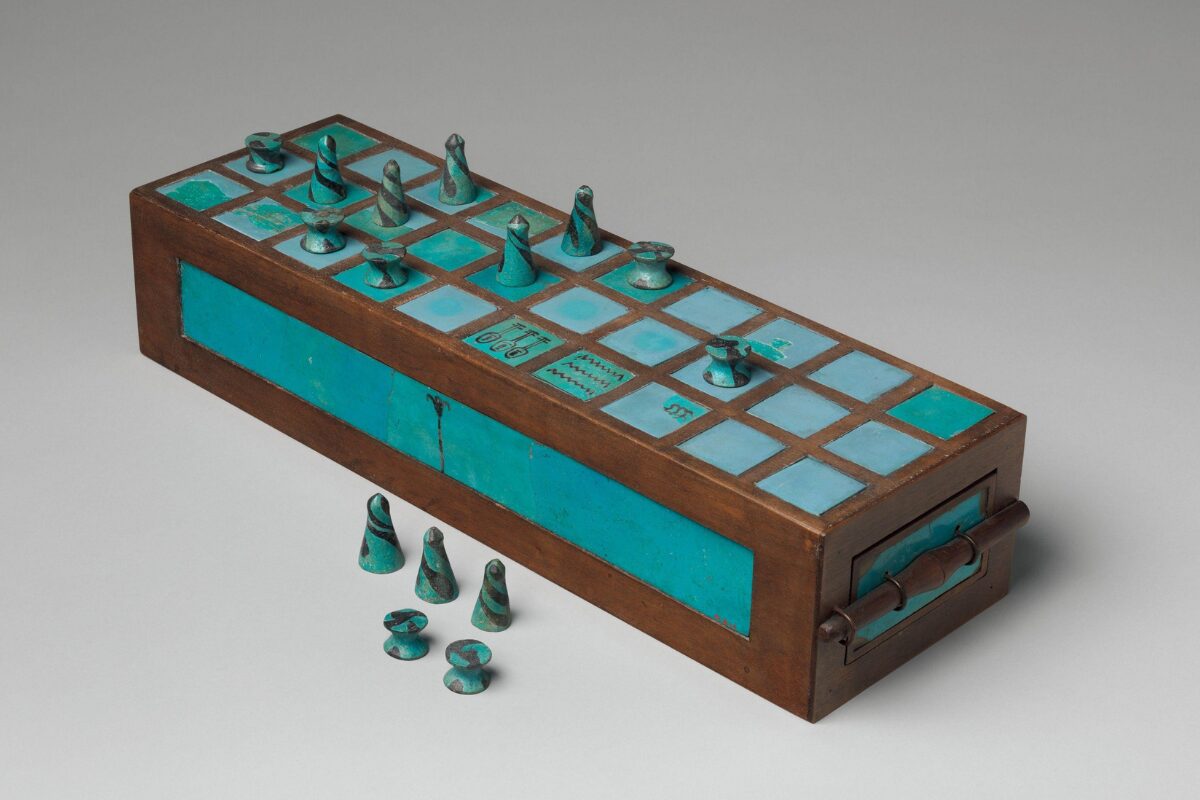
Egyptian. Gameboard and Gaming Pieces. ca. 1550–1295 B.C. Part of Open: The Metropolitan Museum of Art, Artstor.
Leonardo da Vinci. Divina Proportione. June 1, 1509. Part of Open: The Metropolitan Museum of Art, Artstor.
Amedeo Modigliani. Woman’s Head. 1912. Part of Open: The Metropolitan Museum of Art, Artstor.
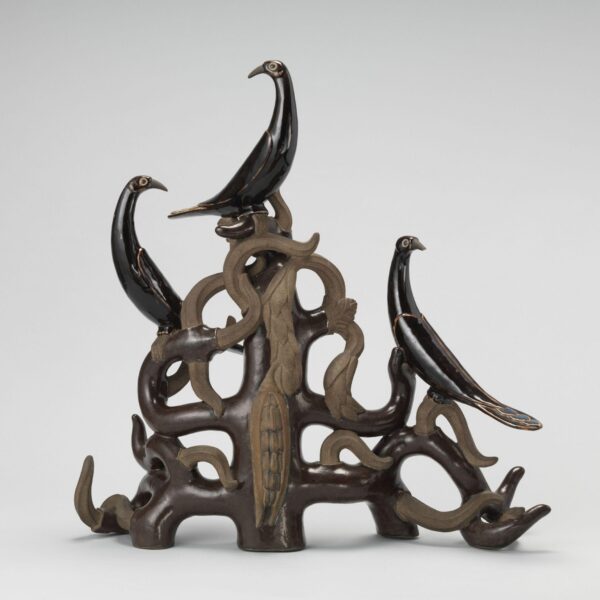
Séraphin Soudbinine. Sculpture. 1928. Part of Open: The Metropolitan Museum of Art, Artstor.

Cundo Bermudez. La Frutica. 1990. Part of Lehigh University Art Galleries Permanent Collection, Shared Collections.

Andy Warhol. Sitting Bull. 1986. Part of Lehigh University Art Galleries Permanent Collection, Shared Collections.
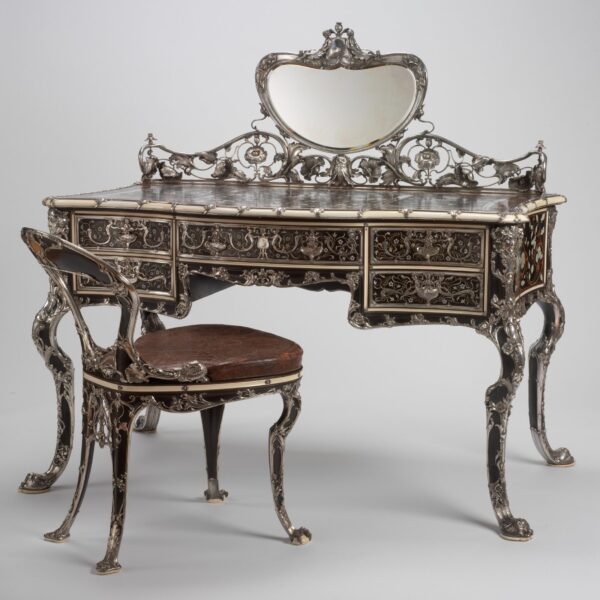
Gorham Manufacturing Company. Lady’s Writing Table and Chair. 1903. Part of RISD Museum (Rhode Island School of Design), Artstor.
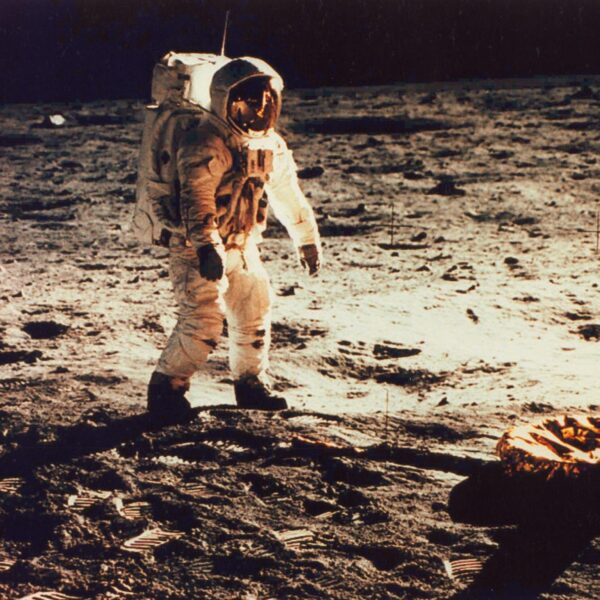
Neil Armstrong. Buzz Aldrin Walking on the Surface of the Moon Near a Leg of the Lunar Module. 1969. Part of Open: The Metropolitan Museum of Art, Artstor.

Manufactured by Nike Inc. Red, White, Yellow, and Blue Nike Sneakers Worn by Big Boi of Outkast. 2005-2006. Part of Open: Smithsonian National Museum of African American History & Culture, Artstor.

Dan Flavin. Untitled. ca. 1970. Part of RISD Museum (Rhode Island School of Design), Artist.
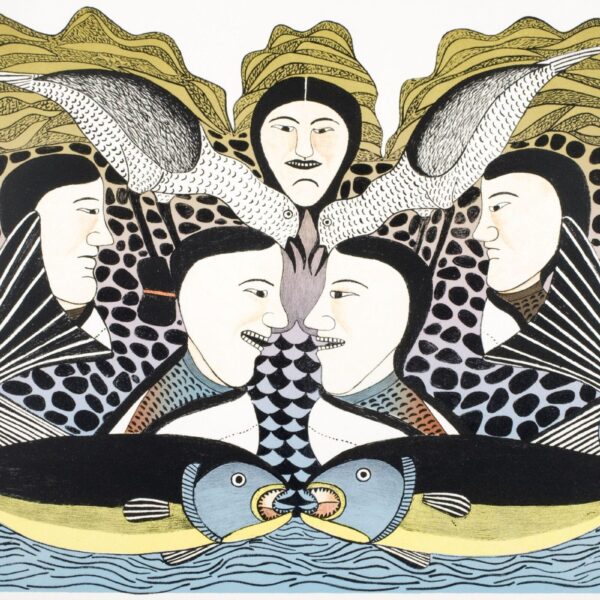
Kenojuak Ashevak. Women Speak of Spring Fishing. 1991. Part of Canadian Inuit Prints, Drawings, and Carvings, Part of St. Lawrence University, Shared Collections.

Edward Hopper. Rooms by the Sea. 1951. Part of Yale University Art Gallery, Artstor.